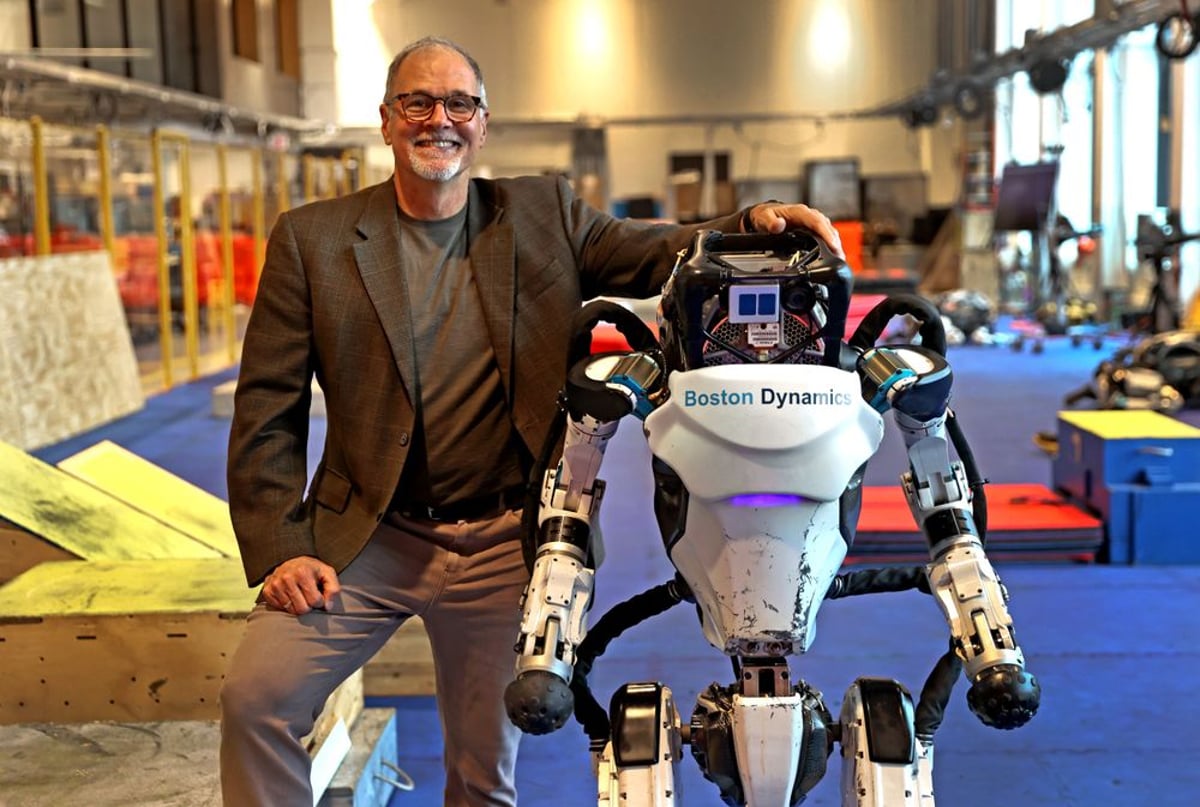
Boston Dynamics CEO Robert Playter is stepping down effective immediately, the robotics pioneer announced Tuesday, marking an abrupt end to a six-year tenure that saw the company change hands from SoftBank to Hyundai and launch its next-generation humanoid robot. Playter will officially leave the company on February 27th, according to A3. The departure comes just days after Boston Dynamics posted new footage of its electric Atlas robot performing tumbling passes and outdoor runs, signaling the company's push toward enterprise-ready humanoid systems.
Boston Dynamics just lost the executive who steered it through one of the most transformative periods in its 32-year history. Robert Playter's immediate resignation as CEO, first reported by A3, caught the robotics industry off-guard on Tuesday, especially given the company's recent momentum showcasing its latest humanoid robot capabilities.
Playter took the reins in 2019 after decades with the company, rising from early engineer to chief operating officer before landing the top job. His tenure coincided with massive ownership changes that reshaped Boston Dynamics' strategic direction. The company went from Google parent Alphabet to SoftBank in 2017, then landed with Hyundai Motor Group in a $1.1 billion deal that closed in June 2021, according to company announcements.
Under Playter's watch, Boston Dynamics shifted from viral video darling to serious commercial player. The company's Spot quadruped robot found real traction in industrial inspection, while its Stretch warehouse robot began deployments with logistics giants. But the biggest reveal came in April 2024 when Boston Dynamics unveiled a fully redesigned electric Atlas humanoid, retiring the hydraulic version that had performed those famous parkour routines.
The new Atlas represents a fundamental bet on humanoid robotics for manufacturing and logistics, putting Boston Dynamics in direct competition with startups like Figure AI and established players like Tesla with its Optimus robot. Just last week, the company posted new footage showing Atlas prototypes attempting gymnastics moves and navigating outdoor terrain - the kind of dynamic capabilities that differentiate Boston Dynamics' approach from simpler humanoid designs.
At CES last month, Boston Dynamics executives detailed how enterprise versions of Atlas would begin pilot programs with manufacturing partners in 2026. Those plans now move forward without the CEO who championed them. The company hasn't named a successor or explained the sudden departure, leaving industry observers speculating about what triggered the immediate exit.
The leadership vacuum comes at a critical moment. Humanoid robotics is experiencing an investment frenzy, with billions flowing into companies promising general-purpose robots for factories and warehouses. OpenAI is backing Figure AI, Amazon is developing Digit through its investment in Agility Robotics, and Chinese manufacturers are flooding the market with lower-cost alternatives.
Boston Dynamics' advantage has always been its sophisticated hardware and control systems - the reason its robots can maintain balance on unstable surfaces and recover from unexpected pushes. But translating that technical prowess into commercial success requires navigating enterprise sales cycles, supply chain scaling, and the messy realities of factory floors. That's the challenge Playter was managing as Boston Dynamics transitioned from R&D showcase to revenue-generating business under Hyundai's ownership.
Hyundai acquired Boston Dynamics explicitly to accelerate its robotics ambitions beyond automotive manufacturing. The Korean conglomerate sees robotics and AI as core to its future mobility vision. Playter's departure raises questions about whether that integration is proceeding as smoothly as planned, or if strategic differences emerged between Boston Dynamics' leadership and Hyundai's corporate hierarchy.
The robotics community will be watching closely to see who takes over and what direction they chart. Boston Dynamics pioneered legged robotics and set the technical standard that everyone else chases. But with well-funded competitors moving fast and customers demanding practical solutions over impressive demos, the company's next leader inherits both enormous credibility and mounting pressure to prove the business model works at scale.
Playter's sudden exit leaves Boston Dynamics at a crossroads. The company he helped build into a robotics icon now faces the hard work of scaling from engineering marvel to mass-market product, all while navigating new ownership and intensifying competition in humanoid robotics. Who takes the helm next will determine whether Boston Dynamics maintains its technical edge while finally cracking the commercial code, or becomes another cautionary tale of brilliant technology that couldn't find sustainable business footing. With Atlas pilots scheduled to begin this year and Hyundai expecting returns on its billion-dollar bet, the clock is ticking.