Samsung just swept the commercial display industry's biggest trade show. At ISE 2026 in Barcelona, the company walked away with a record haul of awards across retail, hospitality, and corporate categories - led by six wins for its newly launched 85-inch Spatial Signage. Over four days, 92,170 visitors packed Samsung's 1,728-square-meter booth to see glasses-free 3D displays, AI-powered content tools, and supersized LED walls that signal where the $150 billion commercial display market is heading next.
Samsung just redrew the map for commercial displays. At ISE 2026 in Barcelona, the company didn't just show up - it dominated, racking up a record number of industry awards while unveiling a portfolio that spans everything from glasses-free 3D signage to hotel TVs that double as digital art.
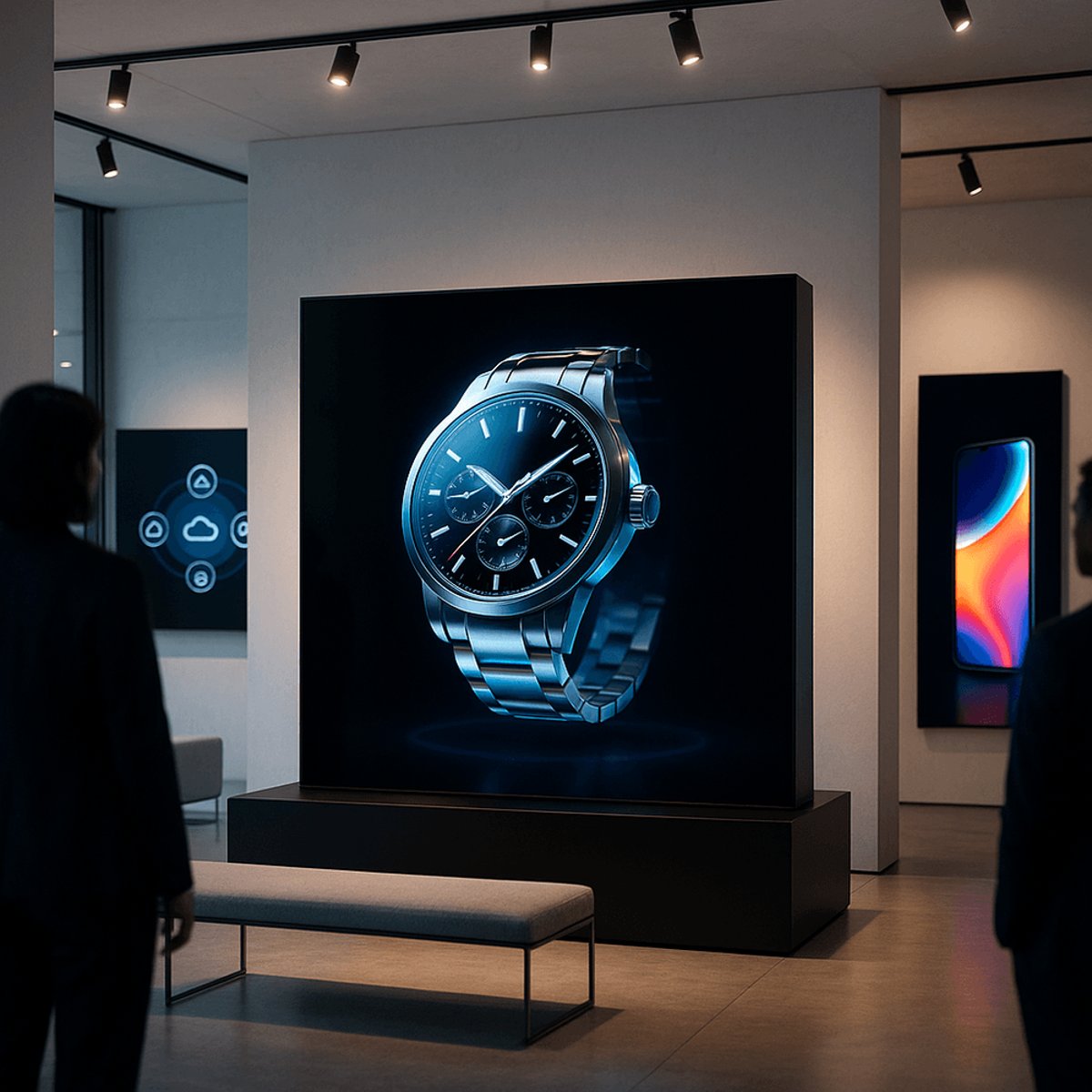
The star of the show? Samsung's 85-inch Spatial Signage, which swept six major categories including Best of Show awards from Future across AV Technology, Digital Signage, and Installation. The display uses patented 3D Plate Technology to render products in full 360-degree rotation without requiring glasses - turning retail windows and showroom floors into immersive product theaters.
It's the kind of visual punch that stopped traffic at Samsung's booth, where the company welcomed over 92,000 visitors across 1,728 square meters of exhibition space. And the awards kept coming: Commercial Integrator's Top New Technologies honor for Digital Signage Hardware, Inavation's Technology Award for Digital Signage, and a Digital Signage Award for Innovation in Display Technology from Sixteen:Nine.
But Samsung wasn't just flexing on 3D. The company used ISE 2026 to showcase how its display ecosystem now touches every corner of commercial environments - and it's getting smarter in the process.
Take Samsung VXT's new AI Studio app, which earned its own Best of Show award from Future. The platform lets retail teams turn static product images into video content optimized for signage with a few clicks. Choose the 'Spatial Signage Optimization' option, and the AI automatically refines shadows, adjusts margins, and adds background treatments to make visuals pop on those glasses-free 3D screens.
In retail environments, Samsung's pushing the boundaries of what displays can handle. The IBF series LED display hit the show floor in a 142-inch configuration built for window-facing installations. With 3,500 nits of brightness and a slim 42mm profile, it delivers clear advertising to passersby while staying visually unobtrusive from inside the store. The IEF series indoor LED signage takes a different tack - optimized for up-close viewing with 600-nit brightness, HDR10+ support, and Glue-on-Board technology for durability in high-traffic zones.
For retailers looking to ditch printed posters, Samsung Color E-Paper now comes in 13-inch, 20-inch, and 32-inch formats. The displays use digital ink technology that only consumes power when content changes, and store associates can update them directly from mobile devices using the dedicated app. It's digital signage that sits naturally alongside existing materials without the operational headache of constant reprinting.
Samsung's supersized lineup made waves too. The 130-inch QPHX Micro RGB signage made its commercial debut, featuring individually controlled micro RGB LED backlights for fine detail rendering across massive canvases. It joins the 105-inch QPDX-5K with its 21:9 widescreen format and the 115-inch QHFX with a non-glare surface designed for bright indoor spaces.
In hospitality, The Frame for Hotel earned a TNT Award and Future's Best of Show in AV Technology. The display blends into guest rooms like artwork while packing hotel-specific features - including a built-in One Connect Box that minimizes visible cabling. It works hand-in-hand with Samsung's LYNK Cloud platform, which helps hotels remotely manage TVs and gather business intelligence on which concierge features guests actually use.
Corporate environments got attention too. The Wall All-in-One simplifies LED installation for boardrooms with a modular, section-based design and includes all peripherals - control, audio, mounting hardware - in a single package. Samsung demoed Cisco-certified integration scenarios where AI-powered cameras and microphones work alongside LED displays for more natural video conferencing. For faster deployment, Samsung's partnering with Logitech on Microsoft Express Install setups that get Teams Rooms running in under an hour.
In education, the Interactive Display WAFX-P series lets teachers log into personal profiles by scanning QR codes or NFC-enabled ID cards. If someone forgets to log out, the next educator just scans their card to switch - eliminating friction between classes. The display won TNT's Interactive Whiteboard award and Future's Best of Show in Tech & Learning.
For mission-critical control rooms, The Wall MPF series with Black Seal Technology+ delivers deep blacks and refined contrast across large, bezel-free LED canvases. Samsung LED Signage Manager 2 (LSM2) simplifies large-scale LED system management with offline pre-configuration, automatic IP assignment, and built-in diagnostics. LSM2 earned the TNT Award for Videowall Software. Separately, The Wall × Twickenham Studios project - Samsung's first major LED screen build in the UK - won AV News Magazine's Project of the Year.
Underpinning everything is Samsung Knox Security, integrated across the commercial display portfolio with advanced encryption and multi-layered protection. Samsung VXT and LYNK Cloud platforms are certified to ISO/IEC 27001:2022 and 27701:2019 standards, supporting secure operations as businesses scale their digital signage deployments.
Samsung also powered Spark, a new ISE 2026 showcase bringing together gaming, broadcast, design, and live events to explore how creative technology shapes modern storytelling. The company hosted an after-hours event, 'Discover the Future with VXT 4.0,' diving into recent platform updates and cloud-based content management for signage at scale.
The award sweep reflects more than product launches - it signals where the $150 billion commercial display market is heading. Glasses-free 3D is moving from novelty to practical retail tool. AI is automating content creation that once required design teams. Cloud platforms are turning scattered screens into centralized, data-generating assets.
And Samsung's sitting at the center of it, extending a 17-year run as the commercial display market leader according to Omdia's Q3 2025 Public Display Report. As retail, hospitality, and corporate buyers look to refresh aging signage infrastructure, they're not just buying screens anymore - they're buying ecosystems that stretch from hardware to software to security.
ISE 2026 made one thing clear: the next generation of commercial displays won't just show content. They'll immerse customers, streamline operations, and generate insights - all while looking more like art than technology.
Samsung's record-breaking performance at ISE 2026 isn't just about hardware innovation - it's about redefining what commercial displays can do. From glasses-free 3D that transforms retail experiences to AI-powered content creation that eliminates design bottlenecks, Samsung's betting that the future of signage is immersive, intelligent, and integrated. With 17 years of market leadership and a portfolio that now spans every commercial environment from boardrooms to hotel rooms, the company's not just keeping pace with the industry - it's setting the direction. As businesses replace aging displays over the next few years, they'll be choosing between screens and ecosystems. Samsung just showed which one wins awards.