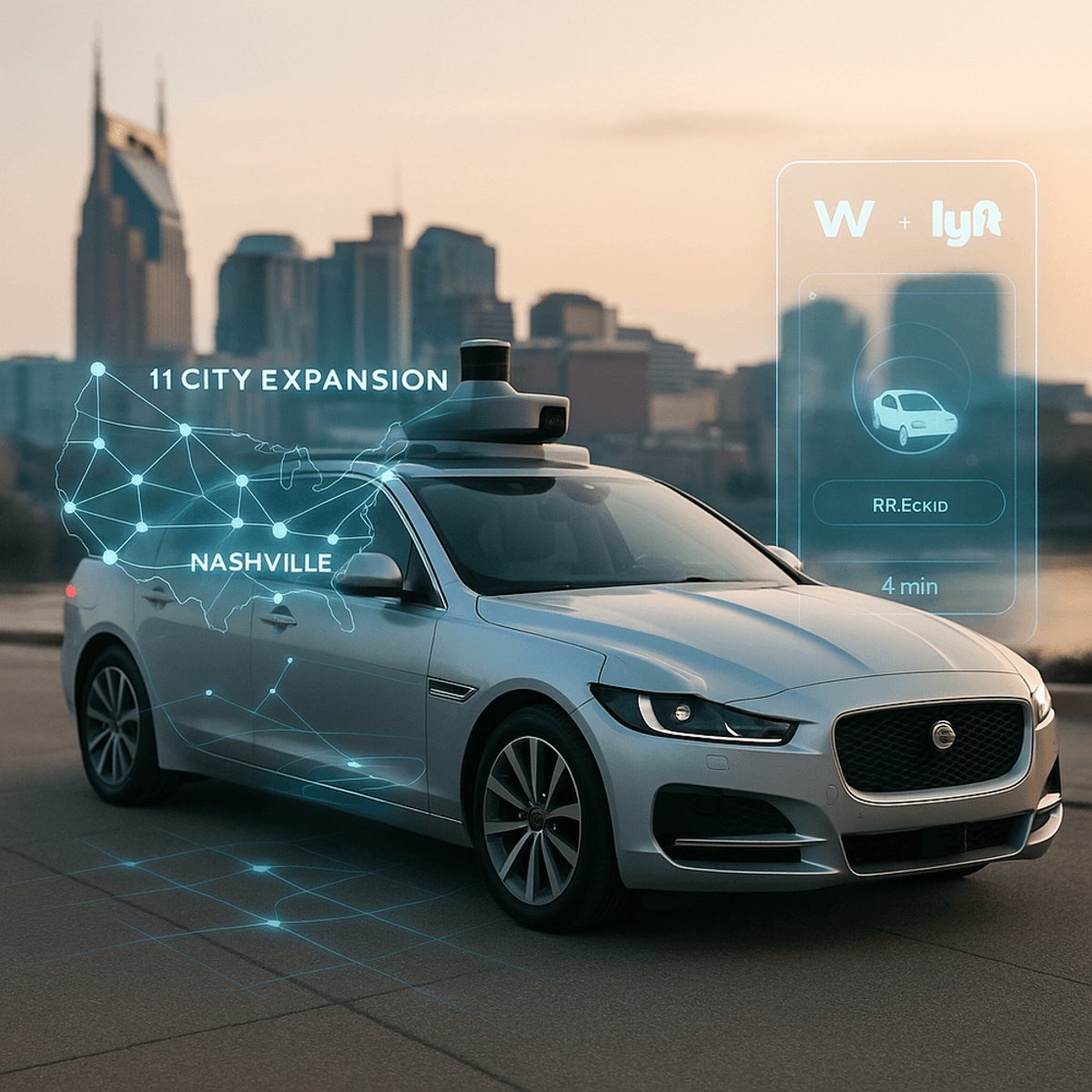
Waymo just planted its flag in Nashville, marking the 11th city where Alphabet's autonomous vehicle unit now runs commercial robotaxi operations. The expansion comes with a strategic twist - riders can now hail Waymo's self-driving cars through the Lyft app, signaling a major shift in how the two former rivals are approaching the increasingly crowded autonomous vehicle market. The move positions Waymo as the clear leader in geographic reach while giving Lyft a foothold in self-driving technology without building its own fleet.
Waymo isn't waiting around. The Alphabet-backed autonomous vehicle company just flipped the switch on commercial robotaxi service in Nashville, its 11th operational city, while simultaneously announcing riders can now summon its self-driving Jaguars through the Lyft app. The dual announcement represents one of the most aggressive expansion plays in the robotaxi wars to date.
The Nashville launch puts Waymo miles ahead of competitors like Cruise and Tesla, which have struggled to match Waymo's pace of geographic expansion. While exact service area boundaries haven't been disclosed, the deployment follows Waymo's typical playbook of starting with high-demand corridors before gradually expanding coverage. The company's been testing in Nashville since early 2024, giving it nearly two years of data collection before going commercial.
But it's the Lyft integration that really reshapes the landscape. Riders in Nashville can now request Waymo vehicles through multiple channels - the Waymo One app, the Lyft app, or at designated pickup zones. The partnership effectively turns Lyft into a distribution channel for Waymo's technology while giving Lyft instant access to autonomous capabilities it abandoned building in-house years ago. According to industry analysts, this type of platform partnership could become the dominant model as AV companies focus on technology rather than consumer-facing apps.
The timing isn't coincidental. Waymo's been on a tear lately, adding cities at a pace that would have seemed impossible just 18 months ago. The company now operates in major metros including San Francisco, Los Angeles, Phoenix, and Austin, accumulating millions of autonomous miles. Each new city represents not just expansion but validation - proof that Waymo's technology can adapt to different road conditions, weather patterns, and traffic behaviors.
Lyft's motivation is equally clear. After shutting down its own autonomous vehicle division in 2021 and selling it to Toyota, the rideshare company needed a path back into self-driving without the massive capital requirements. The Waymo partnership gives Lyft a competitive answer to Uber, which has been aggressively partnering with multiple AV companies including Waymo in other markets. For riders, it means more choice in how they access autonomous vehicles.
The competitive dynamics are getting interesting. While Waymo expands its city count, rivals are taking different approaches. Cruise recently resumed limited operations after its October 2023 suspension following a pedestrian dragging incident in San Francisco. Tesla continues promising that its Full Self-Driving system will eventually power a robotaxi network, though no commercial service exists yet. Chinese companies like Baidu are operating robotaxis in multiple cities, but only in China.
Waymo's strategy appears focused on proving autonomous technology at scale across diverse environments. Nashville brings unique challenges - the city's known for aggressive drivers, complex interstate exchanges, and a growing population that's strained existing infrastructure. If Waymo can navigate Broadway's chaos and I-65's rush hour traffic, it strengthens the case that fully autonomous vehicles can work almost anywhere.
The economics are starting to make sense too. While Waymo doesn't disclose financials, autonomous vehicles eliminate the largest cost in ridesharing - driver compensation. As the technology matures and manufacturing scales up, robotaxis could eventually undercut human-driven rides on price while maintaining higher margins. That's the bet keeping Alphabet's checkbook open despite years of losses.
What happens next matters for the entire transportation industry. If the Lyft partnership works smoothly in Nashville, expect Waymo to replicate it in other markets. The company's already working with Uber in Phoenix, Austin, and Atlanta, creating a scenario where both major rideshare platforms distribute Waymo vehicles. That kind of ubiquity could accelerate consumer acceptance faster than any single app could achieve alone.
Waymo's Nashville expansion isn't just about one more city - it's about establishing the infrastructure and partnerships that could define how autonomous vehicles get deployed nationwide. By spreading across 11 cities and embedding itself into existing rideshare platforms, Waymo's building the kind of network effects that make it increasingly difficult for competitors to catch up. The question isn't whether robotaxis are coming anymore. It's whether anyone besides Waymo will control meaningful market share when they fully arrive.