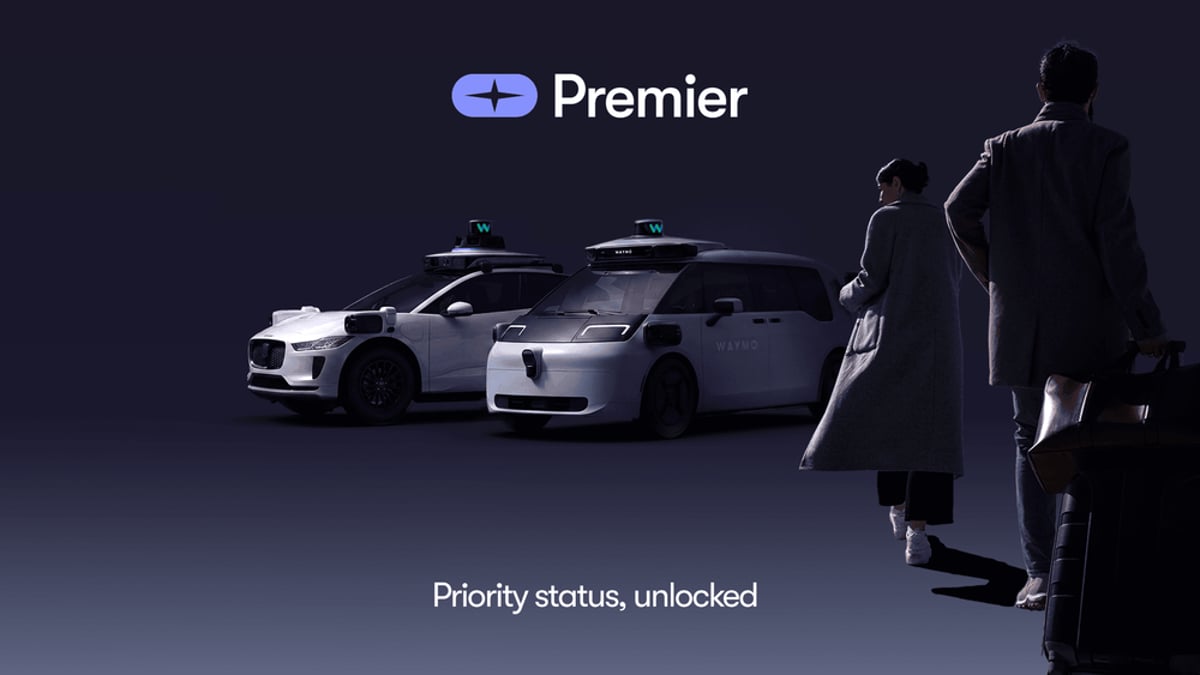
Waymo is taking a page from Uber's playbook with the launch of Waymo Premier, a $29.99-a-month subscription tier that promises priority pickups and VIP perks for its most frequent riders. The invite-only program rolls out today in San Francisco, Los Angeles, and Phoenix, marking the first time an autonomous vehicle operator has launched a premium membership model. It's a strategic play to lock in high-value customers as the robotaxi wars heat up.
Waymo just launched its first subscription tier, and it's aimed squarely at the power users who've been logging hundreds of robotaxi rides. Waymo Premier, priced at $29.99 per month, promises to turn frequent riders into VIP members with a bundle of perks that mirror what Uber One has been offering for years.
The program launches today as an invite-only offering in San Francisco, Los Angeles, and Phoenix, the three cities where Waymo's autonomous Jaguar I-Pace fleet currently operates at scale. According to The Verge's reporting, members get priority pickups during high-demand periods, 10 percent cash back on every trip, early access when Waymo expands to new cities, and up to five free cancellations monthly.
It's a calculated move that reveals how Waymo is thinking about customer retention as competition in the autonomous vehicle space intensifies. While Tesla continues to promise (and delay) its robotaxi network and Cruise works to rebuild trust after its 2023 accident controversies, Waymo has been quietly building a loyal rider base that now generates over 150,000 paid rides weekly across its three markets.
The subscription model directly challenges Uber, which has operated its Uber One membership program since 2020. That service, also priced around $25-30 monthly depending on promotions, offers similar perks across Uber's rideshare and delivery networks. But Waymo's betting that riders will pay a premium for the autonomous experience - no tipping awkwardness, no driver small talk, and theoretically more consistent service.
"We're seeing incredibly high utilization from a core group of riders who've made Waymo their primary transportation option," a company spokesperson told media outlets, though Waymo declined to share specific membership projections or current ride volume data. The company, which operates as an independent subsidiary of Alphabet, has been gradually commercializing its technology after years of testing.
The Premier tier also functions as a soft geographic expansion strategy. By promising early access to new cities, Waymo creates a built-in launch audience for future markets - riders who've already paid for the privilege and are motivated to advocate for the service. The company has been testing in Austin and is eyeing expansion to additional Sun Belt cities where weather conditions favor autonomous operations.
What makes this launch particularly interesting is the timing. Waymo's move comes as the broader autonomous vehicle industry faces a reckoning around unit economics. Operating robotaxis remains expensive - vehicle costs, remote operator oversight, cleaning, maintenance, and the computational overhead of real-time navigation all add up. A subscription model helps smooth revenue and improve lifetime customer value, metrics that matter when Alphabet executives are scrutinizing return on investment.
The 10 percent cash back structure is especially clever. Unlike a straight discount, cash back encourages continued usage - riders need to keep booking trips to realize the value. For someone taking $400 worth of Waymo trips monthly (roughly 15-20 rides in SF), the $40 in cash back more than covers the membership fee, creating a compelling value proposition for high-frequency users.
Competitors are watching closely. Cruise, which relaunched limited operations in Phoenix this spring after its suspension, hasn't announced similar membership plans. Zoox, Amazon's robotaxi unit preparing to launch commercial service in Las Vegas and San Francisco later this year, is taking a different approach by focusing on short-haul, fixed-route service rather than point-to-point rides.
The exclusivity angle - making Premier invite-only initially - builds FOMO while letting Waymo control the rollout pace. It's a tactic borrowed from consumer tech launches, where scarcity drives demand. As the program scales, Waymo will likely open invitations more broadly, but the initial limited access creates buzz among the early adopter community that's already enthusiastic about autonomous vehicles.
Waymo Premier represents more than just a subscription play - it's a signal that the robotaxi industry is maturing beyond the proof-of-concept phase into actual customer relationship management. By creating a loyalty tier now, while the market is still nascent, Waymo can lock in early adopters and build switching costs before competitors like Tesla launch at scale. The real test will be whether $30 monthly is enough to meaningfully improve margins in a business that's still burning cash, or if this is just a prelude to more aggressive monetization down the road. Either way, expect Uber and Lyft to be studying this launch carefully as they navigate their own autonomous futures.