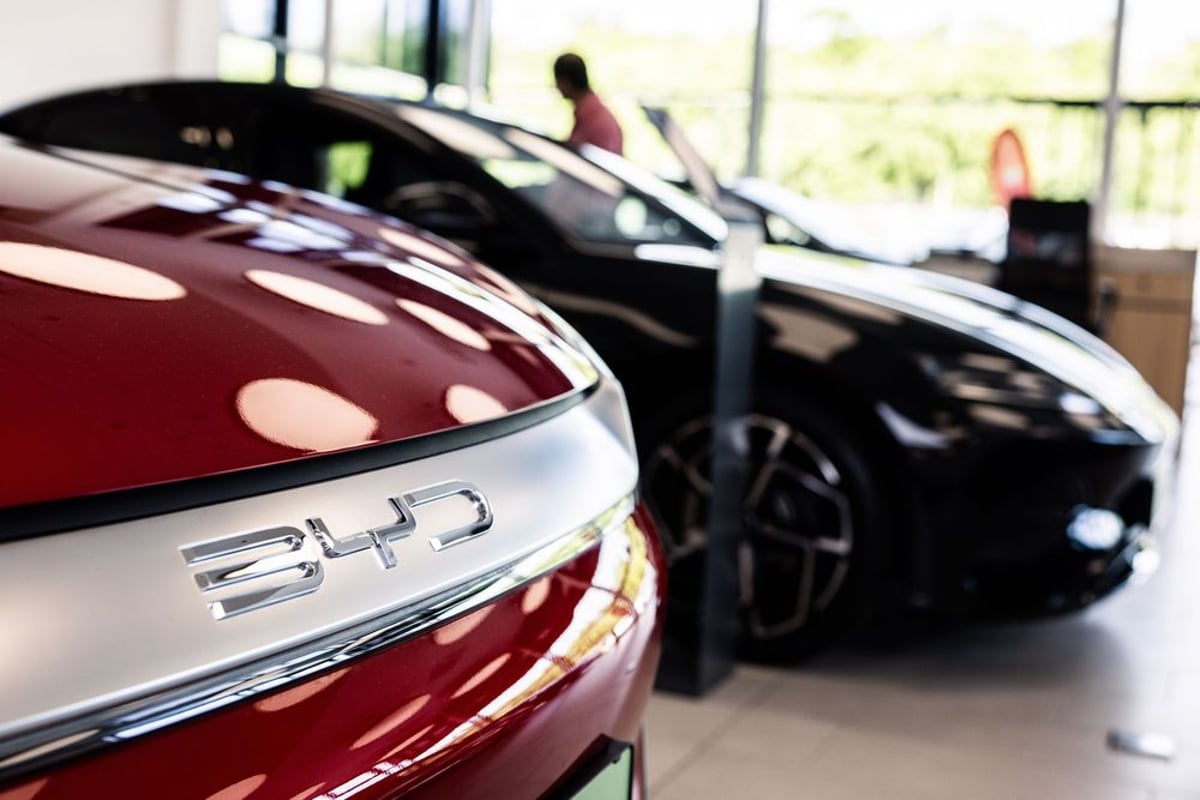
BYD is making its boldest move yet to crack the European EV market, announcing a $2 billion charging infrastructure rollout that directly challenges Tesla's decade-long head start. The Chinese automaker has already planted its first 1,500kW Flash Chargers in Germany and the UK, with plans to install 3,000 units across the continent by late 2027. At triple the power of Tesla's newest V4 Superchargers, BYD's network promises 5-minute top-ups that could finally make range anxiety obsolete. It's a massive infrastructure bet from a company that's spent years playing catch-up in Europe, and it signals just how serious BYD is about taking on the Western EV establishment on its home turf.
BYD just threw down $2 billion to solve Europe's EV charging problem, and Tesla should be paying attention. The Chinese automotive giant has started rolling out what it calls Flash Chargers across the continent, with the first installations already live in Germany and the UK. By the end of 2027, BYD plans to have 3,000 of these ultrafast charging stations scattered across Europe, each one capable of pumping out 1,500 kilowatts of power.
That's not just incrementally better than the competition. It's three times more powerful than Tesla's newest V4 Superchargers, which top out at 500kW. In practical terms, BYD's chargers promise to add meaningful range in about 5 minutes, the kind of stop-and-go convenience that could finally make EV road trips feel less like a logistical chess game and more like, well, just driving.
The economics behind this rollout are staggering. According to analysis from the Financial Times, each Flash Charger costs roughly €580,000 (about $670,000) to install. Multiply that across 3,000 units and you're looking at approximately $2 billion in infrastructure spending. That's a serious commitment from a company that's still fighting for recognition in European showrooms, where BYD remains a relatively unknown brand despite being the world's largest EV manufacturer by volume.
But here's the thing: throwing money at charging infrastructure won't automatically win over European drivers. Tesla's already got 20,000 chargers installed across Europe, a network built over more than a decade that's become one of the company's biggest competitive moats. BYD's Flash Chargers might be faster, but they're starting from essentially zero coverage. Tesla owners know they can road trip from Oslo to Rome with confidence. BYD buyers? Not so much, at least not yet.
The timing of BYD's infrastructure push isn't accidental. The company has been expanding aggressively into Europe over the past two years, opening dealerships and launching new models tailored to European tastes. But consumer surveys consistently show that charging anxiety remains the number one barrier to EV adoption, especially in countries where home charging isn't practical. BYD clearly sees fast, ubiquitous charging as the key to unlocking European market share.
What makes the Flash Charger technology particularly interesting is how it dovetails with BYD's proprietary Blade Battery chemistry. The company's lithium iron phosphate batteries are designed to handle extremely high charging rates without the degradation issues that plague some other EV batteries. That means BYD vehicles can actually take advantage of the full 1,500kW capability in ways that competing EVs might not be able to match, at least not without voiding warranties or accelerating battery aging.
There's also a strategic calculation at play here. European regulators have been pushing hard for open charging standards, which means BYD's Flash Chargers will likely need to work with vehicles from other manufacturers, not just BYD's own lineup. That's both an opportunity and a risk. On one hand, it makes the business case for each charger stronger since they can serve a broader customer base. On the other hand, it means BYD is essentially subsidizing infrastructure that will benefit its competitors.
The rollout puts BYD in direct competition not just with Tesla but with a growing constellation of charging networks across Europe, from Ionity to Fastned to traditional energy companies like BP and Shell that are racing to electrify their filling station networks. Each of these players is betting billions on slightly different visions of what EV charging should look like. BYD's bet is simple: faster is better, and if you build it fast enough, drivers will come.
For European automakers like Volkswagen, BMW, and Mercedes, BYD's infrastructure play is another wake-up call. The Chinese company isn't just competing on vehicle price anymore. It's building the entire ecosystem needed to make EVs truly viable, from batteries to drivetrains to the charging infrastructure itself. That kind of vertical integration gives BYD enormous flexibility to optimize the entire ownership experience in ways that traditional automakers, who've outsourced much of their EV supply chain, simply can't match.
The question now is whether 3,000 chargers by late 2027 will be enough to move the needle. Tesla took more than a decade to build its 20,000-charger European network. BYD is trying to achieve meaningful coverage in less than two years. It's an ambitious timeline that will require flawless execution, not to mention navigating the complex web of local permitting and grid connection requirements across dozens of different countries.
BYD's $2 billion charging infrastructure gambit is the clearest signal yet that the company views Europe as a must-win market, not just another export destination. But building 3,000 ultrafast chargers is only half the battle. The real test will be whether European consumers, who've shown stubborn loyalty to established brands, are willing to take a chance on a Chinese automaker they barely know, even if that automaker can promise the fastest charge times on the continent. Tesla spent years building trust alongside its charging network. BYD is trying to do both simultaneously, and against a backdrop of rising geopolitical tensions around Chinese tech. The technology might be impressive, but the market dynamics are anything but simple.