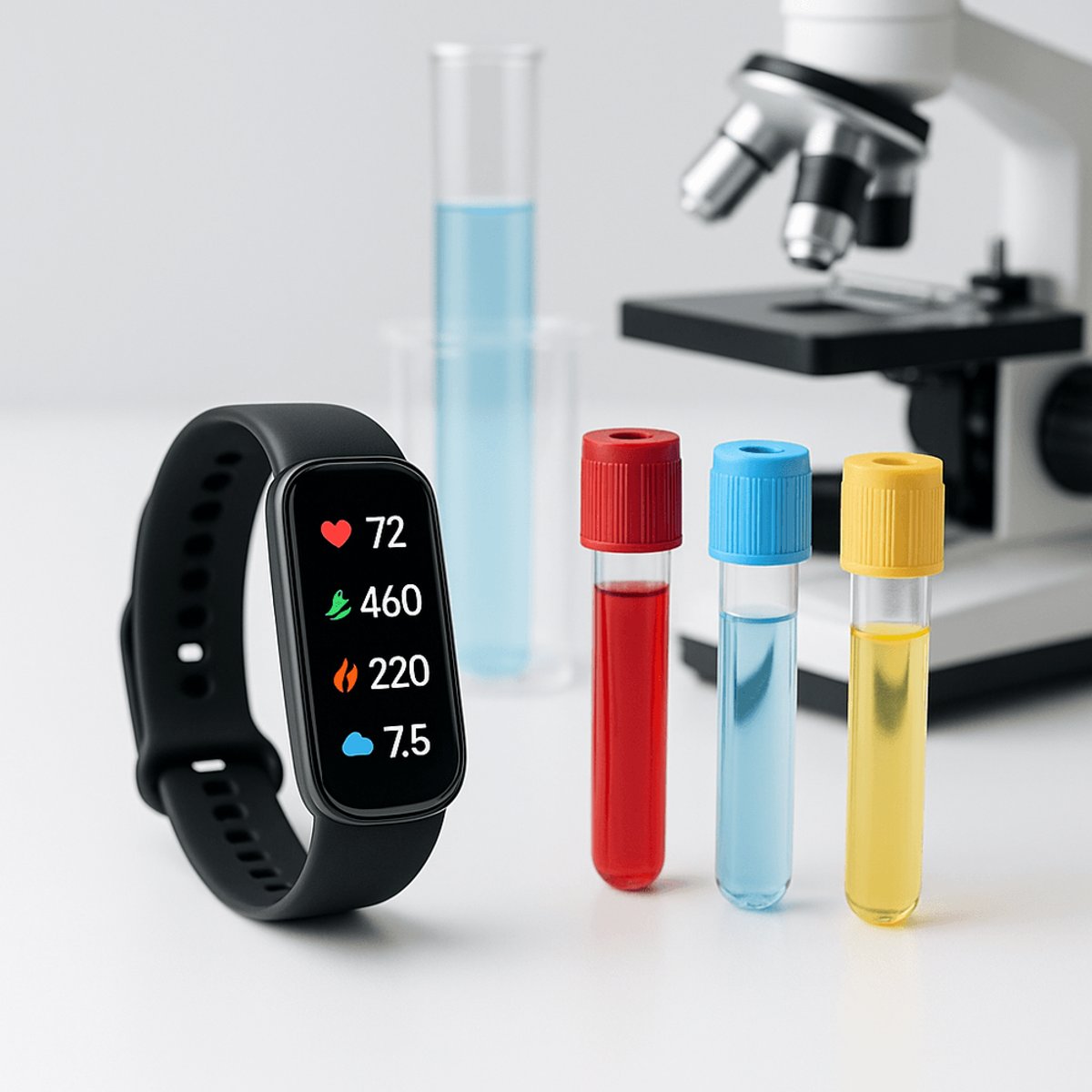
Fitness tracker Whoop just opened its Advanced Labs blood testing service to a staggering 350,000-person waitlist, marking the company's bold expansion beyond wearables into subscription health diagnostics. The move signals how fitness tech companies are racing to capture the lucrative wellness market by combining device data with clinical testing.
The fitness tracking world just got a lot more clinical. Whoop officially launched its Advanced Labs service Tuesday, opening the floodgates to what the company says is a 350,000-person waitlist that's been building since the service was first previewed back in May.
The numbers tell a compelling story about pent-up demand for integrated health monitoring. That waitlist represents roughly the population of Iceland, all eager to combine their wrist-worn data with lab results. It's a validation of Whoop's bet that consumers want their fitness metrics married to actual blood chemistry - not just step counts and sleep scores.
Whoop Advanced Labs partners with Quest Diagnostics to offer comprehensive blood panels covering everything from basic metabolic markers like calcium and glucose to more detailed readings including white blood cell counts and lipid profiles. But here's where it gets interesting - those lab results feed directly into Whoop's existing ecosystem of continuous monitoring data from activity levels, sleep patterns, respiratory rate, and blood pressure.
The pricing structure reveals Whoop's subscription-first mentality. Advanced Labs costs $199 for one annual test, $349 for two tests, or $599 for four tests per year. That's on top of the Whoop device membership itself, which runs $200 to $350 annually depending on which strap features you want. For committed users, you're looking at nearly $1,000 per year for the full experience.
Whoop's timing couldn't be better positioned in the booming subscription wellness market. The company joins a rapidly expanding field of startups betting that consumers will pay out-of-pocket for regular health screenings. Dr. Mark Hyman's Function Health charges $500 annually for quarterly blood tests plus optional body imaging. At the premium end, longevity startup Fountain Life - backed by Tony Robbins and Peter Diamandis - commands over $20,000 per year for comprehensive health monitoring and intervention programs.
What sets Whoop apart is the continuous data integration angle. While Function Health and similar services provide periodic snapshots of your health markers, Whoop can theoretically correlate those blood results with daily biometric patterns. Did your inflammatory markers spike after that week of poor sleep scores? Is your metabolic panel reflecting the recovery data your device has been tracking?
The competitive landscape is heating up fast. Apple continues expanding Apple Watch health features, recently adding blood oxygen monitoring and ECG capabilities. Google's Fitbit division has been pushing deeper into health insights. Meanwhile, clinical-grade wearables from companies like Oura and Garmin are all eyeing similar subscription service expansions.
For Whoop, which has built its brand around professional athletes and serious fitness enthusiasts, Advanced Labs represents a natural evolution. The company's existing user base already pays premium prices for detailed recovery and strain analytics. Adding blood chemistry to that mix creates a more comprehensive health picture - and justifies higher subscription fees.
The 350,000-person waitlist also signals something bigger about consumer behavior. People aren't just interested in tracking their daily activities anymore; they want actionable insights backed by clinical data. The subscription model makes regular testing affordable compared to traditional healthcare costs, while the integration with existing devices provides context that standalone lab results can't match.
What's particularly smart about Whoop's approach is leveraging Quest Diagnostics' established infrastructure. Rather than building lab capabilities from scratch, they're focusing on the data integration and user experience layers - their core strengths. It's a playbook that could work for other wearable companies looking to expand beyond hardware.
The real test will be whether Whoop can deliver meaningful health insights from combining these data streams. Correlation isn't causation, and the challenge for any integrated health platform is providing actionable recommendations rather than just more data points. Early users will likely judge the service on whether those $599 annual blood tests actually help them optimize their training, recovery, or overall wellness in ways their device data alone couldn't.
For the broader health tech industry, Whoop's launch represents another step toward consumer-driven healthcare. As traditional healthcare becomes increasingly expensive and less accessible, subscription wellness services are positioning themselves as preventive alternatives. Whether that's sustainable long-term remains to be seen, but the demand is clearly there.
Whoop's Advanced Labs launch with 350,000 waitlisted users signals a pivotal moment where fitness wearables evolve into comprehensive health platforms. The real question isn't whether consumers want integrated health data - that waitlist proves they do - but whether companies like Whoop can deliver meaningful insights that justify the premium subscription costs. As the wellness market continues fragmenting between affordable services like Function Health and ultra-premium offerings like Fountain Life, Whoop is betting that device integration gives them a sustainable competitive advantage. The next year will determine if that bet pays off or if consumers eventually hit subscription fatigue in the crowded health tech space.