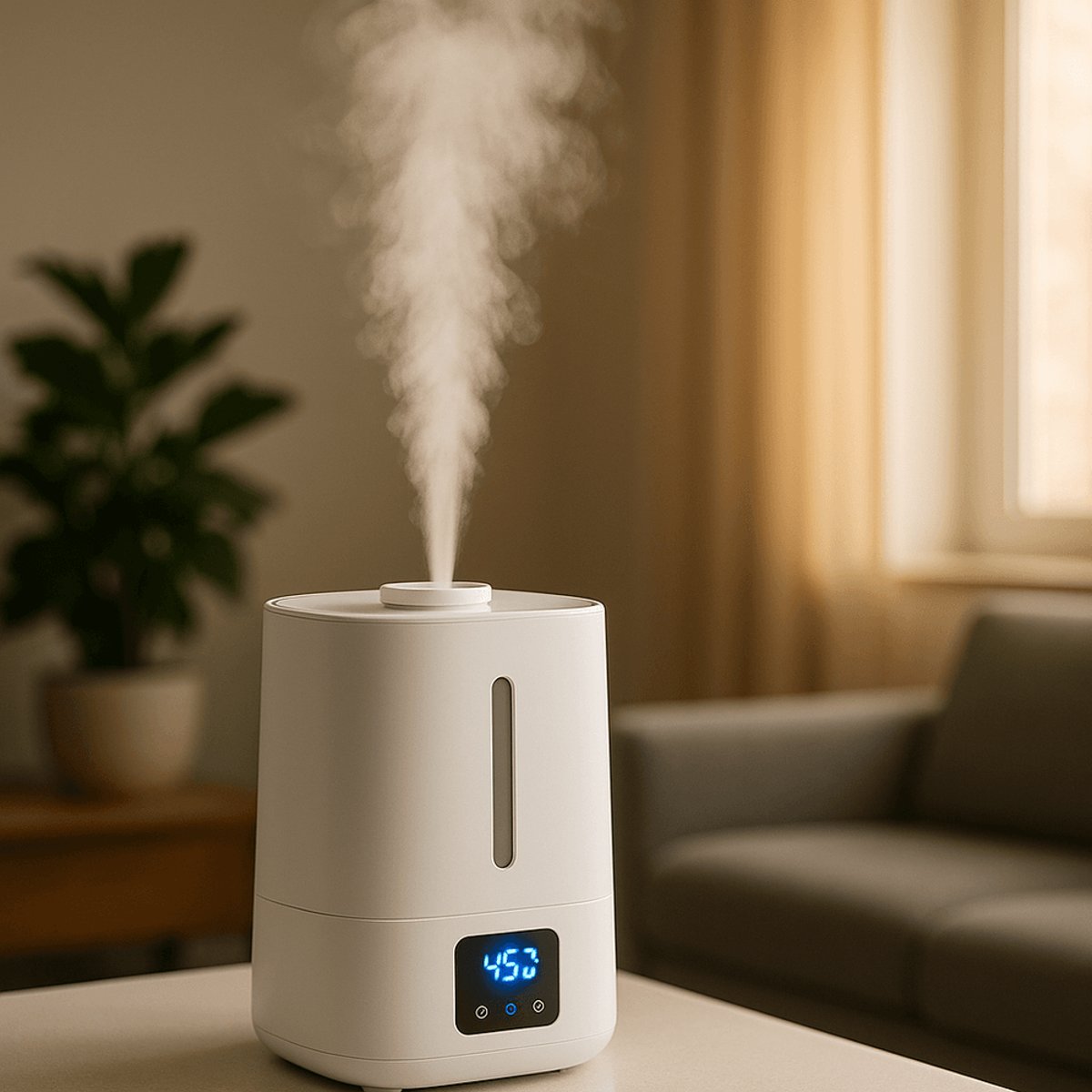
Wired just released its comprehensive 2025 humidifier buying guide after testing 12 models during New York's record drought conditions. The guide covers everything from travel-sized units to whole-house systems, with Blueair's Invisible Mist taking the top spot for overall performance. Lisa Wood Shapiro tested each humidifier in her century-old Brooklyn apartment, focusing on user-friendly models that maintain ideal 30-50% humidity without the hassle of constant distilled water refills.
The timing couldn't be better for Wired's latest humidifier roundup. During New York City's second-longest drought on record, reviewer Lisa Wood Shapiro found herself dealing with brutal 32% indoor humidity in her Brooklyn apartment - well below the EPA's recommended 30-50% range. Her comprehensive testing of 12 humidifier models reveals a market that's finally addressing the biggest pain points that leave these devices abandoned on stoops each spring.
Blueair's Invisible Mist Humidifier claims the top spot with a compelling combination of convenience features. The $150 unit accepts tap water through either traditional tank filling or a clever pour-over method, eliminating the need for distilled water runs. Its antimicrobial wick filter captures minerals and pollutants while producing an invisible mist that rises naturally to breathing height. The dishwasher-safe tank and optional filter subscription service address the maintenance headaches that doom most humidifier relationships.
The budget category sees strong competition from Dreo's HM713S at $90, offering smart app control and color-coded humidity indicators. The unit lights up blue for "wet" conditions, green for "comfort," and orange for "dry" - providing instant visual feedback about indoor air quality. However, the required demineralizing filters sold separately add to the total cost of ownership.
For travel, the compact HoMedics Ultrasonic CMTF14 at $50 delivers surprising performance in hotel rooms and small spaces. At roughly the size of a toiletry bag, it packs a 2-liter tank capable of humidifying 258 square feet. The built-in seven-color nightlight makes it ideal for unfamiliar hotel rooms or children's bedrooms.
The premium segment showcases fascinating hybrid devices. Blueair's 2-in-1 Purify + Humidify combines HEPA air filtration with humidification in a single $430 unit. The device uses color-coded air quality indicators - though Shapiro notes confusion with Blueair's custom system where yellow means "good" rather than the standard "moderate" in US Air Quality Index terminology.
Smart features now dominate the mid-range and premium categories. Blueair's DreamWell Humidifier includes geolocation technology that turns on the unit 15 minutes before you arrive home, with transportation mode settings for walking, biking, public transport, or driving. The unit doubles as a sleep aid with mood lighting and essential oil diffusion capabilities.
For whole-house coverage, Dreo's Smart Humidifier 735S 11L delivers nearly 100 hours of continuous operation with its massive 3-gallon tank. The unit handles spaces up to 700 square feet with mist reaching over 6 feet high, though the 28-pound weight when full creates obvious portability challenges.
The testing reveals persistent industry pain points around maintenance and water quality. Many models still require expensive demineralizing filters sold separately, adding hidden costs to budget options. The guide emphasizes dishwasher-safe tanks as a key feature, citing South Korean studies linking chemical humidifier disinfectants to lung injuries.
Shapiro's testing methodology focused on real-world usability in her century-old apartment during peak heating season. She prioritized models that work with tap water, offer easy filling methods, and maintain consistent humidity without constant attention. The emphasis on sustainability reflects growing consumer fatigue with appliances that become maintenance burdens.
The market clearly segments between basic analog models under $50 and smart connected devices above $100. App control, humidity sensors, and automatic shut-off features separate premium models, while basic units rely on simple dial controls and manual monitoring.
Several innovative designs caught attention, including HoMedics' Natura Plant Humidifier that combines humidification with a built-in planter using FSC-certified bamboo construction. While not app-compatible, it offers multiple filling methods and comprehensive manual controls for large rooms.
Wired's comprehensive testing reveals a humidifier market finally addressing consumer pain points around maintenance and usability. The standout models eliminate distilled water requirements, offer smart controls, and simplify cleaning through dishwasher-safe components. With winter driving indoor humidity to unhealthy levels, the guide provides practical options ranging from $44 budget models to $430 premium hybrids, helping readers find sustainable solutions for better indoor air quality without the maintenance headaches that typically doom these devices.