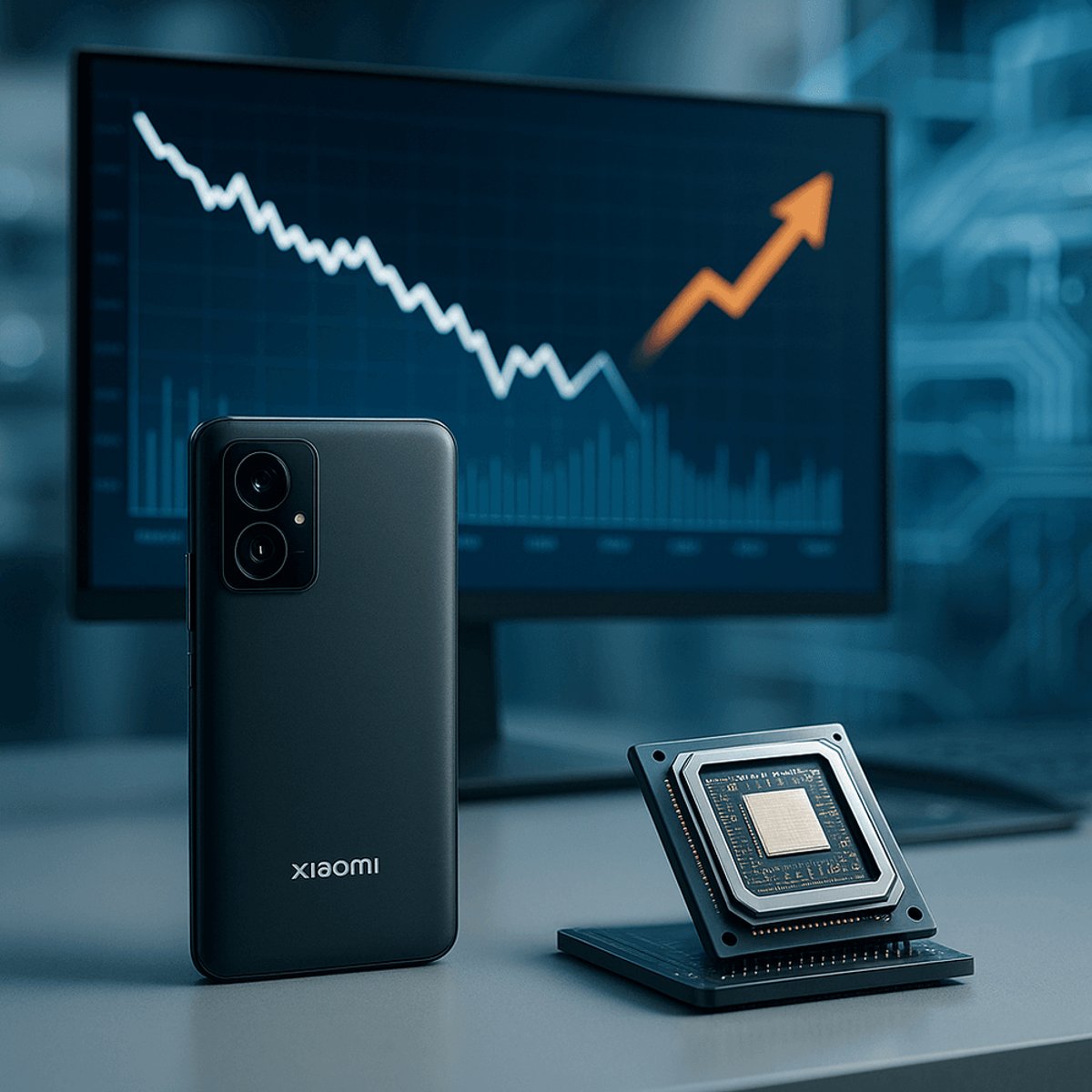
Xiaomi just threw $321 million at its sliding stock price. The Chinese tech giant announced a HK$2.5 billion buyback program on Friday, sending shares up 2% after an 8% year-to-date decline that's got investors worried. But the repurchase - Xiaomi's latest in a series of similar moves - comes as the company faces mounting headwinds from a worsening memory chip shortage, brutal EV price wars, and disappointing delivery targets that suggest the financial engineering might be masking deeper operational struggles.
Xiaomi's stock got a Friday morning jolt, but don't mistake the 2% pop for a turnaround. The Beijing-based tech giant announced it's buying back up to HK$2.5 billion worth of shares - roughly $321 million - in what's becoming a familiar playbook for a company navigating some serious crosswinds. According to a late Thursday filing with the Hong Kong Stock Exchange, the open-market repurchase kicks off January 23 and marks yet another attempt to prop up investor confidence after shares tumbled over 8% since the start of 2026.
This isn't Xiaomi's first rodeo with buybacks. The company snapped up 4 million shares for HK$152 million just ten days earlier on January 13, part of a pattern of repurchases over recent years. But critics argue stock buybacks are just financial sleight of hand - boosting share prices without actually fixing what's broken underneath. That cash could've gone to employee compensation, factory expansion, or the kind of innovation that might address the real problems hammering the stock.
And those problems are piling up fast. A looming memory chip shortage is squeezing margins across Xiaomi's smartphone business, which still forms a core revenue pillar for the company. Dan Baker, senior equity analyst at Morningstar, says the shortage has already caused margin compression for smartphone manufacturers, with multiple industry forecasters slashing their smartphone outlook. The situation's only getting worse as chipmakers prioritize the voracious memory demands of AI applications over consumer electronics.
Ivan Lam, senior analyst at Counterpoint Research, puts it bluntly - 2026 is going to be challenging not just for Xiaomi but for Chinese original equipment manufacturers across the board. Domestic Android players remain most vulnerable to chip shortages, he notes, as memory manufacturers continue diverting capacity toward the AI boom. That leaves smartphone makers fighting over shrinking supply at rising prices, exactly the scenario that tanks gross margins.
Xiaomi's electric vehicle ambitions aren't providing much relief either. The company's been caught in China's brutal EV price war, which has been grinding down margins across the entire sector. Kyna Wong, a China technology analyst at Citi Research, points out that investors were disappointed by Xiaomi's modest 550,000-unit vehicle delivery target for 2026 - a figure that suggests the company's being cautious about its ability to compete with established players like BYD and newer entrants flooding the market.
Wong adds that Beijing's changes to EV subsidy policies in 2026 are likely to push Xiaomi's vehicle margins even lower. That's on top of safety concerns that went viral on social media last year following reports of accidents involving Xiaomi vehicles. The incidents sparked a wave of negative sentiment that the company's still working to shake off, even as it tries to scale production of its premium SU7 Ultra model for global expansion.
Despite the near-term pressures, Xiaomi's making big long-term bets on vertical integration. The company committed at least 50 billion yuan over ten years - starting in 2025 - to develop its own semiconductor division. It's a play straight out of Apple's playbook, aiming to reduce dependence on external chip suppliers and capture more value from its hardware ecosystem. But that's a decade-long investment cycle that won't cushion the blow from today's margin squeeze.
The buyback announcement reveals a company trying to manage multiple narratives at once. To shareholders, it signals confidence and a commitment to returning value. To analysts, it looks like a defensive move by a firm facing structural challenges in both its core smartphone business and its newer EV venture. The company's share price had been under sustained pressure even before 2026 began, reflecting market skepticism about whether Xiaomi can navigate the chip shortage, win the EV price war, and deliver on its ambitious semiconductor dreams all at the same time.
What happens next depends largely on factors outside Xiaomi's control. If memory supply loosens up and prices stabilize, smartphone margins could recover. If China's EV market consolidates and subsidy policies become clearer, vehicle profitability might improve. But right now, Xiaomi's betting $321 million that investors will focus on the buyback rather than the underlying pressures - and the market's not entirely convinced.
Xiaomi's $321 million buyback is a short-term confidence play masking longer-term strategic challenges. While the company's investing heavily in chip development and global EV expansion, it's fighting simultaneous battles against memory shortages squeezing smartphone margins and price wars eroding EV profitability. The buyback might stabilize the stock temporarily, but investors should watch whether Xiaomi can actually address the operational pressures - rising component costs, disappointing delivery targets, and subsidy changes - that drove shares down 8% this year. The real test isn't how much cash Xiaomi spends on its own stock, but whether it can navigate the chip crunch and EV competition well enough to make that stock worth buying in the first place.