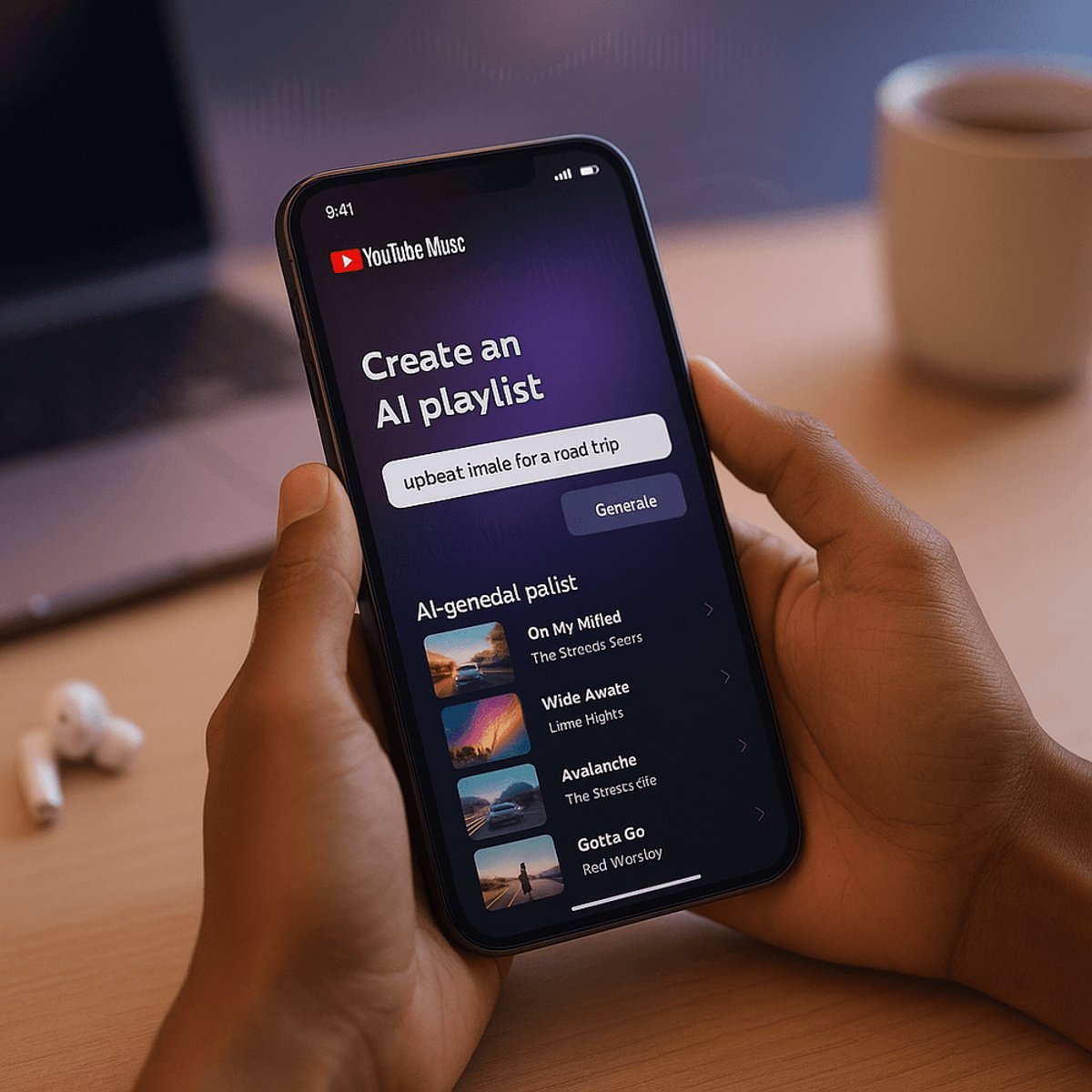
YouTube Music just flipped the switch on AI-generated playlists, giving Premium subscribers a new way to summon custom music mixes through simple text prompts. The feature, rolling out now to iOS and Android users, marks Google's latest push to embed generative AI into its consumer products - and it's arriving just as Spotify and Apple Music race to deploy similar tools. For YouTube's 100 million-plus Premium subscribers, it's a glimpse at how AI might reshape music discovery beyond algorithmic recommendations.
YouTube Music is betting that Premium subscribers want to talk to their playlists. The Google-owned streaming service just rolled out an AI-powered playlist generator that lets users type what they're feeling - "upbeat indie for a road trip" or "melancholic jazz for rainy afternoons" - and watch as the algorithm assembles a matching mix. The feature hit iOS and Android this week, available exclusively to the platform's Premium tier.
It's a calculated play in an increasingly crowded field. Spotify has been quietly testing its own AI playlist tools since late 2025, while Apple Music rolled out natural language search capabilities last quarter. But YouTube brings a unique advantage to the table: its massive catalog spans official releases, live performances, remixes, and user-uploaded content that other services can't touch. That breadth could make AI-generated playlists more adventurous - or more chaotic, depending on how well the model curates.
The timing isn't accidental. Google has been racing to prove its AI credentials since OpenAI kicked off the generative AI frenzy in late 2022. CEO Sundar Pichai told investors during the company's Q4 earnings call that embedding AI into consumer products is a "top priority" for 2026. YouTube Music's playlist generator joins a growing roster of AI features across Google's ecosystem, from Search's generative results to Gmail's Smart Compose and Google Photos' Magic Editor.
But there's a catch - you need to pay for it. YouTube Premium runs $13.99 monthly for individuals and $22.99 for families, putting the AI feature behind a paywall while competitors experiment with freemium models. Spotify's AI DJ, for instance, rolled out to free users in select markets, banking on the idea that AI-driven personalization could hook non-subscribers. YouTube's approach suggests the company sees AI tools as premium differentiators rather than acquisition hooks.
The technical execution matters here. Early AI playlist generators have stumbled on context and mood interpretation - ask for "energetic workout music" and you might get death metal when you wanted pop-punk. YouTube Music hasn't disclosed which language model powers the feature, but it's likely leveraging Google's Gemini infrastructure, the same tech behind Bard and Search's AI overviews. The model needs to parse vague requests, understand musical genres and moods, then map those concepts to YouTube's sprawling catalog.
Music industry analysts are watching closely. Streaming services have long struggled with discovery - algorithms favor popular tracks, while human-curated playlists can't scale. AI promises a middle path: personalized curation that feels handpicked but operates at algorithmic scale. If it works, it could reshape how listeners find new music and how artists break through. If it flops, it's another overhyped AI feature that users ignore.
The competitive pressure is real. Amazon Music has been pushing its Maestro AI playlist tool since January, while Tidal experiments with AI-powered artist radio. Even Pandora, the OG of algorithmic radio, is reportedly testing generative playlist features. The streaming wars are morphing into an AI arms race, with each platform betting that smarter recommendations will lock in subscribers.
For now, YouTube Music's AI playlists remain limited to Premium subscribers on mobile. There's no word on desktop support or whether the feature will expand to free users with ads. But the rollout signals where Google thinks the puck is headed: a future where you don't search for music, you just describe what you want and let the AI handle the rest. Whether that future arrives smoothly or crashes into the uncanny valley remains to be seen.
YouTube Music's AI playlist generator is less about revolutionary tech and more about table stakes in 2026's streaming landscape. Every major platform is racing to prove their AI can understand what you want to hear before you know it yourself. For Premium subscribers, it's a handy new tool that might surface hidden gems or deliver perfectly vibes-matched playlists. For Google, it's another data point in the argument that generative AI belongs everywhere, even in your workout mix. The real test comes in six months when we see whether users actually talk to their playlists or just stick with Discover Weekly. But one thing's clear - the streaming wars just got a lot more conversational.