YouTube just democratized one of marketing's most powerful weapons. The platform expanded its A/B testing feature for video titles from a small beta group to all creators with advanced features access, letting millions optimize their content for maximum engagement. This isn't just a creator perk - it's YouTube betting that better-optimized content keeps viewers glued to the platform longer.
YouTube just handed millions of creators the same A/B testing tools that Fortune 500 marketers spend thousands on. The platform quietly expanded its video title testing feature from a "small percentage" of creators who got access in July to "all creators with access to advanced features" as of this week, according to updated YouTube support documentation.
The timing isn't coincidental. With creator economy revenues expected to hit $480 billion globally, YouTube's racing to keep its top talent from jumping ship to TikTok or emerging platforms. Better optimization tools mean higher engagement rates, which translates to more ad revenue for both creators and YouTube's parent company Google.
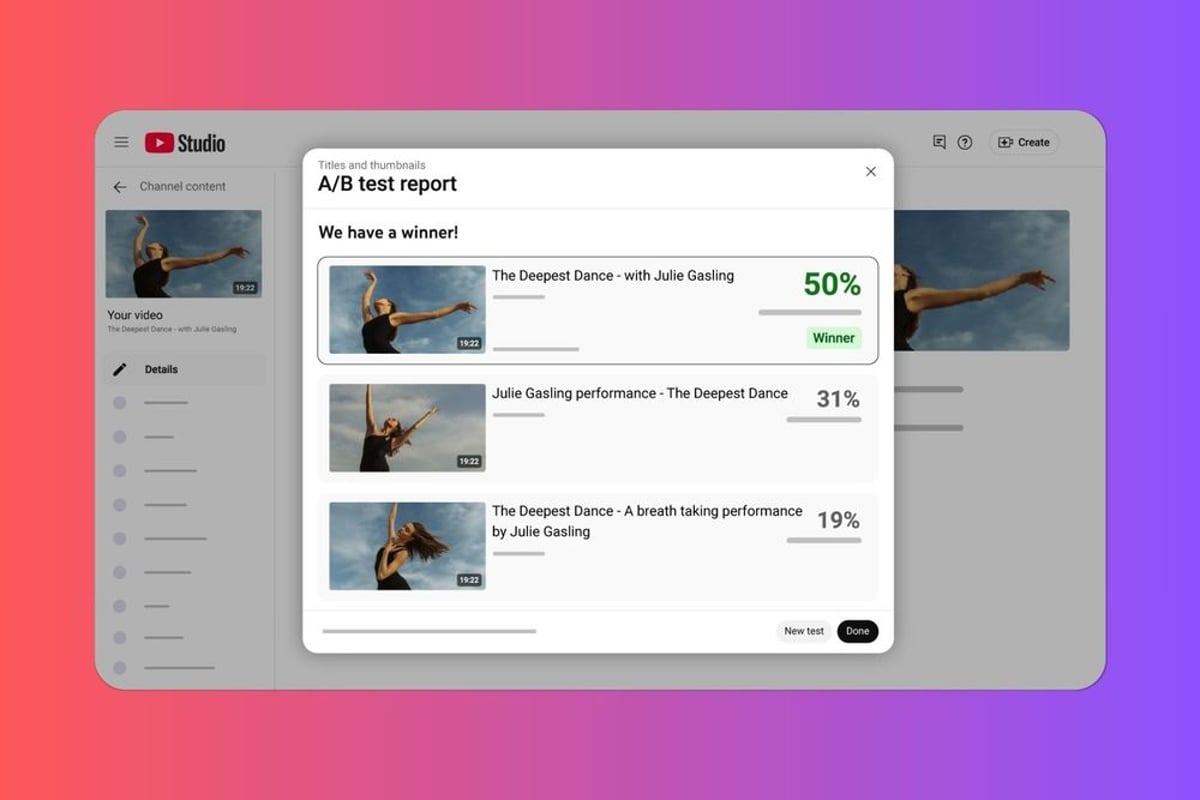
The new feature lets creators upload up to three different titles for any video, with YouTube's algorithm automatically splitting traffic between variants over a maximum two-week testing period. The platform measures success purely by watch time - the metric that matters most for YouTube's recommendation engine. Whichever title drives the longest viewing sessions gets crowned the "winner" and becomes the permanent title.
This builds directly on YouTube's existing thumbnail A/B testing capability that launched earlier this year. Now creators can test title-thumbnail combinations, essentially A/B testing their entire video marketing package. It's a significant upgrade from the old days of posting and hoping.
The feature comes with typical YouTube restrictions. Desktop-only for now, limited to public long-form content, live stream archives, and podcast episodes. Videos marked for mature audiences or "Made for Kids" are excluded, likely due to advertising policy complications around those categories.
But here's what makes this move strategic: YouTube isn't just giving creators better tools - it's collecting massive amounts of data about what titles work. Every test feeds back into YouTube's understanding of viewer behavior, potentially improving its recommendation algorithm. When a creator tests "iPhone 16 Review" against "This iPhone Will Change Everything," YouTube learns which emotional triggers drive engagement in tech content.
The broader creator economy implications are significant. Professional YouTubers have long used third-party analytics tools or manual testing to optimize titles. Now that capability is baked directly into YouTube Studio, leveling the playing field between individual creators and media companies with dedicated growth teams.
For advertisers and brands watching this space, the message is clear: YouTube is doubling down on creator retention through better tooling. Expect more data-driven features as the platform tries to maintain its lead in long-form video content against increasingly sophisticated competition.
Early reports from creators testing the feature suggest title optimization can boost click-through rates by 15-30%, though YouTube hasn't released official performance benchmarks. The real test will be whether this democratization of optimization tools leads to higher overall engagement across the platform or just shifts traffic between creators more efficiently.
YouTube's title testing rollout signals a broader shift toward data-driven content creation. By democratizing A/B testing tools previously available only to major media companies, the platform is betting that better-optimized content will keep both creators and viewers more engaged. For the millions of YouTube creators now getting access to these tools, it represents a significant upgrade in their ability to compete for attention in an increasingly crowded video landscape.