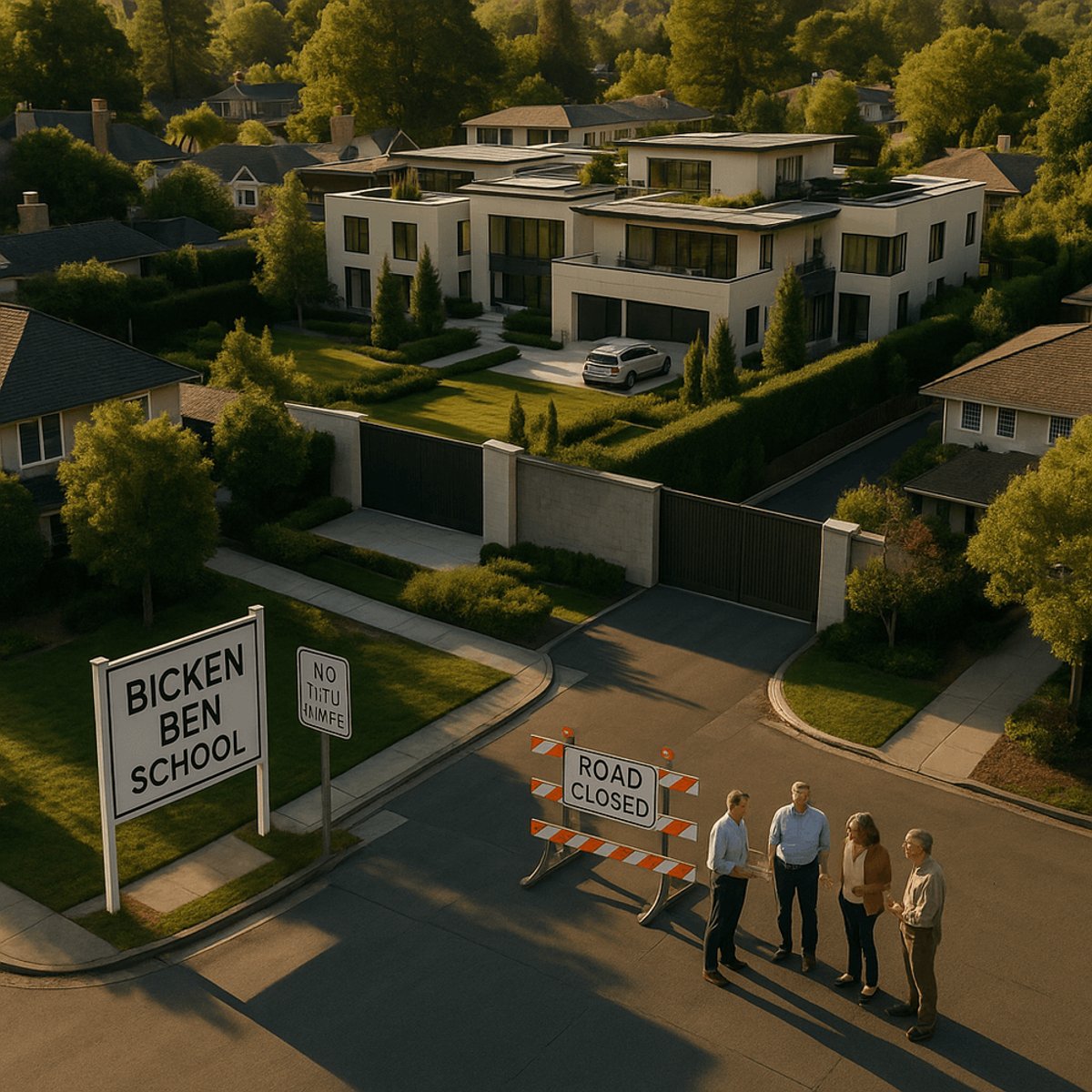
Meta CEO Mark Zuckerberg is facing fresh scrutiny after WIRED obtained over 1,600 documents revealing he operated an illegal school at his Palo Alto compound for years, sparking a neighborhood revolt. The "Bicken Ben School," named after a family chicken, operated without permits while neighbors complained about preferential treatment from city officials.
The tech world's most powerful neighborhood just got a lot more interesting. Mark Zuckerberg has been quietly building an empire in Palo Alto's exclusive Crescent Park area, but his latest venture - an illegal school named after a pet chicken - has his affluent neighbors up in arms.
Caroline Haskins at WIRED just dropped a bombshell investigation backed by 1,665 pages of city documents that paint a picture of Silicon Valley royalty playing by different rules. The "Bicken Ben School" - yes, really named after one of the Zuckerberg family's chickens - operated without proper permits from their sprawling compound that now spans 11 formerly separate properties.
The timeline is particularly damning. While California Department of Education records claim the school opened in October 2022, neighbors spotted operations as early as 2021. The school's director had already updated her LinkedIn profile two and a half years before the official opening date, suggesting this wasn't exactly a spur-of-the-moment educational experiment.
What makes this story fascinating isn't just the regulatory violations - it's the pattern of behavior that's been building for nearly a decade. Since 2016, neighbors have been documenting complaints about Zuckerberg's expanding presence in their quiet residential enclave. Construction noise, intrusive security details, staff traffic, and parking issues have turned what should be a peaceful neighborhood into what feels like a corporate campus.
One particularly telling message from frustrated neighbors to the Zuckerberg family office reads: "Ideally, stop, or at a minimum, give us an extended break from the acquisition, demolition, and construction cycle, to let the neighborhood recover from the last eight years of disruption." That's the kind of plea you'd expect from residents dealing with major infrastructure projects, not a neighbor's house renovations.
The school itself appears to have been created to serve the compound's residents - essentially a private educational facility masquerading as a home-based operation. Under Palo Alto's residential zoning codes, operating such a facility requires specific permits and compliance with various safety and operational standards. The documents suggest these requirements were simply ignored.
What's particularly striking is the alleged preferential treatment from city officials. Multiple neighbors expressed frustration that their complaints weren't being addressed with the urgency or effectiveness they expected. When you're paying millions for a home in one of America's most expensive neighborhoods, the expectation is that zoning laws apply equally to everyone - even tech billionaires.
This isn't Zuckerberg's first brush with neighborhood tensions. His 2013 purchase of four homes surrounding his original property sparked concerns about market manipulation and community disruption. The pattern suggests a systematic approach to creating a private compound that operates more like a corporate facility than a residential property.
The timing couldn't be more interesting for Meta. As the company faces increasing scrutiny over its business practices and regulatory compliance, having its CEO embroiled in local zoning violations creates an uncomfortable parallel. If Meta is asking users to trust it with their data and governments to trust it with platform governance, what message does it send when its leader can't follow basic municipal regulations?
The documents also reveal the broader challenge of tech wealth concentration in Silicon Valley communities. When a single individual can acquire entire neighborhood blocks and operate private institutions without oversight, it raises questions about how local governance adapts to extreme wealth inequality.
For neighboring residents who've watched their quiet street transform into what feels like a tech campus, the school represents a final straw. They're not just dealing with construction noise or parking issues anymore - they're watching their residential neighborhood become a private corporate compound with its own educational institution.
The story highlights a broader trend of tech executives creating elaborate personal compounds that blur the lines between private residences and commercial operations. From Elon Musk's Texas facilities to Larry Ellison's Hawaiian island, Silicon Valley's ultra-wealthy are increasingly creating private kingdoms that operate outside traditional community structures.
The Bicken Ben School saga represents more than just a zoning violation - it's a window into how extreme tech wealth can reshape entire communities. As Silicon Valley's elite create increasingly elaborate private compounds, local governments and residents are grappling with new challenges around accountability and community integration. For Zuckerberg, this episode adds another layer to questions about whether tech leaders believe rules apply to them the same way they apply to everyone else.