Discover the 5 most anticipated crypto token launches for late 2025. From Base's rumored airdrop to privacy L2s and impact tokens. Expert analysis inside.
The token generation event (TGE) landscape looks dramatically different than it did during the ICO boom of 2017. Projects launching tokens today face real regulatory scrutiny, need actual users before launch, and must demonstrate product-market fit. The GENIUS Act and CLARITY Act are creating the first comprehensive US framework for digital assets, and smart projects are designing their launches around these new rules.
December 2025 is shaping up to be one of the most concentrated launch windows in crypto history. We're tracking confirmed launches, credible rumors, and strategic positioning for projects that will define the next market cycle.
Quick Answer: The most anticipated token launches include Base (rumored December 17, 2025), Aztec Network (auction December 2-6, 2025), Zama FHE infrastructure (mid-late December 2025), WYDE cause tokens ($EAT launching December 10, 2025), TheoriqAI, and several RWA protocol tokens currently in development.
⚠️ IMPORTANT DISCLAIMER: This list is for educational purposes only and is NOT financial advice. Token launches involve substantial risk. Many tokens fail completely. Past performance of similar projects does not predict future results. Never participate in token launches with more than you can afford to lose. Always conduct your own research (DYOR) and consult qualified financial advisors before making any decisions.
What's Inside This Guide
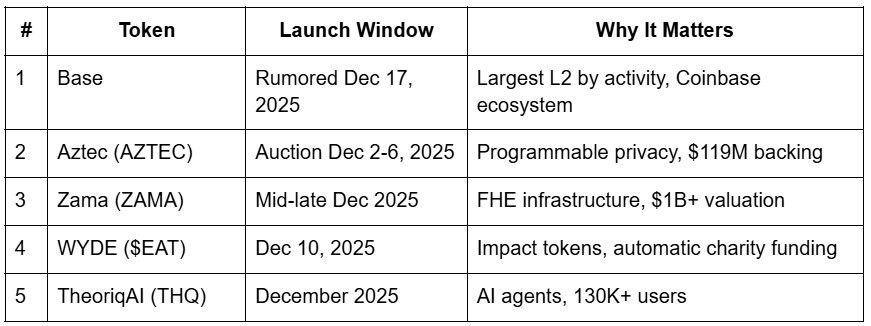
How We Picked These 5 Token Launches
Not every upcoming TGE deserves attention. We filtered hundreds of announced and rumored launches down to these 10 based on five criteria:
-
Confirmation Status: Is this actually happening, or just Twitter speculation? We prioritized confirmed launches and credible signals over pure rumor.
-
Team Track Record: Have these people shipped products before? First-time founders with no history got filtered out.
-
Existing Traction: Does the project have real users today? We weighted heavily toward projects with measurable adoption before their token launches.
-
Regulatory Positioning: How does this token structure fit the emerging SEC and CFTC frameworks? Projects ignoring regulation got deprioritized.
-
Clear Utility: Does the token actually do something beyond speculation? Governance tokens, utility tokens, and fee-sharing mechanisms all counted.
1. Base: Could Coinbase's Layer 2 Finally Launch a Token?
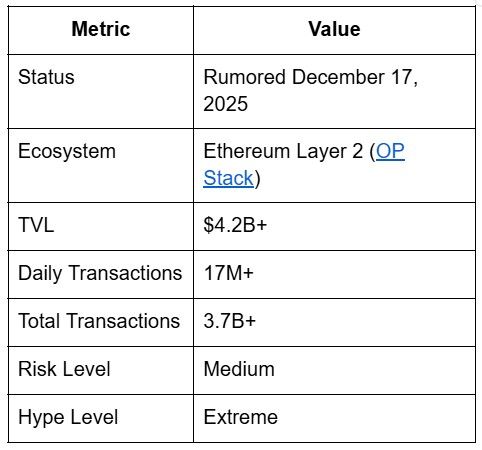
📊 The Numbers That Matter:
Why Everyone Is Watching December 17
Coinbase changed its bio. That's it. That's what triggered a frenzy across crypto Twitter and sent prediction markets into overdrive.
The "System Update" livestream scheduled for December 17, 2025 at 2 PM PT has markets pricing in a potential token announcement. Prediction platforms show strong "YES" positions for a tradeable Base token by December 31.
What Makes Base Different From Other L2 Token Launches
Most Layer 2 tokens launch to bootstrap adoption. Base doesn't need that. The network already processed over 3.7 billion transactions and holds $9.1 billion in TVL. Unlike Arbitrum or Optimism at their token launches, Base has proven demand.
At BaseCamp 2025 in Vermont, Jesse Pollak confirmed the team is actively "exploring" a network token. Brian Armstrong emphasized decentralization as a core priority. The focus is on creating a "shared network economy" for creators, developers, and users.
The Risks You Should Know About
-
No official confirmation: This could still be a marketing event with no token
-
Regulatory sensitivity: Coinbase's public company status means extra caution on token design
-
Airdrop eligibility unclear: Who qualifies and how much remains unknown
Who Should Be Paying Attention
Base ecosystem developers, active Base users, anyone building on or using Coinbase products. If you've been using Base applications, you may already qualify for potential airdrops.
Learn More: Base Documentation | Base Ecosystem
2. Aztec Network (AZTEC): The Privacy Layer Ethereum Has Been Waiting For
📊 The Numbers That Matter:
Why Privacy Infrastructure Is Having a Moment
Here's the problem: everything on Ethereum is public. Your wallet balance, your transaction history, every DeFi position you've ever taken. For individuals, this is uncomfortable. For businesses, it's often impossible.
Aztec Network fixes this with programmable privacy. Developers can build applications where transaction details stay private while remaining verifiable on-chain. You get the security of public blockchain without broadcasting your financial life to the world.
The Auction Mechanics (This Is Different From Most Token Launches)
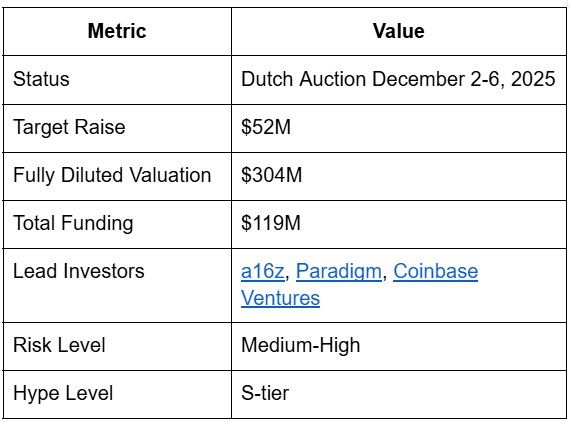
Aztec is using a Dutch auction format running December 2-6, 2025. The price starts high and decreases until all tokens sell. This means:
-
Everyone who buys in the auction pays the same final price
-
Early bidders lock in their allocation at whatever the clearing price ends up being
-
The TGE happens immediately after the auction closes
Target: $52 million raise at $304 million fully diluted valuation. Major DEX listings expected right after.
Key Capabilities Worth Understanding
-
Confidential smart contracts: Transaction logic executes privately
-
Zero-knowledge proofs: Verify without revealing underlying data
-
Cross-chain compatibility: Works with existing Ethereum infrastructure through bridges
The Risks You Should Know About
-
Privacy protocols face regulatory uncertainty: Some jurisdictions treat privacy tools with suspicion
-
Technical complexity limits initial adoption: Developers need to learn new patterns
-
Competition heating up: Zama (see #3) launches the same month
Who Should Be Paying Attention
Privacy-focused developers, RWA protocols needing confidential transactions, AI applications requiring data privacy, anyone building applications where financial privacy matters.
Learn More: Aztec Documentation | Aztec Blog
3. Zama (ZAMA): Encrypted Computing Without Decryption
📊 The Numbers That Matter:
What Makes Fully Homomorphic Encryption Revolutionary
Most privacy solutions have a weakness: at some point during computation, the data gets decrypted. That's when it becomes vulnerable.
Fully Homomorphic Encryption (FHE) eliminates this problem entirely. With Zama's infrastructure, smart contracts can process your data while it stays encrypted the entire time. Nobody ever sees the underlying information, not even the nodes processing the computation.
Think about what this enables: private DeFi where your positions are invisible, confidential AI inference where models process your data without accessing it, encrypted data marketplaces where you sell insights without revealing source data.
The Technical Reality (And Its Limitations)
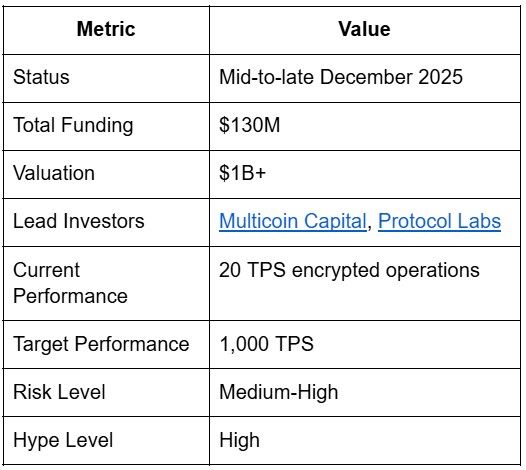
FHE is computationally expensive. That's the trade-off. Zama currently handles 20 transactions per second for encrypted operations, with a roadmap to 1,000 TPS. For comparison, a standard Layer 1 blockchain processes thousands of unencrypted transactions per second.
The good news: Zama completed the largest Web3 security audit to date, and Solana integrations are planned for Q1 2026. The $53K in Galxe rewards for early participants signals confidence in the mainnet timeline.
The Risks You Should Know About
-
FHE is computationally intensive: Real-world performance at scale remains unproven
-
New technology category: Less developer tooling and documentation than established privacy solutions
-
Competition from Aztec: Two major privacy infrastructure launches in the same month
Who Should Be Paying Attention
Privacy infrastructure developers, protocols handling sensitive data, AI projects requiring confidential computation, anyone building applications where even encrypted data processing is too much exposure.
Learn More: Zama Documentation | FHE Explainer
4. WYDE ($EAT): When Every Trade Feeds Someone Hungry
📊 The Numbers That Matter:
A New Category: Impact Tokens That Fund Real Charities
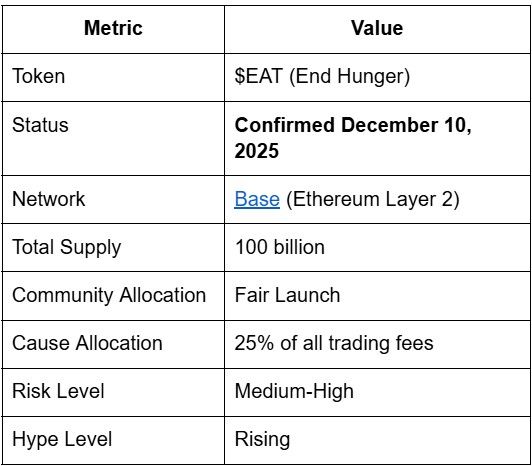
Here's how $EAT works: every time someone trades the token, 25% of the fee goes directly to verified 501(c)(3) hunger relief organizations. No donation buttons. No fundraising campaigns. Just automatic funding from normal trading activity.
The WYDE Impact Exchange is building infrastructure where trading and giving happen simultaneously. The Wyoming DUNA legal structure provides governance frameworks for this kind of token-based charitable funding.
Target Partners (The Organizations That Could Receive Funds)
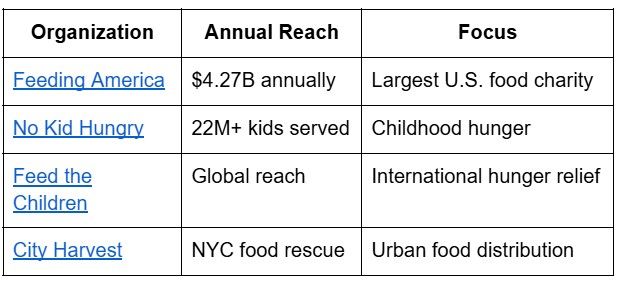
Links: Feeding America, No Kid Hungry, Feed the Children, City Harvest
The Risks You Should Know About
-
Impact depends on trading volume: Low volume means low charitable impact
-
New category without established comparisons: Harder to value against existing tokens
-
Charity execution risk: Partners must effectively deploy funds
Who Should Be Paying Attention
Impact-focused crypto users, anyone interested in combining trading with charitable giving, Base ecosystem participants, people tired of pure speculation wanting purpose-driven assets.
Why These First 4 Tokens Lead Our List
Before we continue, let's acknowledge what makes these four stand out from the rest:
Base represents the infrastructure layer. With $4.2B+ TVL and Coinbase's backing, a token launch would instantly become one of the most significant events in crypto.
Aztec and Zama both tackle privacy, the missing piece that keeps enterprises from going fully on-chain. Two different technical approaches, both launching the same month. This competition will accelerate the entire privacy infrastructure category.
WYDE ($EAT) pioneers a new token category entirely. Instead of pure speculation, every trade creates measurable humanitarian impact. It's the first real test of whether markets can serve missions.
The remaining entries represent important trends: AI agents, DeFi aggregation, social tokens, and real-world assets. Each deserves attention for different reasons.
5. TheoriqAI (THQ): AI Agents That Trade While You Sleep
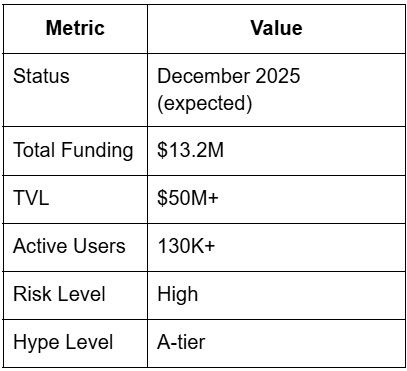
📊 The Numbers That Matter:
Why AI Agents Are Becoming Crypto Native
TheoriqAI builds modular infrastructure for AI agents that autonomously execute DeFi strategies. These agents handle yield optimization, portfolio rebalancing, and cross-protocol arbitrage without human intervention.
The 130,000+ users already automating strategies through the testnet prove the demand. People want to capture DeFi opportunities without monitoring screens 24/7. AI agents make this possible.
Key Capabilities
-
Autonomous DeFi execution: Agents trade, stake, and rebalance without manual input
-
Multi-chain operation: Works across protocols and blockchains
-
Modular architecture: Developers can create custom agents for specific strategies
-
Community farming: Active airdrop farming for early participants
The Risks You Should Know About
-
AI agent sector is crowded: Multiple competitors targeting the same use case
-
Regulatory uncertainty: Autonomous trading agents face unclear legal treatment
-
Technical risks: Bugs in autonomous systems can compound losses quickly
Who Should Be Paying Attention
DeFi power users, developers building AI applications, anyone interested in automated trading strategies who lacks time for manual management.
Learn More: TheoriqAI Documentation
Notable Mentions
Farcaster Ecosystem: Where Social Meets Finance
Status: Multiple tokens active and emerging
The SocialFi Tokens Already Live on Base
The Farcaster ecosystem has become a launchpad for Base-native tokens. SocialFi combines community building with token economics, creating natural distribution without traditional marketing.
CLANKER (Tokenbot)
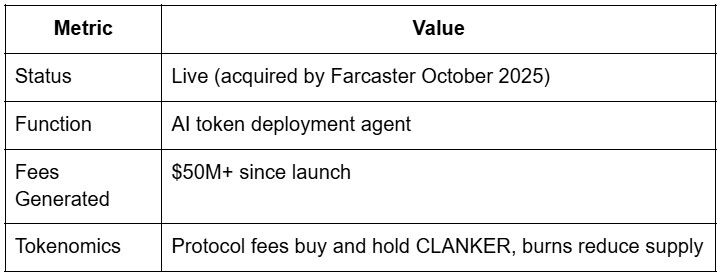
Clanker powers AI-driven token deployments on Farcaster. The protocol generated over $50 million in fees since launch. WYDE's $EAT token will be deployed using Clanker, demonstrating how impact projects can leverage social-first infrastructure.
BNKR (BankrCoin)
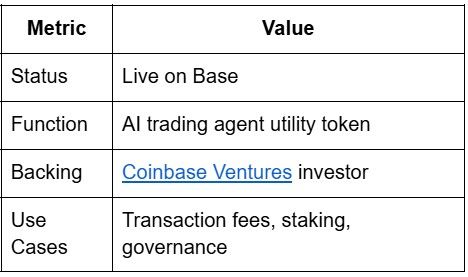
Coinbase Ventures
The Risks You Should Know About
-
Social tokens face significant volatility: Value tied to platform engagement
-
Regulatory treatment remains unclear: SEC hasn't provided guidance on social tokens
-
Platform concentration risk: Dependent on Farcaster's continued growth
Learn More: Farcaster Documentation | Clanker
RWA Protocol Tokens: Bringing Wall Street On-Chain
Status: Various stages of development
The Institutional Infrastructure Layer
Real-world asset (RWA) tokenization protocols are building infrastructure for bringing traditional assets on-chain. The CLARITY Act creates clearer paths for tokenized securities and digital commodities, and protocols with existing traction will likely benefit.
Existing Governance Tokens:
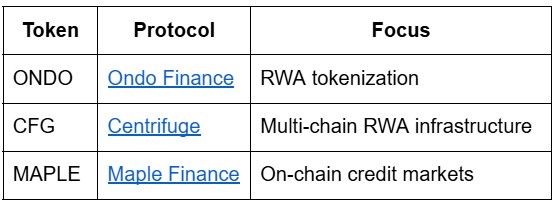
Links: Ondo Finance, Centrifuge, Maple Finance, Securitize
The Risks You Should Know About
-
Rate cycle impacts Treasury-backed products: Rising rates affect tokenized treasury demand
-
Competition increasing: Regulatory clarity attracts new entrants
-
Token utility varies significantly: Not all RWA tokens have clear use cases
Learn More: Ondo Finance | Centrifuge
The Complete December 2025 Launch Calendar
This is the most concentrated launch window in recent crypto history. Mark your calendar:
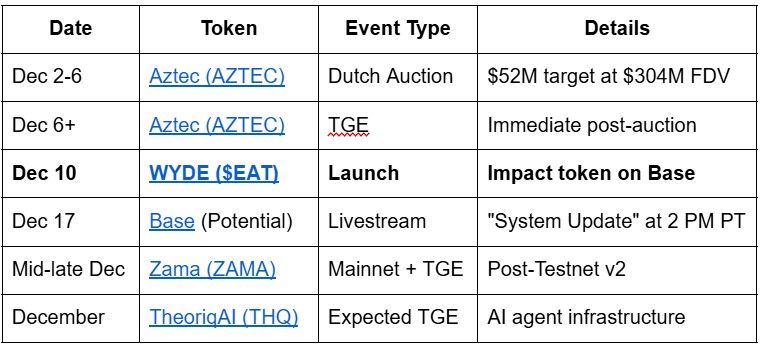
Aztec (AZTEC), Aztec (AZTEC), WYDE ($EAT),
Base (Potential), Zama (ZAMA), TheoriqAI (THQ)
What These Launches Tell Us About Where Crypto Is Heading
The Privacy Infrastructure Wave
Aztec and Zama launching in the same month signals strong institutional demand for on-chain privacy. Both have significant backing and different technical approaches (zero-knowledge proofs vs. fully homomorphic encryption). The market sees room for multiple winners.
TGEs Require Real Products Now
Projects increasingly launch with existing products, users, and revenue rather than just whitepapers.
Infrastructure Over Applications
Many anticipated launches center on infrastructure (Base, Plasma, Aztec, Zama, RWA protocols) rather than application-layer speculation. This suggests market maturation toward sustainable utility.
Regulation Is Now a Feature, Not a Bug
The GENIUS Act and CLARITY Act create frameworks that projects actively design around. Launches increasingly consider jurisdictional restrictions and compliance from the start.
Social Distribution Changes Everything
Farcaster's ecosystem demonstrates how social platforms can enable token distribution without traditional marketing. WYDE's $EAT deployment through Clanker shows how impact projects can leverage these same rails.
AI Becomes Native to Crypto
TheoriqAI and the Farcaster AI agents (CLANKER, BNKR) show AI becoming native to crypto rather than adjacent. Expect more AI-crypto integration tokens throughout 2026.
How to Prepare for These Token Launches
General Preparation Steps
-
Set up a Base-compatible wallet: Many launches happen on Base. MetaMask, Coinbase Wallet, and Rainbow all support Base.
-
Bridge assets to Base: Use the official Base bridge or aggregators to move funds.
-
Follow official channels: Scammers create fake launch announcements. Verify everything through official project websites and Twitter accounts.
-
Understand the tokenomics: Read whitepapers before participating. Know the vesting schedules, allocation breakdowns, and unlock timelines.
-
Size positions appropriately: Never allocate funds you cannot afford to lose entirely. New token launches are high-risk.
Project-Specific Preparation
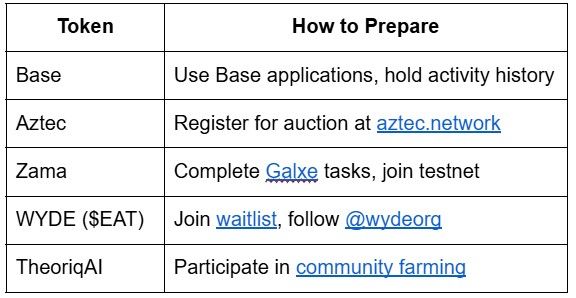
1 Aztec: Register for auction at aztec.network
2 Galxe: Complete Galxe
3 WYDE: Join ($EAT) waitlist, follow @wydeorg
4 TheoriqAI: Participate in community farming
⚠️ FINAL RISK DISCLOSURE: Token launches are high-risk events. Most tokens lose significant value after launch. Timelines change frequently. The tokens listed here represent projects to monitor for their ecosystem significance, not recommendations to participate. Regulatory frameworks continue evolving and may impact any launch. Never allocate funds you cannot afford to lose entirely. Tax implications vary by jurisdiction. Consult qualified financial and legal advisors before making any decisions.
Last Updated: December 2025 | This list is updated as new information becomes available. Verify all details with official project sources before any participation.
Share This Guide: Found this useful? Share it with other crypto users tracking upcoming launches.
Stay Updated: Follow @wydeorg for updates on $EAT and the impact token ecosystem.