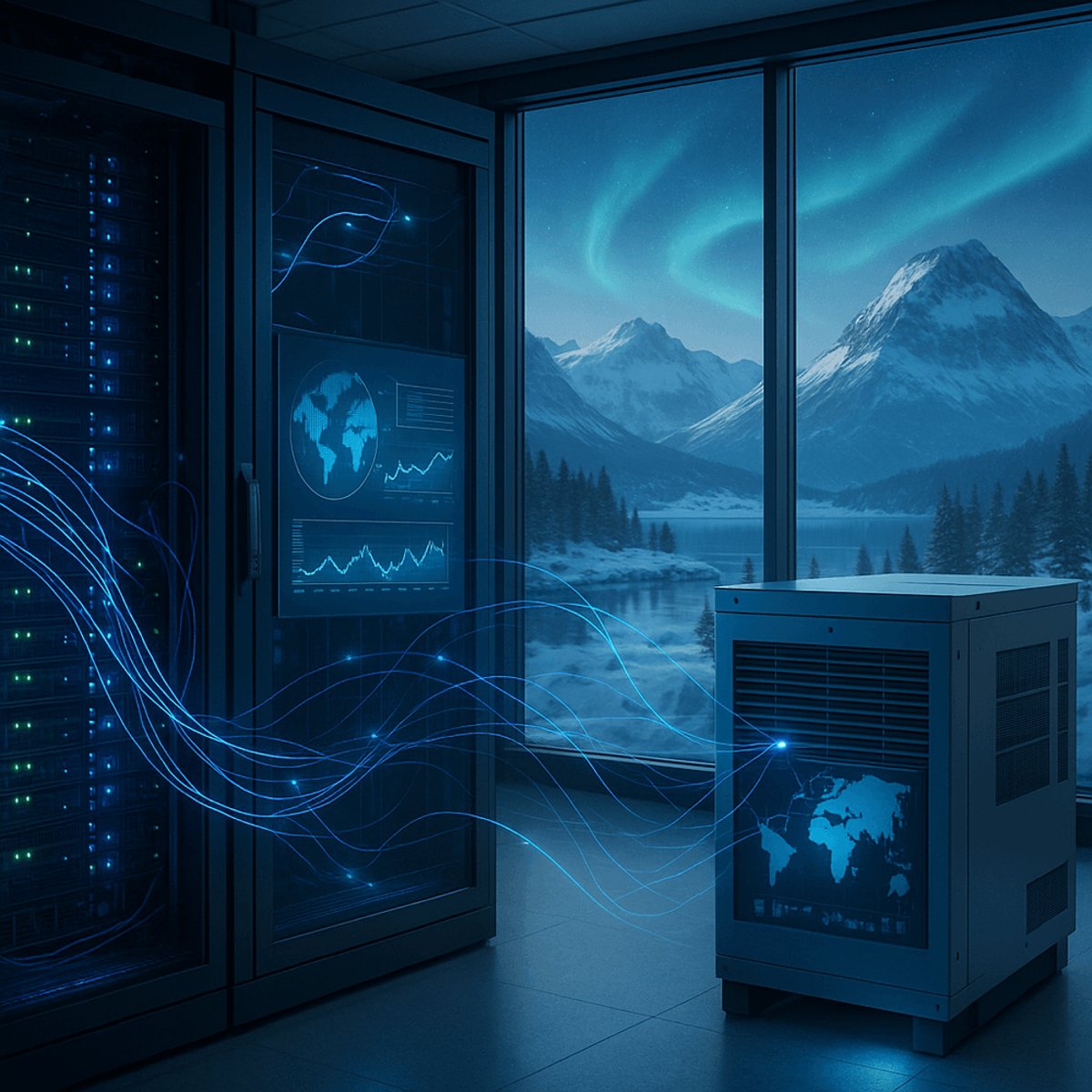
The race for AI supremacy is pushing data center operators into one of Earth's most extreme environments. As AI labs burn through massive amounts of compute power, hyperscalers are establishing a new frontier at the edge of the Arctic Circle, drawn by abundant renewable energy and natural cooling. The migration north represents a dramatic shift in infrastructure strategy as companies like Microsoft, Google, and Meta grapple with AI's insatiable appetite for electricity and the cooling capacity needed to keep chips from melting under workload pressure.
The Arctic Circle isn't where you'd expect to find the beating heart of artificial intelligence, but that's exactly where it's heading. Data center operators are flooding into northern regions of Scandinavia and Iceland as AI labs gorge themselves on compute power that's pushing traditional infrastructure to its breaking point.
The numbers tell the story. Training a single large language model can consume as much electricity as several hundred homes use in a year, and inference - running those models for actual users - burns through even more power at scale. OpenAI, Microsoft, Google, and Meta are all racing to build bigger models, and each new generation demands exponentially more compute. That means more servers, more chips, and critically, more energy and cooling capacity.
The Arctic offers something these companies desperately need: cheap, abundant renewable energy. Iceland sits on massive geothermal reserves that provide nearly endless power at rock-bottom prices. Norway and Sweden have vast hydroelectric resources that can feed hungry data centers without the carbon footprint or the premium price tags attached to power in traditional tech hubs like Virginia or California.
But it's not just about the electricity. The cold northern climate provides natural cooling that dramatically cuts operational costs. When you're running thousands of high-performance GPUs in tight quarters, heat becomes your enemy. Traditional data centers spend almost as much on cooling as they do on compute. In the Arctic, you can literally pipe in frigid air from outside for much of the year, slashing cooling bills by more than half.
Microsoft has been quietly evaluating sites in northern Sweden and Finland for massive AI-focused data centers, according to industry sources familiar with the plans. Google already operates facilities in Finland and has expanded capacity there as its AI ambitions have grown. Meta built one of Europe's largest data centers in northern Sweden specifically because of the energy and cooling advantages.
The migration represents a fundamental shift in how tech companies think about infrastructure. For years, data centers clustered near major population centers to minimize latency - the milliseconds it takes for data to travel between users and servers. But AI training doesn't care about latency. You can train a model anywhere and then deploy it closer to users. That decoupling means companies can chase cheap energy without sacrificing performance.
Local governments are rolling out the welcome mat. These regions see data centers as economic engines that bring high-paying jobs and tax revenue to areas that have struggled since traditional industries declined. Iceland has positioned itself as a "sustainable compute hub," actively courting AI companies with tax incentives and streamlined permitting.
But the expansion isn't without tension. Environmental groups worry that even renewable energy has limits, and that dedicating massive amounts of hydroelectric power to AI could strain local grids or divert resources from other uses. Some communities have pushed back against proposals, concerned about the environmental impact and questioning whether the jobs promised will actually materialize at scale.
The infrastructure challenges are real too. These Arctic locations weren't built for the kind of connectivity modern AI systems demand. Companies are investing heavily in undersea fiber optic cables to link their northern facilities to the rest of their networks. Microsoft and Google have both funded new cable projects connecting Scandinavia to other parts of Europe and North America.
The trend is accelerating as AI compute demands continue to explode. OpenAI's training runs for its next-generation models will require clusters that push the boundaries of what current facilities can handle. The company and its backers are looking at unconventional locations where energy is abundant and cheap - and that increasingly means going north.
What we're watching is a new geography of AI emerging. The countries and regions that can offer reliable, affordable, clean energy at massive scale are becoming the new power brokers in the AI race. It's not just about having the smartest researchers or the most advanced chips anymore. It's about having the juice to run them.
The push to the Arctic Circle isn't just a quirky footnote in tech history - it's a clear signal that energy availability now determines where AI innovation happens. As models get bigger and compute demands grow even more extreme, expect this northern migration to accelerate. The companies that can secure cheap, abundant power in these unconventional locations will have a real advantage in the AI race, while those stuck in traditional, expensive data center markets may find themselves priced out of the competition. The next frontier of artificial intelligence isn't in Silicon Valley or Seattle - it's in the frozen north, where electricity flows cheap and the air is cold enough to keep the future running.