TL;DR:
• Altman admits GPT-5 rollout mistakes but API traffic doubled in 48 hours
• OpenAI planning trillions in data center spending to address GPU shortage
• Company eyeing Google Chrome acquisition and developing brain-computer interface rival to Neuralink
• ChatGPT now reaches 700M+ weekly users, targeting path to become third-largest website
Sam Altman just delivered his most candid assessment yet of OpenAI's GPT-5 launch, admitting the company 'totally screwed up some things on the rollout' while revealing ambitious plans to spend trillions on data centers and potentially acquire Google Chrome. The exclusive interview comes as ChatGPT hits 700 million weekly users despite user backlash over the model switch.
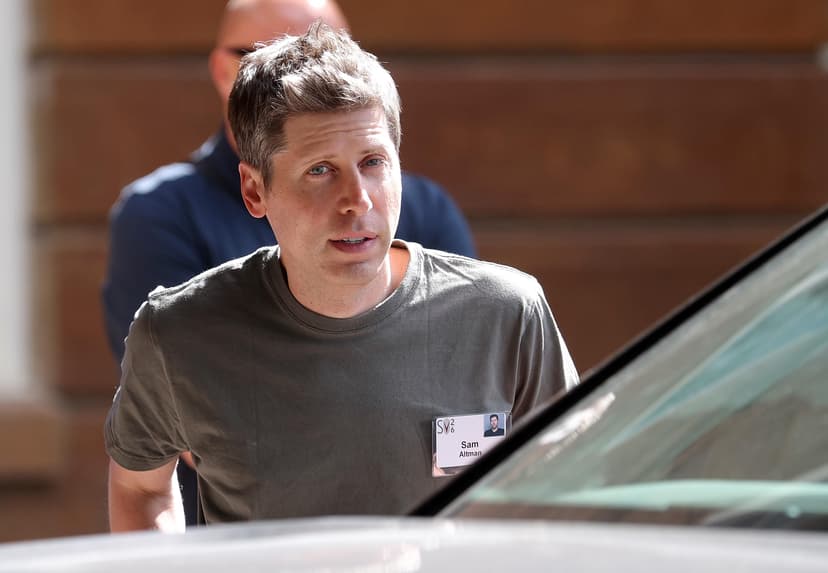
OpenAI CEO Sam Altman just delivered the most unvarnished look yet at the chaos behind GPT-5's launch, admitting his company 'totally screwed up some things' during last week's rollout that sparked user revolt across Reddit and X. Speaking candidly during an exclusive dinner with The Verge's Alex Heath and other reporters in San Francisco, Altman revealed the internal scramble to restore ChatGPT's beloved 4o model after paying subscribers protested its sudden disappearance.
'I think we totally screwed up some things on the rollout,' Altman acknowledged, describing how he personally made the call to quickly bring back 4o as an option for subscribers. The admission comes as OpenAI grapples with managing a product that now reaches over 700 million people weekly – roughly quadrupling its user base in just one year.
Yet beneath the surface chaos, the numbers tell a different story. API traffic doubled within 48 hours of GPT-5's launch, and ChatGPT continues hitting new daily user records despite the backlash. 'We're out of GPUs,' Altman admitted, highlighting the fundamental constraint choking OpenAI's growth ambitions.
This GPU crunch is driving Altman's most audacious promise yet: 'You should expect OpenAI to spend trillions of dollars on data center construction in the not very distant future.' The comment reveals how AI leaders are now thinking in unprecedented scales, with OpenAI essentially betting its future on becoming the world's largest infrastructure company. 'We have better models, and we just can't offer them because we don't have the capacity,' he explained.
The infrastructure bottleneck is forcing brutal strategic choices. Rather than building another 'giant model' that would overwhelm their systems, OpenAI optimized GPT-5 for inference costs – a pragmatic decision that may have contributed to user disappointment over the model's perceived personality changes.
Altman's expansion vision extends far beyond chatbots. He confirmed OpenAI plans to fund a brain-computer interface startup rivaling Elon Musk's Neuralink, telling reporters 'I would like to be able to think something and have ChatGPT respond to it.' The company is also eyeing social media, with Altman expressing interest in building 'a much cooler kind of social experience with AI.'
Perhaps most surprisingly, Altman signaled OpenAI's potential interest in acquiring Google Chrome if antitrust regulators force its sale. 'If Chrome is really going to sell, we should take a look at it,' he said, suggesting the AI company sees browsers as critical infrastructure for its future.
The dinner revealed Altman's complex relationship with his own success. Despite building what he calls 'the fifth biggest website in the world' with clear paths to surpass Instagram and Facebook, he admits being 'not a naturally well-suited person to be a public company CEO.' When pressed about his long-term commitment, Altman offered a telling response: 'Maybe an AI is [CEO] in three years. That's a long time.'
The hiring of former Instagram chief Fidji Simo to run 'applications' signals OpenAI's push beyond ChatGPT. Altman confirmed multiple standalone apps are coming, potentially transforming the company from a single-product phenomenon into a platform play.
Meanwhile, the AI talent wars continue reshaping the industry. GitHub CEO Thomas Dohmke's sudden departure for startup life just days after a high-profile interview reflects the magnetic pull of AI entrepreneurship. Igor Babuschkin, co-founder of Musk's xAI, also announced his exit to launch an AI safety-focused investment firm.
Altman's most sobering assessment came when discussing the current AI investment climate. 'Are we in a phase where investors as a whole are overexcited about AI? My opinion is yes,' he said, while maintaining that 'AI is the most important thing to happen in a very long time.' This nuanced view – acknowledging bubble dynamics while defending AI's transformative potential – reflects the complex reality facing industry leaders.
Altman's candid admissions about GPT-5's rocky launch reveal the challenges of managing a product used by hundreds of millions while racing to build trillion-dollar infrastructure. His ambitious expansion plans – from brain interfaces to Chrome acquisition – suggest OpenAI is positioning itself as more than an AI company, but as the foundational platform for the next computing era. Whether Altman himself will lead that transformation remains an open question, but his willingness to acknowledge mistakes while pushing forward aggressively demonstrates the unique pressures facing today's AI leaders.