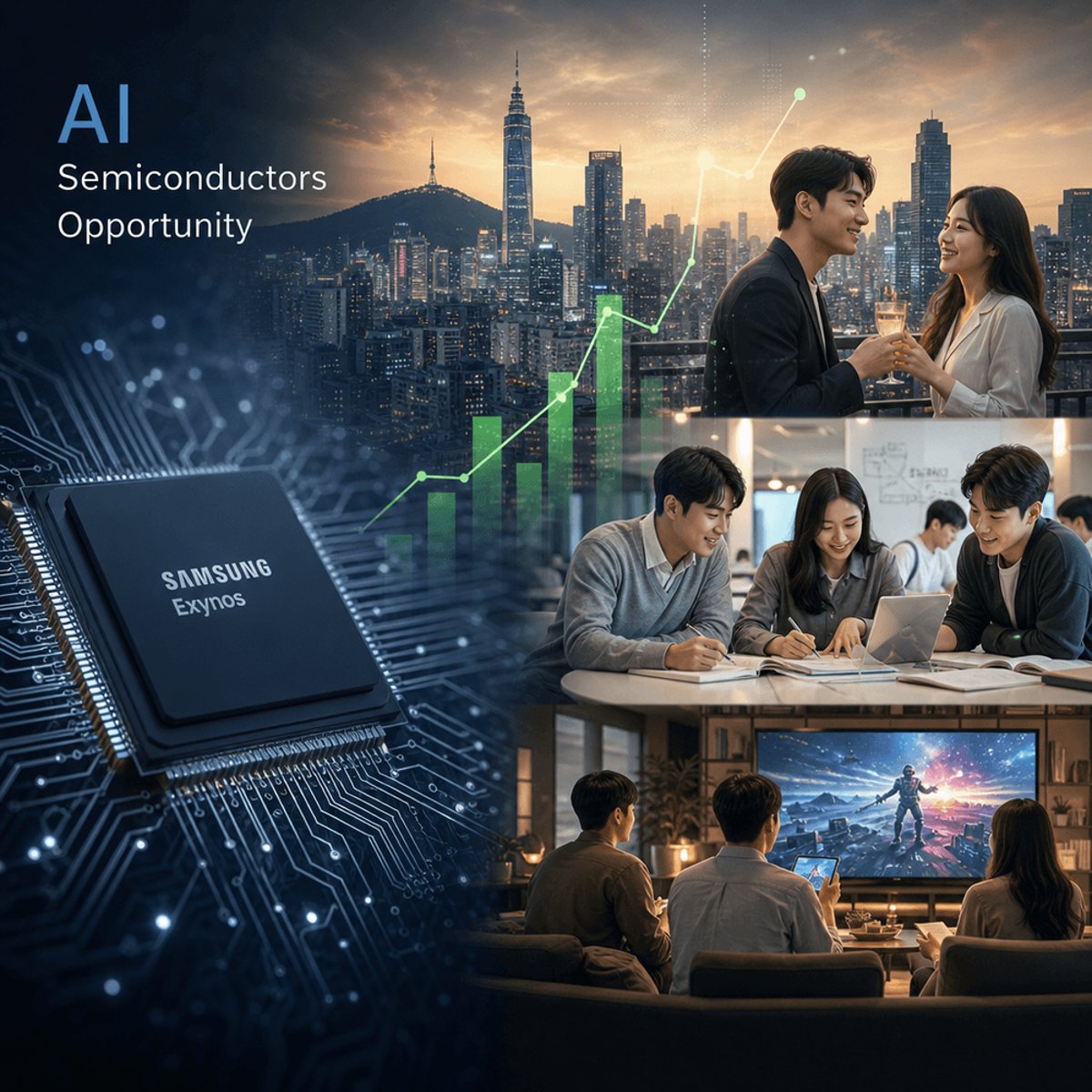
South Korea's blistering AI-driven stock rally, powered largely by Samsung Electronics and its chip rival SK Hynix, has stopped being just a market story. It's rewriting who Koreans date, what they binge on TV, and which majors they chase in college, according to a new CNBC report. The wealth effect from Korea's AI boom is trickling into everyday culture in ways nobody quite predicted.
South Korea's stock market has been on an absolute tear this year, and it's not hard to trace the source. Samsung Electronics, alongside SK Hynix, has ridden the global appetite for AI chips to record valuations, with the KOSPI index posting some of its strongest gains in over a decade. But according to a CNBC report, the ripple effects have moved well past trading floors and into living rooms, dating apps, and college admissions offices across the country.
The shift is most visible in dating culture. Matchmaking platforms in Seoul say semiconductor engineers and AI researchers have jumped to the top of most-wanted profiles, edging out the doctors and lawyers who traditionally dominated those lists. It's the kind of cultural pivot that tends to follow money, and right now the money is flowing straight into chip fabs tied to the AI buildout championed by Nvidia's supply chain partners, of which Samsung and SK Hynix are central players.
[Embedded image: Seoul skyline with stock ticker overlay showing KOSPI gains]
Reality television has caught the wave too. Dating shows that once centered contestants' careers in finance or medicine are increasingly casting engineers from Korea's booming chip sector, producers telling local outlets that viewers respond to the aspirational pull of the AI economy. It mirrors a broader trend The Tech Buzz has tracked in how AI wealth is reshaping consumer behavior, where sudden industry booms create new status symbols almost overnight.
The most consequential shift, though, might be happening in classrooms. High school seniors who once fought for spots in medical school, long considered Korea's most prestigious and stable career path, are now applying in greater numbers to semiconductor engineering and AI-focused programs. University admissions officers cited in the CNBC piece describe the change as one of the fastest shifts in applicant preference they've seen in years, driven almost entirely by the visible success of companies like Samsung and the broader AI chip boom.
That's a big deal for a country where the path to medical school has functioned almost like a national obsession for decades, with families investing heavily in test prep from early childhood. If AI and chip engineering are now displacing that as the aspirational default, it signals just how deeply the AI rally has penetrated Korean society's sense of what success looks like.
[Video iframe: Explainer on South Korea's semiconductor boom and its cultural ripple effects]
Economists watching the trend caution that cultural shifts tied to stock rallies can reverse quickly if the underlying boom cools. The AI chip cycle has been volatile globally, with demand swings tied to everyone from OpenAI's infrastructure buildouts to Nvidia's own supply constraints. Should Samsung or SK Hynix hit a rough earnings patch, the same dating apps and reality shows that elevated engineers could just as quickly move on to the next hot sector.
Still, for now, the momentum feels self-reinforcing. Rising stock prices boost household wealth tied to employee stock plans at Samsung and SK Hynix, which in turn makes those jobs look more attractive, which pushes more students into related majors, which feeds the talent pipeline the AI boom needs to keep going. It's a feedback loop that's uniquely visible in Korea's tightly interconnected economy and culture, where a handful of conglomerates carry outsized influence over both markets and daily life.
What happens next likely depends on whether the AI rally has staying power or turns out to be another cycle. Either way, it's a reminder that when a stock market boom is big enough, it doesn't stay contained to trading apps. It ends up on dating profiles, television screens, and college applications too.
The story here isn't really about stock prices, it's about what happens when a national economy gets this concentrated around one industry's success. South Korea's AI chip rally, anchored by Samsung, has quietly become a cultural force, redefining who's considered a good catch, what shows up in prime-time entertainment, and which degrees ambitious students chase. Whether that reshaping sticks around depends entirely on whether the AI boom itself has the legs to keep going, but for now, it's a vivid example of how deeply intertwined markets and everyday life have become in Korea's tech-driven economy.