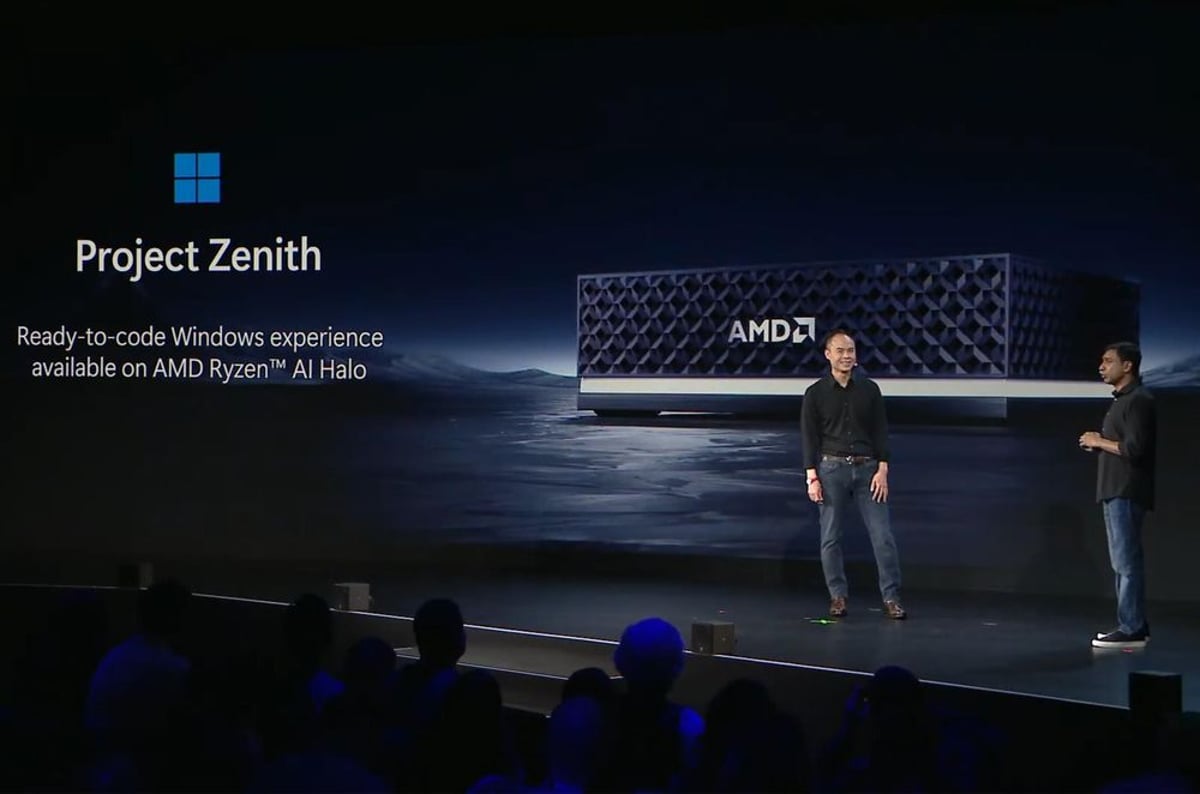
Microsoft just gave a name to the developer-optimized Windows experience it teased at Build earlier this year: Project Zenith. The setup is built for a new class of developer machines packing 64GB or more of unified memory, letting coders run massive AI models locally without hitting usage caps. For developers tired of cloud API bills and rate limits, this could be a big deal.
Microsoft is putting a name on something it's been building toward for months. The company announced Project Zenith on Windows Blog, a developer-optimized version of Windows designed specifically for machines with 64GB or more of unified memory. It's the formal rollout of an effort Microsoft first previewed at Build earlier this year, when it teased a developer-optimized Windows experience built with Linux-style workflows in mind.
The pitch here is simple but significant. "Project Zenith devices come with a preconfigured Windows setup for development and a set of tools curated for what developers reach for first," explains Logan Iyer, CVP of Windows platform and developer at Microsoft, in the announcement. The headline feature: developers can run models with 30 billion or more parameters directly on their machines, with no metering and no cloud dependency. That's a meaningful jump from what most laptops can handle today, and it signals Microsoft wants Windows to be the default OS for the next wave of local AI experimentation, not just an afterthought behind Mac and Linux setups that developers have traditionally favored for this kind of work.
[embedded image: Project Zenith hardware setup]
This isn't happening in a vacuum. Local inference, running AI models on your own hardware instead of pinging a cloud API, has become one of the hottest fronts in the AI developer tooling race. Every API call to a hosted large language model costs money and adds latency, and for developers iterating quickly on prototypes, that adds up fast. By baking support for 30B+ parameter models directly into a preconfigured OS experience, Microsoft is betting that removing that friction will pull more developers into its ecosystem, especially those building on Windows machines equipped with the kind of unified memory architecture that's become common in newer AI-focused silicon.
The timing also lines up with a broader hardware shift. Devices with large amounts of unified memory, the kind Project Zenith requires, have become more common as chipmakers race to support on-device AI workloads. That's put pressure on Microsoft to make sure Windows isn't left behind as developers gravitate toward machines that can actually run serious models without round-tripping to the cloud. It's a similar dynamic to what's played out across the industry as companies chase the next wave of on-device AI capability, where local compute power becomes a competitive differentiator rather than a niche feature.
For Microsoft, this is also about developer mindshare, a battle it's fought for decades against Apple and the open-source Linux community. Getting developers comfortable building and testing AI applications natively on Windows, without needing to dual-boot into Linux or reach for a Mac, keeps them inside the Microsoft ecosystem, from Visual Studio to Azure to GitHub. Iyer's framing that Zenith comes with "tools curated for what developers reach for first" suggests Microsoft has been watching closely what developers actually install and configure when they set up a new machine for AI work, then trying to shortcut that entire process.
What's still unclear is which hardware partners will actually ship Zenith-certified machines and at what price point. Running 30B+ parameter models locally isn't cheap in terms of hardware requirements, and 64GB of unified memory isn't standard on most consumer laptops today. That likely means Project Zenith devices will initially target a premium tier of developer workstations rather than mainstream machines. Still, if Microsoft can get OEM partners on board quickly, it could accelerate a shift toward local-first AI development that's already gaining momentum across the industry, and put real pressure on competitors who've assumed cloud-dependent workflows would remain the default for years to come.
Project Zenith is Microsoft's clearest signal yet that it wants Windows to be a first-class platform for local AI development, not just a place where developers tolerate cloud dependency out of necessity. If it can get hardware partners moving fast and keep the tooling as frictionless as Iyer promises, it could pull a meaningful chunk of AI developers away from Mac and Linux setups they've defaulted to for years. The real test comes when actual Zenith-certified devices hit shelves and developers get to see whether running 30B+ parameter models locally feels as seamless as Microsoft says it will.