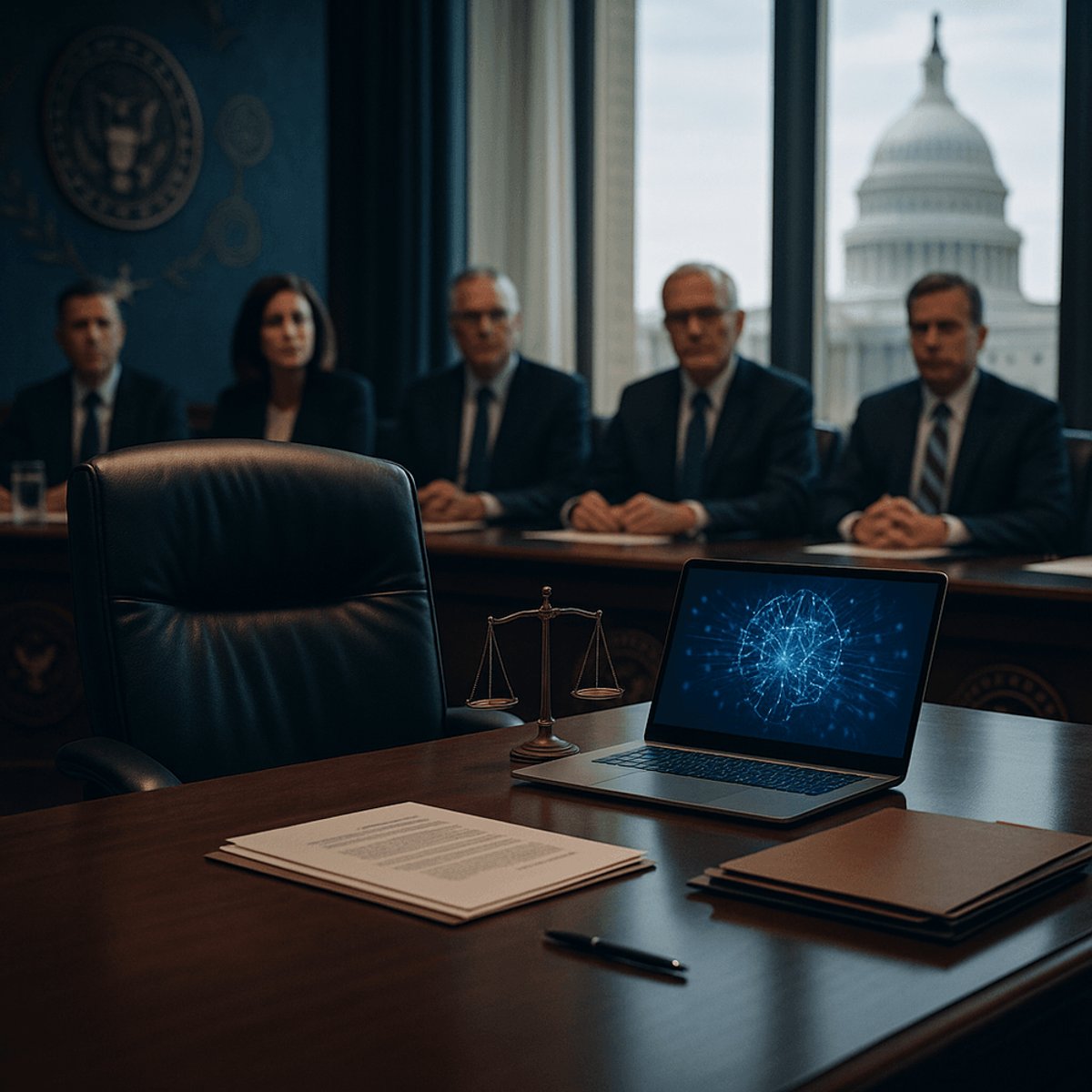
OpenAI CEO Sam Altman walked into a closed-door Capitol Hill meeting Thursday facing what sources describe as 'serious questions' about the company's deepening ties with the Defense Department. The session marks a critical moment for AI policy as lawmakers wrestle with how cutting-edge language models should be deployed in national security contexts, and whether the company that promised to build safe AGI for humanity can square that mission with military applications.
OpenAI CEO Sam Altman spent Thursday afternoon in Washington facing the kind of scrutiny that comes when Silicon Valley's idealism collides with Pentagon reality. In a meeting with a select group of lawmakers, Altman fielded what sources characterized as 'serious questions' about the company's work with the Defense Department - a partnership that's become increasingly controversial as OpenAI's technology grows more powerful.
The closed-door session represents a turning point in how Congress views AI companies' military entanglements. While the specific lawmakers present haven't been publicly disclosed, the meeting's tenor suggests mounting concern on Capitol Hill about transparency and oversight as OpenAI and its competitors race to embed their models in national security infrastructure.
This scrutiny didn't come out of nowhere. OpenAI quietly revised its usage policies in January 2024, removing language that explicitly prohibited military applications. That policy shift unlocked the door to Defense Department contracts, but it also created tension with the company's founding mission to ensure artificial general intelligence benefits all of humanity. Critics argue that building AI weapons systems - even if framed as defensive or analytical tools - represents a dangerous mission creep for a company that once positioned itself as a safety-first alternative to reckless AI development.
The Defense Department has been aggressively courting AI partnerships as it works to maintain technological superiority over China and Russia. From intelligence analysis to logistics optimization, military planners see large language models and multimodal AI as force multipliers. But that enthusiasm hasn't been matched with clear public guidelines about what these partnerships actually entail - a opacity that's clearly frustrating lawmakers.
Altman's appearance comes just weeks after OpenAI faced internal upheaval over safety concerns, with former employees publicly questioning whether the company has adequate safeguards as it pushes toward more advanced AI systems. Those worries take on new dimensions when the technology is being deployed in military contexts where the stakes involve life-and-death decisions.
The meeting also reflects broader anxiety about AI governance at a moment when the technology is advancing faster than regulatory frameworks can keep pace. Congress has struggled to pass comprehensive AI legislation, instead relying on agency-level guidance and voluntary commitments from companies. But voluntary commitments ring hollow when billion-dollar defense contracts are on the table.
What lawmakers apparently want to know is straightforward but thorny: What exactly is OpenAI building for the military? Who has oversight? What happens if the technology is misused? And can a company that's racing to build superintelligent AI simultaneously ensure it's not creating autonomous weapons that could spiral out of human control?
Those questions don't have easy answers. OpenAI has maintained that its defense work focuses on cybersecurity and non-offensive applications, but the company hasn't released detailed public disclosures about specific projects or contractual obligations. That lack of transparency is exactly what's driving congressional concern.
The timing is particularly sensitive as OpenAI navigates its complex corporate structure - a capped-profit entity controlled by a nonprofit board - while pursuing what could become one of the largest funding rounds in tech history. Defense contracts add revenue, but they also add reputational risk with employees, users, and international partners who may view military AI development as crossing ethical red lines.
For Altman, Thursday's meeting was likely a preview of scrutiny to come. As AI capabilities expand and military applications multiply, expect more lawmakers to demand answers about who's building what for whom - and whether the guardrails are strong enough to prevent catastrophic misuse.
Altman's Capitol Hill grilling signals a new chapter in AI regulation - one where the cozy relationship between tech giants and the Defense Department will face real scrutiny. As OpenAI pushes deeper into military applications while simultaneously claiming to prioritize safety, lawmakers are clearly skeptical about whether those two goals can coexist. The company's next moves will set precedents not just for its own future, but for how the entire AI industry navigates the fraught intersection of innovation, national security, and ethics. With congressional patience wearing thin and public concern mounting, OpenAI can't afford to keep its defense work behind closed doors much longer.