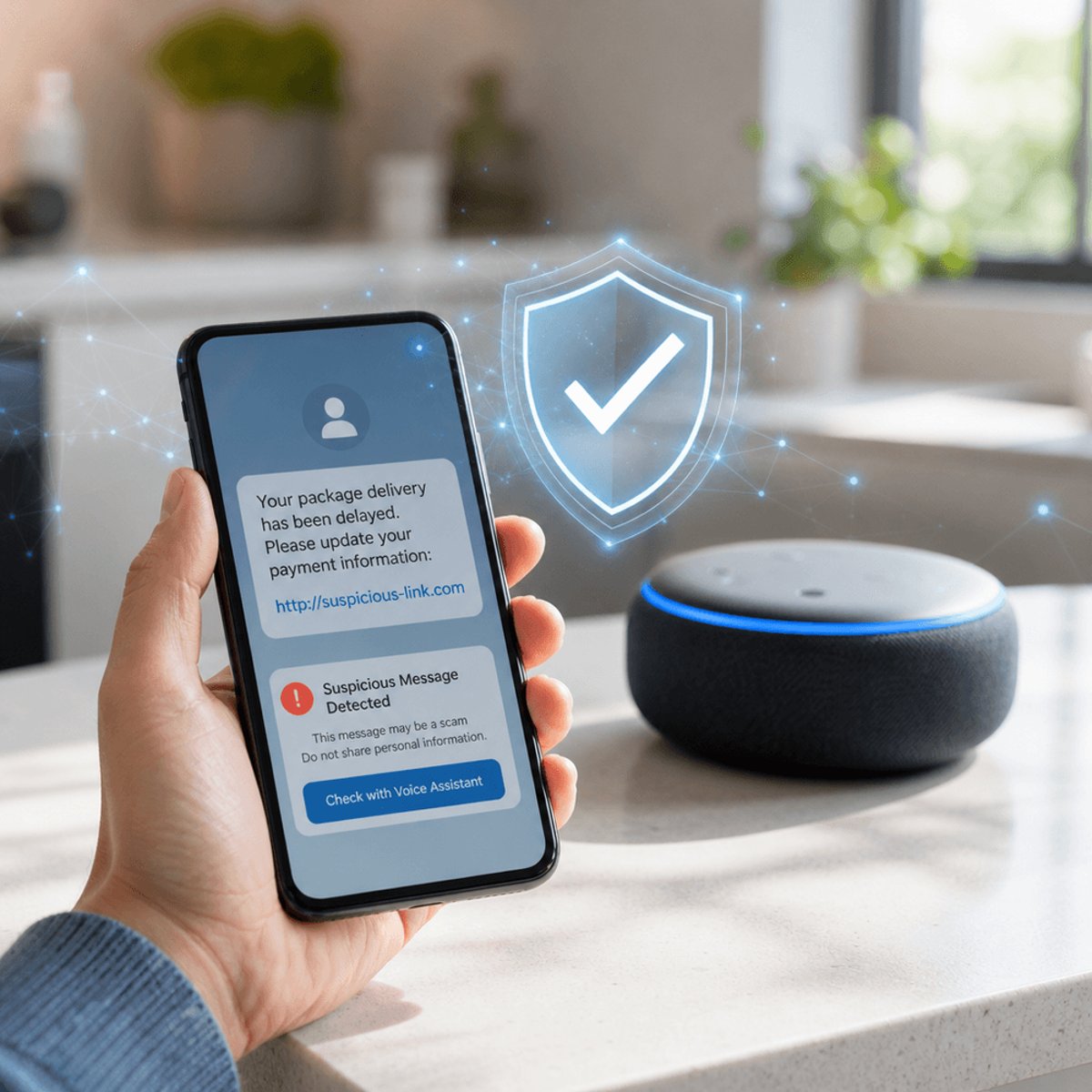
Amazon is giving shoppers a new weapon against scammers: just ask Alexa. The company announced its first-of-its-kind Alexa for Shopping feature that lets customers verify whether a text, email, or call claiming to be from Amazon is legitimate, a move that comes as phishing scams impersonating the retail giant continue to surge across the U.S.
Amazon just handed its customers a simple new defense against one of the oldest tricks in the scammer playbook: fake messages pretending to be from the company itself. The retail giant announced this week that its voice assistant now includes a dedicated Alexa for Shopping feature that lets users ask, in plain language, whether a text, email, or call claiming to be from Amazon is actually legitimate, according to Amazon News. Amazon calls it a first-of-its-kind capability, and the framing matters. Impersonation scams, where fraudsters pose as trusted brands to trick people into handing over payment details or account credentials, have become one of the most common forms of consumer fraud in the U.S., and Amazon is a favorite disguise precisely because so many people already expect delivery notifications, order confirmations, and account alerts from the company. That familiarity is exactly what scammers exploit, and it's exactly what Amazon is now trying to neutralize by turning Alexa into a built-in fact-checker. Instead of clicking a link or calling back a number embedded in a suspicious message, customers can simply ask Alexa whether Amazon actually sent it. The assistant checks the request against the company's own records of official communications and gives a real-time answer, cutting out the guesswork that scammers rely on. It's a small interaction, but it shortcuts a decision-making process that normally takes people to Google searches, customer service hotlines, or worse, straight into a scammer's trap. Amazon didn't publish specific fraud-loss figures tied to this launch, but the timing lines up with a broader pattern the company has been fighting for years. Amazon has previously rolled out tools letting customers report suspicious messages directly through its app, and it has pushed law enforcement partnerships to take down fraudulent call centers impersonating its brand. This latest move folds that fight directly into Alexa, the company's most ubiquitous consumer product, rather than treating scam verification as a separate app feature buried in settings. That distribution advantage is significant. Alexa is embedded in hundreds of millions of devices, from Echo speakers to third-party smart home gadgets, giving Amazon a scale advantage that smaller anti-fraud tools simply don't have. It also puts pressure on competitors. Google and Apple have both leaned into AI-powered spam and scam detection within Messages and Mail, but neither has framed a feature quite this specifically around brand impersonation verification through a voice assistant. If Amazon's approach gains traction, it wouldn't be surprising to see Google Assistant or Siri add comparable brand-verification prompts, especially as generative AI makes phishing messages harder to visually distinguish from the real thing. That's really the subtext here: scams are getting more convincing, not less, as fraudsters use AI tools to mimic corporate tone, formatting, and even customer service scripts. Amazon leaning on its own AI assistant to fight back is as much a defensive product move as it is a security one. For everyday users, the practical upside is straightforward. Anyone unsure about a delivery text or a "your account has been suspended" email supposedly from Amazon can now get a fast, direct answer without digging through help center articles or risking a call to a fake support line. Amazon frames this as protecting consumers, but it's also protecting its own brand trust, since every successful scam using the Amazon name chips away at customer confidence in real Amazon communications. What's still unclear is how the feature performs at scale, how quickly Amazon updates its verification database as new scam campaigns emerge, and whether it extends beyond U.S. markets where impersonation fraud is especially rampant. Amazon hasn't detailed an international rollout timeline. For now, the company is betting that arming Alexa with this verification layer will make it just a little harder for scammers to hide behind its name, and a little easier for customers to trust what lands in their inbox.
Amazon's Alexa for Shopping verification tool is a modest-sounding feature with an outsized purpose: rebuilding trust in a brand that scammers have weaponized for years. By turning its voice assistant into an on-demand fact-checker, Amazon is betting that convenience beats caution fatigue, giving customers a faster path to the truth than a Google search or a risky callback. Whether competitors follow with their own built-in brand-verification tools may depend on how well this one actually cuts down fraud in practice, but the direction is clear: as AI makes scams more convincing, companies are going to lean on AI right back to stop them.