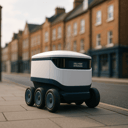
Amazon just inked a major deal with Also, the Rivian spinoff, to buy thousands of pedal-assist cargo quads that can haul 400+ pounds while fitting in bike lanes. The multi-year partnership represents Amazon's latest push into sustainable last-mile delivery, building on its existing fleet of over 25,000 Rivian electric vans.
Amazon is doubling down on its micromobility strategy with a game-changing partnership that could reshape urban delivery. The e-commerce giant announced a multi-year deal with Also, the Rivian spinoff, to purchase thousands of pedal-assist cargo quad vehicles that bridge the gap between traditional delivery trucks and nimble e-bikes.
The TM-Q vehicles launching in 2026 pack serious capability into a bike-lane-friendly form factor. These four-wheeled electric quads can carry over 400 pounds of packages while remaining narrow enough to navigate crowded urban streets and dedicated bike infrastructure. For Amazon's last-mile delivery challenge in dense cities, it's a potential breakthrough.
"We really understand how to work with each other," Rivian founder and CEO RJ Scaringe told TechCrunch, referencing the companies' existing relationship. Amazon has already deployed more than 25,000 Rivian electric delivery vans, creating a foundation of trust and operational knowledge.
The timing couldn't be better for Also, which spun out of Rivian earlier this year with $105 million in funding from Eclipse Ventures. The startup emerged from Rivian's internal skunkworks project with deep industry connections and technical expertise from the EV maker's delivery van program.
"There's no guesswork and Also has benefited from a lot of input from the Rivian team, which has been involved, because they're so close to Amazon," Scaringe explained. That relationship translates into vehicles custom-built for Amazon's specific delivery requirements across European and US markets.
The TM-Q vehicles share core technology with Also's consumer TM-B e-bike, including a proprietary pedal-by-wire drivetrain system and removable battery packs. The company is developing battery swap stations to enable continuous operation without lengthy charging downtime. A five-inch circular touchscreen handles navigation, fleet management, and vehicle security through the Also app.
Amazon's Emily Barber, Director of Global Fleet, highlighted the strategic fit: the TM-Q's compact size and pedal-assist capabilities make it ideal for dense urban areas where traditional delivery trucks struggle with traffic, parking, and emissions restrictions. Amazon already operates over 70 micromobility hubs across US and European cities, creating ready infrastructure for rapid TM-Q deployment.
But Amazon won't have exclusive access. Also President Chris Yu confirmed the company will sell consumer versions of the TM-Q platform, swapping the delivery cargo box for passenger seating that can accommodate friends, kids, pets, or grocery runs. The modular design philosophy opens doors to multiple configurations.
"It's less about what's on top here and it's more about the underlying quad platform," Yu said. Scaringe noted the cost advantage: "What I love about these, to do a new top hat on a car it's like a billion dollars; to do new top hat here, it's a lot less."
The partnership signals Amazon's broader shift toward sustainable delivery solutions as urban regulations tighten around commercial vehicle emissions. Cities from London to New York are implementing low-emission zones that favor electric and pedal-assist vehicles over traditional diesel trucks.
For the micromobility sector, Amazon's backing provides crucial validation and scale. Also joins a competitive landscape that includes companies like Rad Power Bikes and Urban Arrow, but with the advantage of Rivian's automotive engineering expertise and Amazon's operational requirements driving product development.
Amazon's partnership with Also represents more than just another fleet procurement deal - it's a strategic bet on the future of urban logistics. As cities worldwide implement stricter emissions regulations and delivery demands continue surging, pedal-assist cargo vehicles could become essential infrastructure for e-commerce giants. The 2026 launch timeline gives Amazon a significant head start in deploying this technology at scale, potentially reshaping how millions of packages reach customers in dense urban markets.