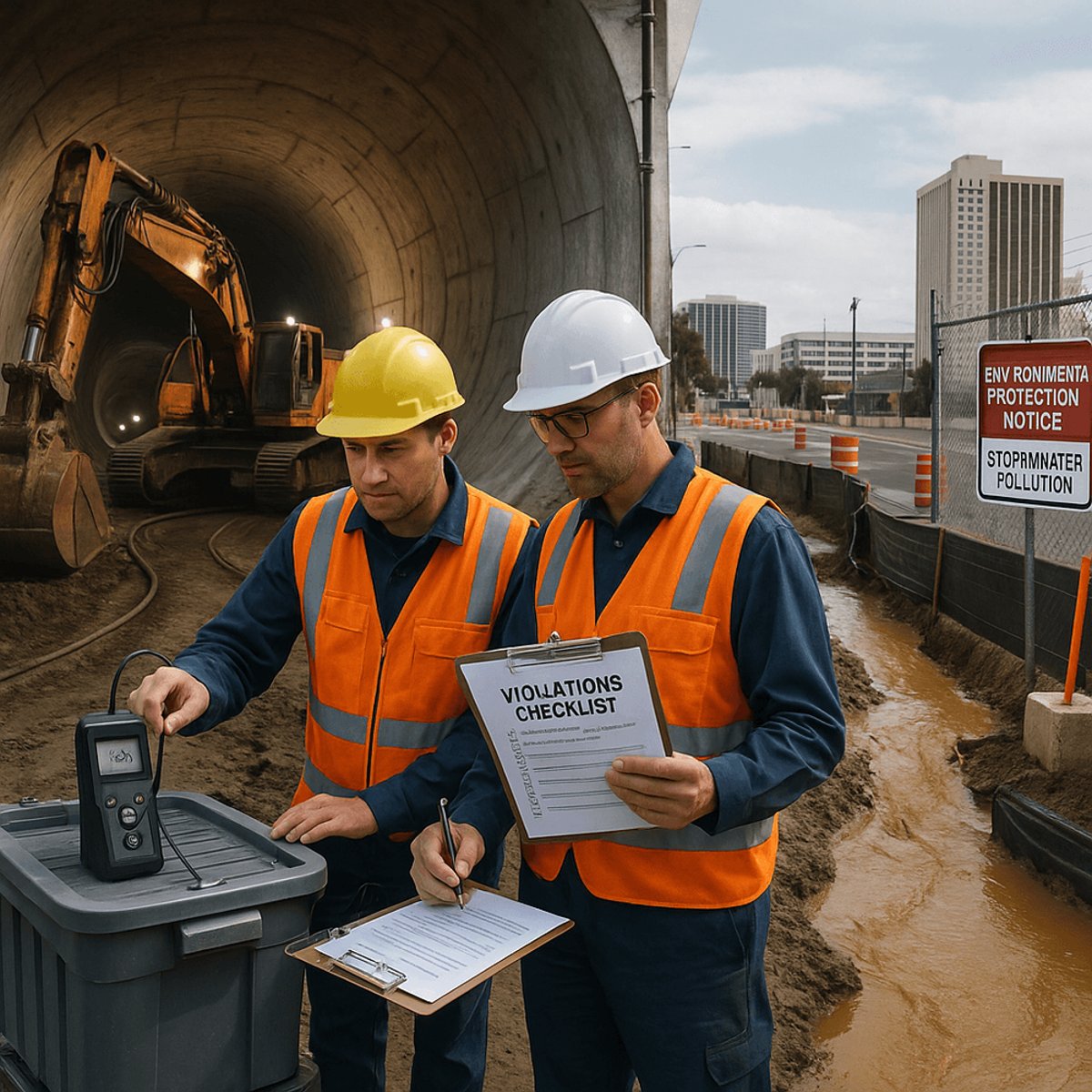
Elon Musk's tunneling venture just got caught in a regulatory avalanche. Nevada environmental officials are alleging The Boring Company racked up nearly 800 violations while expanding its Las Vegas underground network - with about 100 of those happening after the company promised to clean up its act in a 2022 compliance agreement.
The numbers are staggering, and they paint a picture of a company that couldn't seem to follow its own promises. The Boring Company now faces allegations of nearly 800 environmental violations in Nevada, with the most damning detail being that roughly 100 of these occurred after the company had already inked a compliance deal with state regulators in 2022.
According to ProPublica's investigation, the violations read like a construction nightmare checklist: digging without proper approval, dumping untreated water directly onto Las Vegas city streets, failing to install basic silt fences, and tracking construction dirt onto nearby roadways. These aren't minor paperwork oversights - they're the kind of environmental missteps that can contaminate local water supplies and create public health hazards.
What makes this particularly striking is the timing. The company had already been on Nevada's radar and had signed that 2022 agreement specifically designed to force compliance with state environmental laws. Yet nearly 100 violations happened after that deal was signed, suggesting either a fundamental breakdown in project oversight or a calculated decision to proceed regardless of regulatory requirements.
The financial penalty tells its own story about how regulators handle tech industry violations. The Boring Company could have faced fines exceeding $3 million if each violation had been treated separately. Instead, Nevada's Division of Environmental Protection decided to group violations together, bringing the total fine down to $242,800 - less than what some tech executives spend on a single real estate transaction.
"The reduced total offers a reasonable penalty that will still serve to deter future non-compliance conduct," the Nevada Division of Environmental Protection stated, though critics might question whether a $242,800 fine actually deters a company backed by one of the world's richest individuals.
This regulatory drama unfolds against the backdrop of The Boring Company's ambitious Vegas expansion plans. The current tunnel system spans just a few miles, but the company envisions growing it to 68 miles connecting 104 stations throughout the Las Vegas area. That's a massive infrastructure undertaking that would make it one of the most extensive private tunnel networks in the United States.
But the environmental violations aren't the only safety concerns plaguing the project. Just last month, operations on a tunnel connecting to Las Vegas airport had to be suspended after a worker sustained what officials described as a "crushing injury" when they became pinned between two 4,000-foot pipes. The incident highlights broader questions about The Boring Company's safety protocols across its various projects.
The Las Vegas tunnel project represents a crucial test case for Musk's vision of revolutionizing urban transportation through underground networks. Unlike his other ventures like SpaceX or Tesla, which operate in relatively controlled environments, tunnel boring involves complex interactions with existing city infrastructure, groundwater systems, and dense urban environments where mistakes can have immediate public consequences.
Industry observers note that traditional construction companies face similar regulatory challenges, but they typically have decades of experience navigating environmental compliance. The Boring Company's troubles suggest the learning curve for tech companies entering heavily regulated industries like infrastructure development is steeper than many anticipated.
The Nevada violations also raise questions about oversight at other Boring Company projects. The company has proposed similar tunnel networks in cities like Chicago, Los Angeles, and Miami. If Nevada's experience is indicative of broader operational patterns, other municipalities might want to scrutinize their own environmental monitoring more closely.
For Musk personally, this adds another regulatory headache to a growing list that includes ongoing battles with the SEC over Tesla communications and various disputes with federal agencies over SpaceX operations. The pattern suggests that despite his companies' technological innovations, traditional regulatory compliance remains a persistent challenge across his business empire.
The nearly 800 environmental violations paint a troubling picture of a company that struggled to balance rapid expansion with regulatory compliance, even after explicitly promising to do better. With Vegas serving as a testing ground for Musk's tunnel vision, these enforcement actions will likely influence how other cities approach similar proposals. The real test isn't whether The Boring Company can dig tunnels - it's whether it can do so without leaving a trail of environmental violations in its wake.