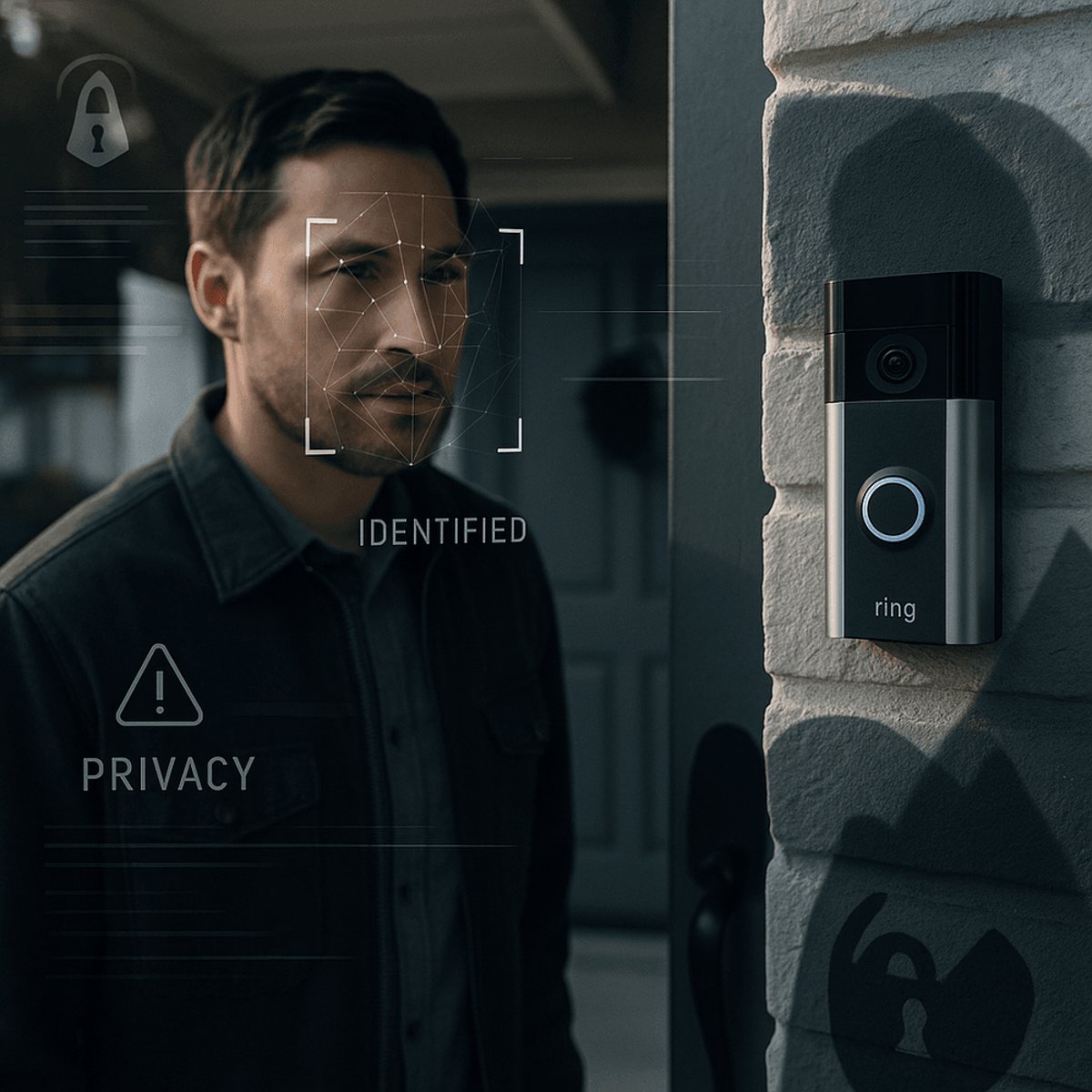
Amazon just rolled out its most controversial feature yet - AI-powered facial recognition for Ring doorbells. The "Familiar Faces" technology can identify up to 50 people approaching your door, replacing generic "person detected" alerts with personalized notifications like "Mom at Front Door." But the launch comes amid fierce backlash from privacy advocates and a U.S. senator demanding Amazon abandon the feature entirely.
Amazon's Ring division just crossed a line that privacy advocates have been dreading. The company's new "Familiar Faces" feature transforms every Ring doorbell into an AI-powered facial recognition system, capable of identifying regular visitors and replacing anonymous alerts with personalized notifications.
The technology works by creating a digital catalog of up to 50 faces - family members, friends, delivery drivers, or anyone else who regularly approaches your door. Once you label someone in the Ring app, the system recognizes them automatically and sends customized alerts like "Mom at Front Door" instead of generic person detection warnings.
Amazon frames this as convenience, allowing users to filter out unwanted notifications from their own comings and goings. The feature requires manual activation in app settings and promises encrypted face data that's automatically deleted after 30 days if left unlabeled. But the launch has already sparked a political firestorm.
Senator Ed Markey (D-Mass.) is demanding Amazon abandon the feature entirely, calling it a dangerous expansion of surveillance technology. Privacy laws in Illinois, Texas, and Portland, Oregon have already blocked the rollout, while the Electronic Frontier Foundation warns about Amazon's troubling track record with user data.
That history includes some damning precedents. Ring paid a $5.8 million FTC fine in 2023 after regulators found employees and contractors had "broad and unrestricted access" to customer videos for years. The company's Neighbors app exposed users' home addresses and precise locations, while Ring passwords have been floating around dark web markets for years.
More troubling is Amazon's expanding surveillance ecosystem. The company recently partnered with Flock Safety, whose AI-powered cameras are used by police, federal law enforcement, and ICE. Amazon has a documented history of forging partnerships with law enforcement and once gave police departments direct access to Ring footage through the Neighbors app.
When pressed by the EFF about data handling, Amazon claimed the biometric information is processed in the cloud but won't be used to train AI models. The company also insisted it couldn't technically identify all locations where a person had been detected, even if law enforcement requested such data.
But that claim seems questionable given Ring's existing "Search Party" feature, which already scans across neighborhood camera networks to locate lost pets. If the system can track a missing dog across multiple Ring devices, the technical infrastructure for human surveillance appears readily available.
The feature rollout reveals Amazon's aggressive push into AI-powered surveillance, even as regulatory pressure mounts. The company is essentially turning millions of doorbell cameras into a distributed facial recognition network, with homeowners as unwitting operators.
For Ring owners, the privacy calculus is stark. While the feature promises convenience through personalized alerts, it also creates a detailed facial recognition database processed in Amazon's cloud infrastructure. Given the company's security track record and law enforcement partnerships, many privacy experts recommend keeping the feature disabled entirely.
Amazon's facial recognition rollout represents a watershed moment in consumer surveillance technology. While the company promises privacy protections, its track record suggests caution. With senators demanding the feature's removal and privacy laws blocking deployment in multiple states, this launch may mark the beginning of a broader regulatory reckoning with AI-powered home surveillance. Ring owners now face a choice between convenience and privacy - and given Amazon's history, the safer bet might be keeping those familiar faces unfamiliar to the algorithm.