Amazon just pulled the plug on its experimental physical grocery stores, closing all Amazon Go and Amazon Fresh locations in a dramatic pivot that signals where the retail giant thinks the future of grocery shopping actually lies. The company announced it will instead double down on online delivery and expand Whole Foods Market with over 100 new stores in the coming years, converting some shuttered locations to the organic grocer's brand. The move marks a rare retreat for Amazon's physical retail ambitions after years of testing checkout-free technology and fresh food formats that never quite found their footing.
Amazon is admitting defeat on its physical grocery experiments, and the retail world is taking notice. The company announced today it's closing all Amazon Go and Amazon Fresh physical stores, marking a significant strategic retreat from the brick-and-mortar grocery business it's been testing for years. Instead, Amazon is going all-in on what's actually driving results - online delivery and its Whole Foods Market acquisition.
The decision comes after what Amazon describes as "a careful evaluation" that revealed a hard truth: despite years of innovation and investment, these Amazon-branded stores never cracked the code on creating a compelling enough customer experience with economics that made sense at scale. According to Amazon's official announcement, while they've seen "encouraging signals," the stores simply haven't delivered the distinctive experience needed for large-scale expansion.
The numbers tell a different story for Amazon's other grocery channels. The company's online grocery business has exploded to over $150 billion in gross sales, serving more than 150 million customers annually. That's made Amazon one of the top three grocers in the U.S. without most customers ever setting foot in an Amazon-branded store. Even more striking: everyday household essentials now represent one out of every three units sold on Amazon.com.
The real momentum is in delivery speed. Amazon introduced perishables into its Same-Day Delivery service in 2025, and the response has been explosive. Perishable grocery sales through Same-Day Delivery have grown 40 times since January 2025, with fresh groceries now making up nine of the top ten most-ordered items in areas where the service is available. That kind of growth explains why Amazon is planning to expand Same-Day Delivery of fresh groceries to many more communities in 2026.
Amazon is even testing Amazon Now, an ultra-fast delivery option that brings thousands of essential items, including fresh food, to customers' homes in about 30 minutes. The service is currently available in several cities and essentially recreates the convenience store experience with doorstep delivery.
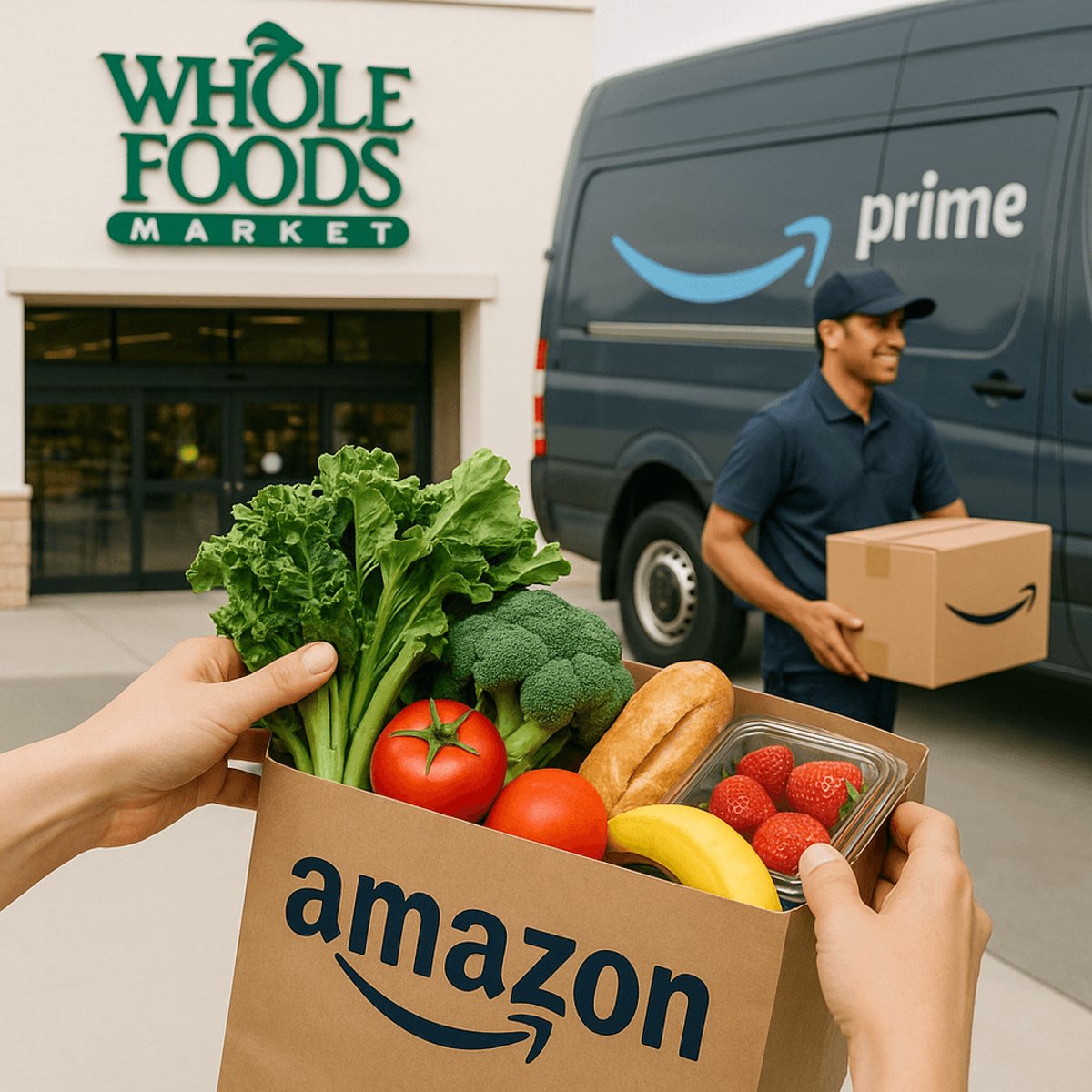
Meanwhile, Whole Foods Market has become Amazon's unexpected grocery champion. Since the 2017 acquisition, the organic grocer has posted over 40% sales growth and expanded to more than 550 locations. Year-over-year comparable store growth is outpacing the broader industry, with record-breaking customer traffic. Amazon is now committing to open more than 100 new Whole Foods Market stores over the next few years.
The company is also expanding Whole Foods Market Daily Shop, a smaller format focusing on grab-and-go meals, coffee, and everyday essentials. Currently in five locations, the format has quickly become part of customers' daily routines. Five additional Daily Shop locations are planned by the end of 2026.
Some Amazon Go and Fresh locations will get a second life as Whole Foods stores, allowing Amazon to salvage real estate investments while consolidating under a brand that's actually resonating with customers. The company says it's working to help displaced employees find roles elsewhere within Amazon, including across its vast operations network.
The closures don't mean Amazon's abandoning physical retail innovation entirely. The company says it's testing new concepts like Amazon Grocery in Chicago and 'store within a store' experiences that let customers shop for groceries and household essentials from Amazon inside Whole Foods locations. Amazon is also exploring a new supercenter concept designed to offer its broad selection and low prices across fresh groceries, household essentials, and general merchandise.
One technology born from the failed stores will live on: Just Walk Out, the checkout-free system developed in Amazon Go locations, is now operating in over 360 third-party locations across five countries. The tech has cut cafeteria wait times from 25 minutes to just 3 minutes at BayCare's St. Joseph's Hospital and lets sports fans at Scotiabank Arena grab concessions in 30 seconds. Amazon is expanding Just Walk Out to its own operations, with more than 40 North American fulfillment centers using it in breakrooms today.
The pivot reflects a broader reality in retail: customers are voting with their wallets for convenience over novelty. Amazon's checkout-free stores and Fresh locations generated buzz but didn't create the habit-forming experiences that drive grocery loyalty. Whole Foods, despite its premium positioning, offers something customers actually crave - trusted quality and a shopping experience they already understand.
For competitors like Walmart and Target, Amazon's retreat from physical grocery stores removes a potential threat but underscores the challenge they face in online delivery. Amazon's 40x growth in same-day perishable delivery since January shows the company is figuring out how to make online grocery work at scale, even as its physical experiments faltered.
Amazon's decision to shutter Go and Fresh stores while expanding Whole Foods reveals a company willing to admit when experiments aren't working, even after years of investment. The real story isn't the closures - it's where Amazon is placing its bets. Online grocery delivery growing 40x in perishables and Whole Foods outpacing industry growth show Amazon has found its grocery formula, just not in the experimental formats it initially imagined. For the grocery industry, this means competing with Amazon increasingly means competing on delivery speed and online convenience, not worrying about checkout-free stores on every corner. The future of grocery Amazon is building looks less like a tech showcase and more like getting organic milk to your door before you realize you're out.