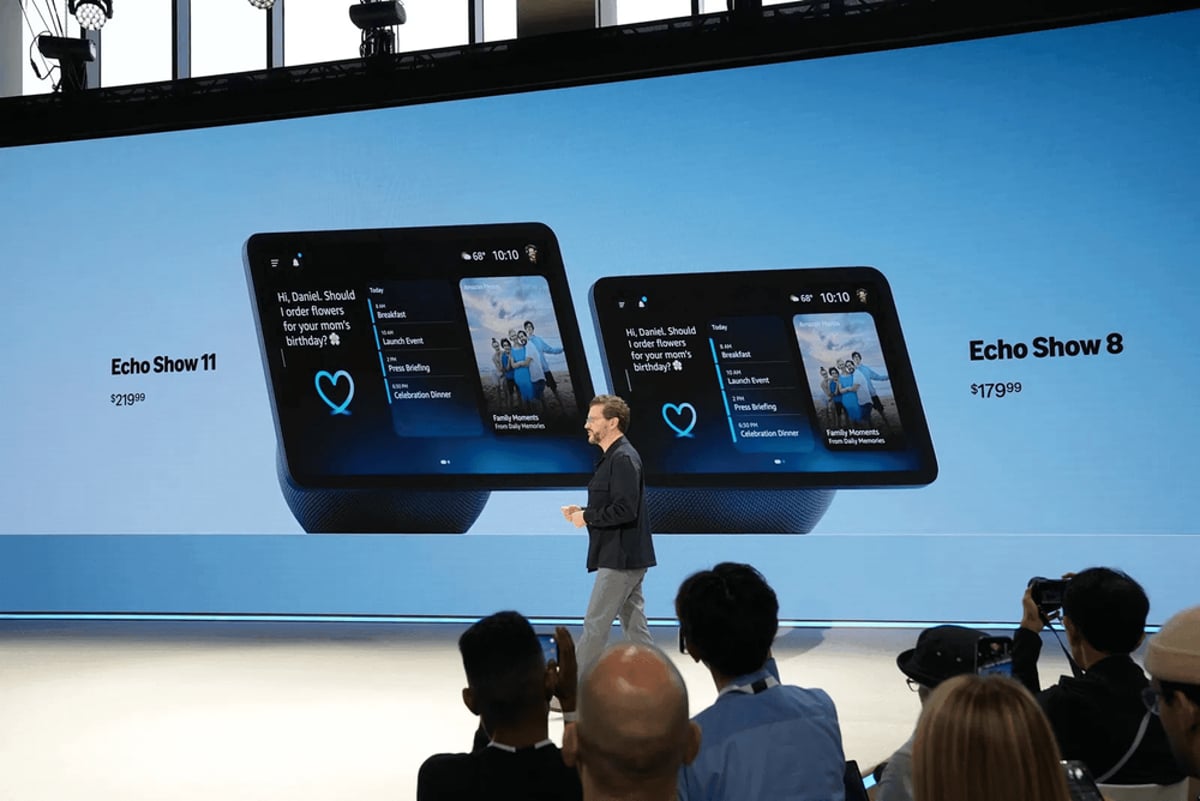
Amazon just dropped two new Echo Show models at its fall hardware event, marking the biggest upgrade to its smart display lineup in years. The Echo Show 8 and 11 aren't just hardware refreshes - they're built specifically to run the company's revamped Alexa Plus AI assistant, powered by large language models and advanced sensor fusion that can track everything from your daily routines to whether you've fed the dog.
Amazon just reshaped the smart display battlefield. The company's surprise Echo Show 8 and 11 announcement at Tuesday's fall hardware event signals a major pivot toward AI-first home devices, complete with premium redesigns that finally ditch the chunky aesthetic that's defined the Echo lineup for years.
The timing couldn't be more strategic. While Google has been content to iterate on its Nest Hub formula, Amazon is betting everything on Alexa Plus, its LLM-powered assistant that transforms these displays from simple smart speakers with screens into contextually aware home intelligence hubs.
The Echo Show 8 updates Amazon's popular mid-range model with an 8-inch 720p LCD display featuring improved viewing angles and higher contrast. But the real story is the new Echo Show 11 - essentially a spiritual successor to the discontinued Echo Show 10 from 2021. With its 1080p resolution and 11-inch screen, it's positioned as Amazon's answer to anyone who found previous Echo Shows too small for kitchen countertops or bedside tables.
Both devices get the premium treatment Amazon's been promising for years. Thinner bezels, sleeker profiles, and rounded oblong speakers wrapped in 3D knit fabric create a more sophisticated look that can actually blend into modern home decor. The 13-megapixel cameras sit discreetly above each display, while the screens mount slightly elevated from the speaker bases - a design choice that should improve both audio projection and voice recognition.
Audio has been completely rebuilt from the ground up. New front-facing stereo speakers paired with custom woofers can deliver spatial audio or blast music directly at users. It's a significant upgrade from earlier Echo Shows that often struggled with audio clarity during video calls or music playback.
But the real innovation lies under the hood. Amazon's new AZ3 Pro chips don't just power improved performance - they enable the Omnisense sensor platform that represents the company's most ambitious smart home play yet. By combining data from cameras, microphones, Wi-Fi radar, accelerometers, and other sensors, these displays can understand environmental context in ways previous generations never could.
The demo Amazon showed on stage was telling: asking Alexa Plus to remind you if nobody feeds the dog. The AI can apparently track household routines, recognize patterns, and proactively surface relevant information. It's the kind of ambient computing that Google has talked about for years but never quite delivered at scale.
Alexa Plus remains optional for now, available as "Early Access" out of the box. Users can stick with regular Alexa if they prefer, though the new hardware is clearly designed with the upgraded assistant in mind. The catch? Alexa Plus is still US-only, limiting the global appeal of these new features.
The Show UI interface gets meaningful improvements too, particularly around smart home control. A new full-screen panel lets users manage multiple devices simultaneously, while native support for Thread, Matter, and Zigbee protocols positions these displays as legitimate smart home hubs that can compete with dedicated solutions from Samsung SmartThings or Hubitat.
Partnership integrations hint at Amazon's broader ambitions. Health tracking through Oura and Withings, food delivery via Uber, restaurant reservations through OpenTable, entertainment booking with Fandango - these aren't just app integrations but deeper AI-powered experiences that leverage the displays' always-on nature and visual interface.
Pricing reflects Amazon's premium positioning: $179.99 for the Echo Show 8 and $219.99 for the Echo Show 11. Pre-orders start immediately, with full availability November 12th. Those prices put both models above entry-level competitors but below high-end alternatives like Apple's HomePod with display rumors.
Notably absent are updates to Amazon's larger displays - the 15.6-inch Echo Show 15 and massive 21-inch Echo Show 21. Both remain focused on wall-mounted or entertainment center use cases, suggesting Amazon sees the 8-11 inch range as the sweet spot for countertop smart displays.
The bigger question is whether consumers are ready for AI-powered home devices that actively monitor and learn from daily routines. Amazon's betting they are, but privacy concerns around always-listening, always-watching devices with advanced AI capabilities could limit adoption regardless of the technology's impressive capabilities.
Amazon's Echo Show 8 and 11 represent more than just hardware upgrades - they're the company's clearest signal yet that the future of smart homes runs on AI-powered ambient computing. With Alexa Plus integration, advanced sensor fusion, and premium designs that finally look at home in modern kitchens and living rooms, these displays could reshape consumer expectations for what smart home devices should do. The real test will be whether Amazon can convince users that always-on AI assistance is worth the privacy trade-offs, especially as competitors like Google and Apple prepare their own next-generation responses.