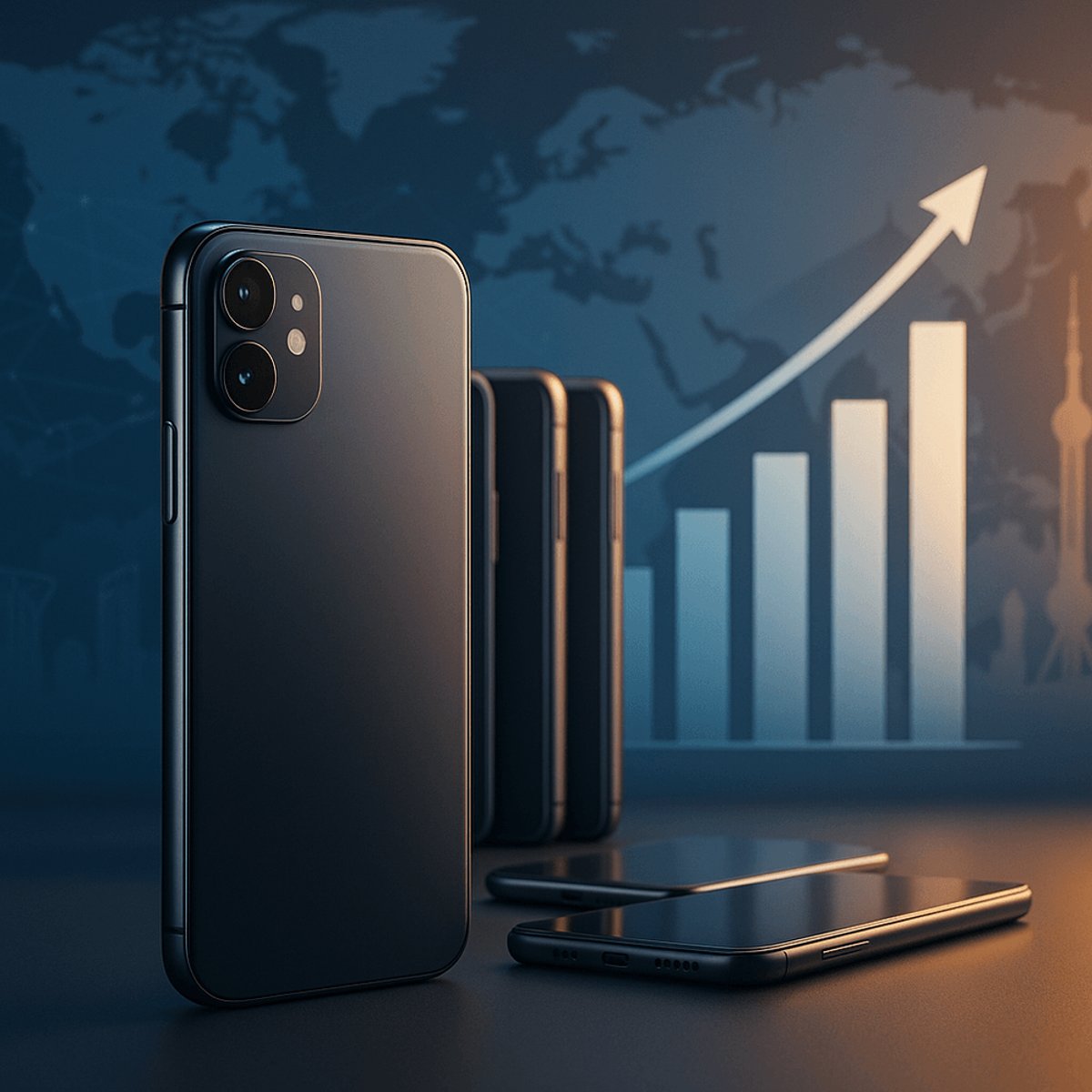
Apple is set to shatter its iPhone shipment record this year, with IDC forecasting 247.4 million units shipped in 2025 - a 6% jump that surpasses even the iPhone 13's blockbuster 2021 performance. The surge is powered by strong iPhone 17 demand, particularly a stunning 17% year-over-year spike in China shipments during Q4, marking Apple's comeback in its most challenging market.
Apple just delivered the comeback story Wall Street's been waiting for. The tech giant is on track to ship a record-breaking 247.4 million iPhones in 2025, according to fresh IDC forecasts released Tuesday - crushing even the iPhone 13's legendary 2021 run of 236 million units.
The numbers tell a remarkable turnaround tale, especially in China where Apple seemed to be losing ground to homegrown rivals just months ago. Fourth-quarter shipments in the region are surging 17% year-over-year, completely flipping IDC's earlier projection of a 1% market decline into 3% growth. "Massive demand for iPhone 17 has significantly accelerated Apple's performance," Nabila Popal, senior research director at IDC, said in the report.
This Chinese revival couldn't come at a better time for Apple. Local competitors like Huawei have been steadily chipping away at the iPhone's market share, while Android rivals pushed ahead with AI features that left some questioning Apple's strategy. When the iPhone 17 series launched in September, investors were watching closely to see if Apple could answer those doubts.
The shipment surge isn't just about one market - it's reshaping the entire smartphone landscape. Counterpoint Research forecasted last week that Apple will outsell Samsung globally in 2025 for the first time in 14 years, a seismic shift that would crown Apple the world's top smartphone shipper.
But there's a potential speed bump ahead. Bloomberg reported that Apple might delay the base iPhone 18 model until 2027, breaking its traditional fall release cycle. IDC warns this timing shift could trigger a 4.2% shipment drop in 2026 - a reminder of how much Apple's fortunes ride on its iPhone release rhythm.
The iPhone 17's success validates Apple's bet on premium positioning even as economic headwinds buffet consumer spending. While other smartphone makers chase the budget segment, Apple's continued ability to drive record shipments at premium prices shows the brand's staying power. The 6% year-over-year growth might seem modest compared to startup unicorn valuations, but for a company shipping hundreds of millions of devices, it represents billions in additional revenue.
What makes this surge particularly impressive is the competitive context. Chinese brands aren't backing down - they're doubling down on AI features, foldable designs, and aggressive pricing. Yet Apple's managing to not just hold ground but actually accelerate shipments in what many considered a hostile market.
The timing also highlights Apple's strategic patience. While competitors rushed AI features to market throughout 2024, Apple took its time refining Apple Intelligence and integrating it thoughtfully into the iPhone 17 experience. That measured approach appears to be paying off in actual sales, not just marketing buzz.
For the broader tech ecosystem, Apple's resurgence in China sends ripples beyond smartphone market share. It demonstrates that premium Western brands can still compete effectively against local alternatives when they nail product-market fit. Component suppliers, app developers, and accessory makers are all recalibrating their 2025 projections based on these shipment forecasts.
Apple's record iPhone shipment forecast caps off a remarkable year of strategic execution and market momentum. The 17% surge in China shipments particularly stands out, proving that even in the most competitive markets, the right product can flip the script overnight. As the smartphone wars intensify and AI becomes table stakes, Apple's ability to drive record volumes while maintaining premium pricing shows why it remains the industry's most watched player. The potential iPhone 18 delays add an element of uncertainty to 2026, but for now, Apple's riding high on iPhone 17 success.