Apple is gearing up to mark its 50th anniversary, celebrating five decades since Steve Jobs and Steve Wozniak launched what would become the world's most valuable company from a California garage. The announcement comes as the iPhone maker reflects on innovations that transformed personal computing, mobile technology, and consumer electronics into a $3 trillion market cap juggernaut.
Apple just set the stage for what's likely to be one of tech's biggest birthday parties. The company announced it will mark its 50th anniversary this year, celebrating five decades since Steve Jobs, Steve Wozniak, and Ronald Wayne founded Apple Computer Company on April 1, 1976.
The official announcement arrived with characteristic Apple minimalism, but the implications are massive. This isn't just any corporate milestone - it's a moment to reflect on how a garage startup in Los Altos, California, became the most valuable company on Earth, currently commanding a market cap north of $3 trillion.
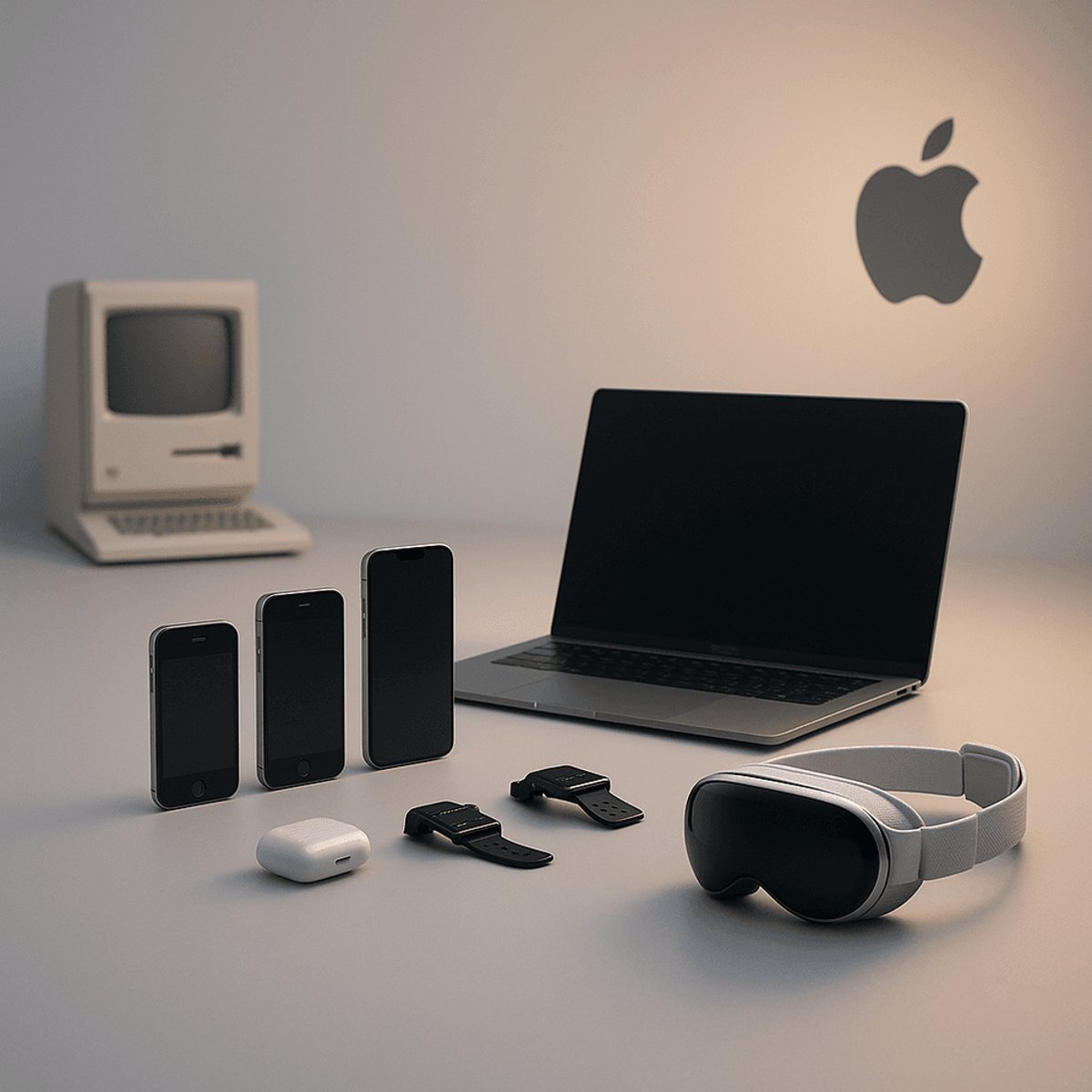
While Apple didn't reveal specific celebration plans, the company's history of product launches suggests this won't be purely ceremonial. The anniversary coincides with a pivotal moment as Apple pushes deeper into AI integration across its ecosystem, building on the Apple Intelligence features introduced in recent iOS updates. The timing creates natural synergy between looking backward at innovations like the Macintosh, iPod, and iPhone while pushing forward into artificial intelligence and spatial computing.
The "Think Different" tagline referenced in the announcement carries special weight. That 1997 campaign marked Apple's resurrection under Jobs' second stint as CEO, when the company was just 90 days from bankruptcy. Now, nearly three decades later, Apple's brand value and cultural influence dwarf almost every competitor. From revolutionizing personal computers with the Apple II and Mac to reinventing mobile phones and creating entirely new categories like smartwatches and wireless earbuds, the track record speaks for itself.
What makes this anniversary particularly significant is the generational shift happening inside Cupertino. CEO Tim Cook has led Apple for over a decade since Jobs' death in 2011, steering the company through its most profitable era while facing questions about the next breakthrough innovation. The company's recent push into mixed reality with Vision Pro and aggressive AI development suggests Apple is betting its next 50 years on spatial computing and machine learning.
The consumer electronics landscape Apple helped create looks radically different than 1976. Back then, the Apple I sold for $666.66 as a bare circuit board requiring assembly. Today's Apple sells seamlessly integrated devices, services, and experiences across a customer base exceeding 2 billion active devices worldwide. That evolution from hobbyist computers to mainstream consumer technology defines modern tech.
For competitors like Microsoft, Google, and Samsung, Apple's anniversary serves as a reminder of the company's staying power. While countless tech giants have risen and fallen over five decades - remember Digital Equipment Corporation, Sun Microsystems, or even Nokia's dominance - Apple survived near-death experiences to reach unprecedented heights.
The celebration also arrives as Apple navigates regulatory scrutiny in the U.S. and Europe over App Store practices, faces growing competition in China, and works to prove it can lead in AI after being perceived as late to the generative AI race. These challenges make the anniversary both a victory lap and a strategic moment to reinforce Apple's innovation narrative.
Industry watchers expect Apple to leverage the milestone for marketing across its retail stores, potential retrospective exhibits, and maybe even special edition products. The company's mastery of brand storytelling means this won't just be about nostalgia - it'll reinforce Apple's positioning as the innovation leader heading into an AI-driven future.
Apple's 50th anniversary isn't just corporate nostalgia - it's a strategic inflection point. As the company reflects on transforming computing, music, phones, and wearables, it's simultaneously betting its next chapter on AI and spatial computing. The real question isn't what Apple accomplished over five decades, but whether the next 50 years can possibly match the first half-century's impact. With $3 trillion in market value and 2 billion devices in pockets worldwide, Apple's built enough momentum to make that audacious goal seem achievable.