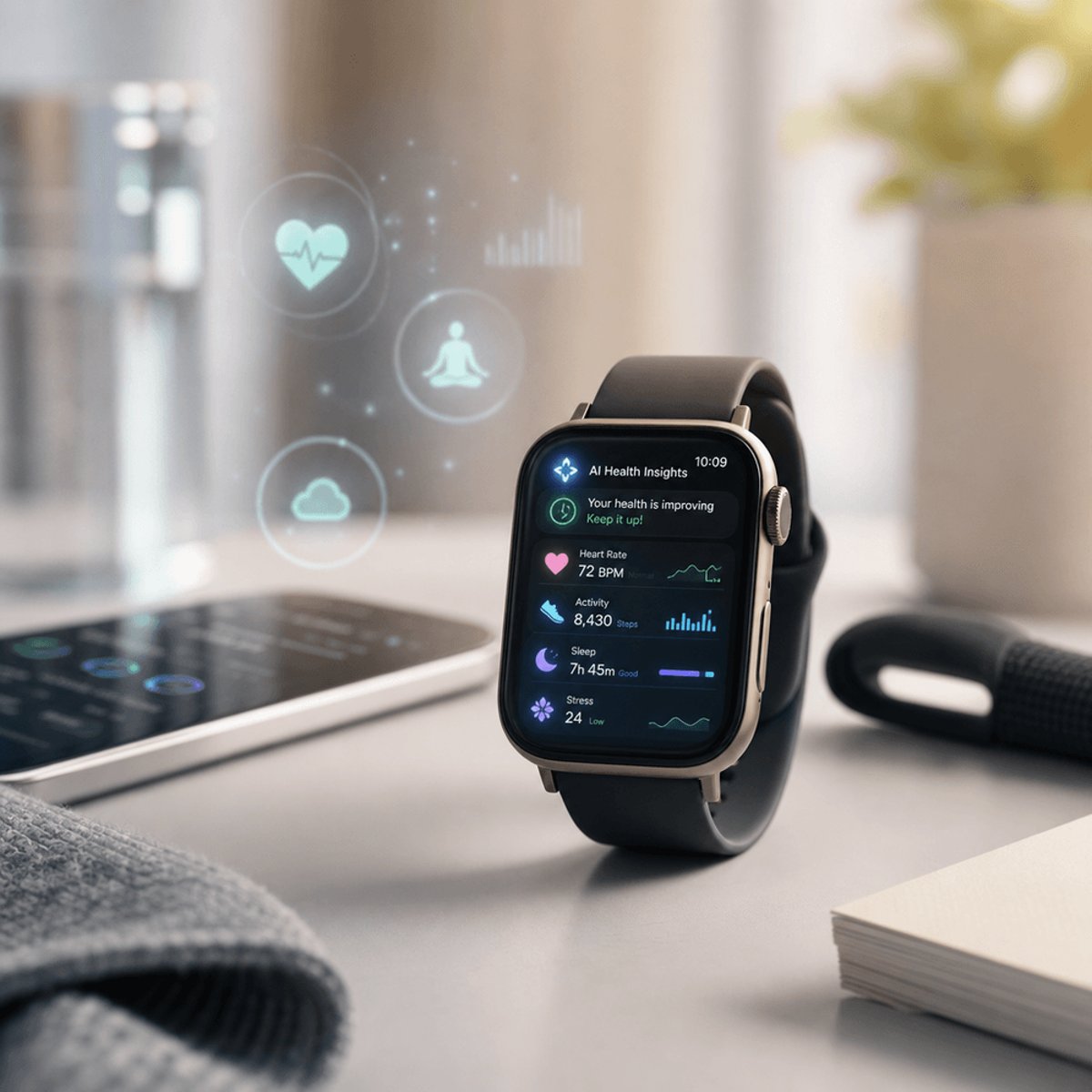
Samsung is positioning its next Galaxy Watch as an AI-first health companion, teasing enhanced wellness tracking and real-time insights ahead of its July 22 Unpacked event. The company's latest teaser signals a strategic push to integrate AI deeper into its wearables ecosystem, promising all-new internal components and improved battery life for continuous health monitoring. It's a clear shot at Apple Watch and sets up what could be Samsung's biggest play yet in the increasingly crowded AI wearables race.
Samsung just dropped its most explicit AI wearables pitch yet. The company's teaser for its next Galaxy Watch leans hard into AI-powered health monitoring, promising a device that works "continuously in the background" to make wellness tracking truly seamless. It's launching July 22 at Galaxy Unpacked, and Samsung's framing it as nothing less than a new era for its wearables strategy.
The timing matters. Apple has dominated the premium smartwatch market for years, but the AI wave is reshuffling the deck. Samsung's pitch centers on what it calls "intelligent, AI-driven insights" that help users "proactively manage" their health in real time. Translation: this isn't just about tracking steps anymore. It's about prediction, personalization, and turning sensor data into actionable intelligence before problems escalate.
According to Samsung's announcement, the upcoming Galaxy Watch features "all-new internal components and enhanced battery life" designed specifically to support longer, more accurate health monitoring. That's significant because battery life has been the Achilles heel of feature-rich smartwatches. If Samsung can deliver AI-powered insights without sacrificing all-day wear, it could finally have a legitimate answer to Apple Watch's endurance advantage.
But the real story here is Samsung's ecosystem play. The company explicitly positions Galaxy Watch as a "health-first, always-on gateway for advanced, personalized AI" within its broader device family. That language echoes the cross-device AI strategies we've seen from Google with Pixel and Apple with its Health app integration. Samsung's betting that seamless AI experiences across phones, watches, and other Galaxy devices will be the sticky factor that keeps users locked into its ecosystem.
The competitive landscape is heating up fast. Google's Pixel Watch line has been steadily improving with Fitbit integration, while rumors suggest Apple's working on non-invasive glucose monitoring for future Watch models. Meanwhile, startups like Whoop and Oura have carved out premium niches with subscription-based health insights. Samsung's challenge is differentiating in a market where everyone's promising smarter health tracking.
What's notably absent from Samsung's teaser? Specifics. There's plenty of aspirational language about AI understanding "how we rest, move and sleep," but zero technical details about which AI models are running on-device versus in the cloud, what new sensors might be included, or how privacy is handled when health data gets processed by AI systems. Those details matter enormously, especially as regulators worldwide scrutinize how tech companies handle sensitive health information.
The wearables market is primed for disruption. According to industry analysts, global smartwatch shipments topped 150 million units in 2025, with health and fitness features consistently ranking as top purchase drivers. But most devices still rely on relatively basic algorithms to interpret sensor data. If Samsung's delivering genuine AI breakthroughs - models that can spot patterns in heart rate variability, sleep quality, and activity levels that humans would miss - it could justify a premium position.
Samsung's also playing catch-up on the software side. While Galaxy Watch runs Wear OS (a Google partnership), the company's health platform has historically lagged behind Apple Health in terms of third-party integration and data portability. The shift to AI-powered insights could be Samsung's opportunity to leapfrog those limitations, assuming the company can attract developers to build on its platform.
The July 22 Unpacked event will be the moment of truth. Samsung's likely unveiling more than just the Watch - expect new foldables and possibly Galaxy Buds with their own AI features. But the wearables announcement feels like a strategic anchor. By positioning Galaxy Watch as the "always-on" AI gateway, Samsung's signaling that it sees wearables, not phones, as the next frontier for ambient, contextual AI that actually improves daily life.
What remains to be seen is whether Samsung can deliver on the promise. The company's got a track record of impressive hardware let down by inconsistent software experiences. If the AI features feel gimmicky or require constant manual input, this becomes just another incremental Watch update. But if Samsung's cracked real predictive health insights that work passively in the background, it could finally have a genuine Apple Watch competitor on its hands.
Samsung's latest Galaxy Watch teaser is less about specs and more about strategic positioning. By framing the device as an AI-first health companion within a connected ecosystem, the company's making a clear play for the premium wearables market that Apple's dominated for years. But teasers are easy - execution is hard. The real test comes July 22, when Samsung needs to prove its AI health features are more than marketing speak. If the company can deliver genuinely useful predictive insights without sacrificing battery life or privacy, it could reshape the smartwatch conversation. If not, this becomes another example of promising AI capabilities that underwhelm in practice. Either way, the AI wearables race just got more interesting.