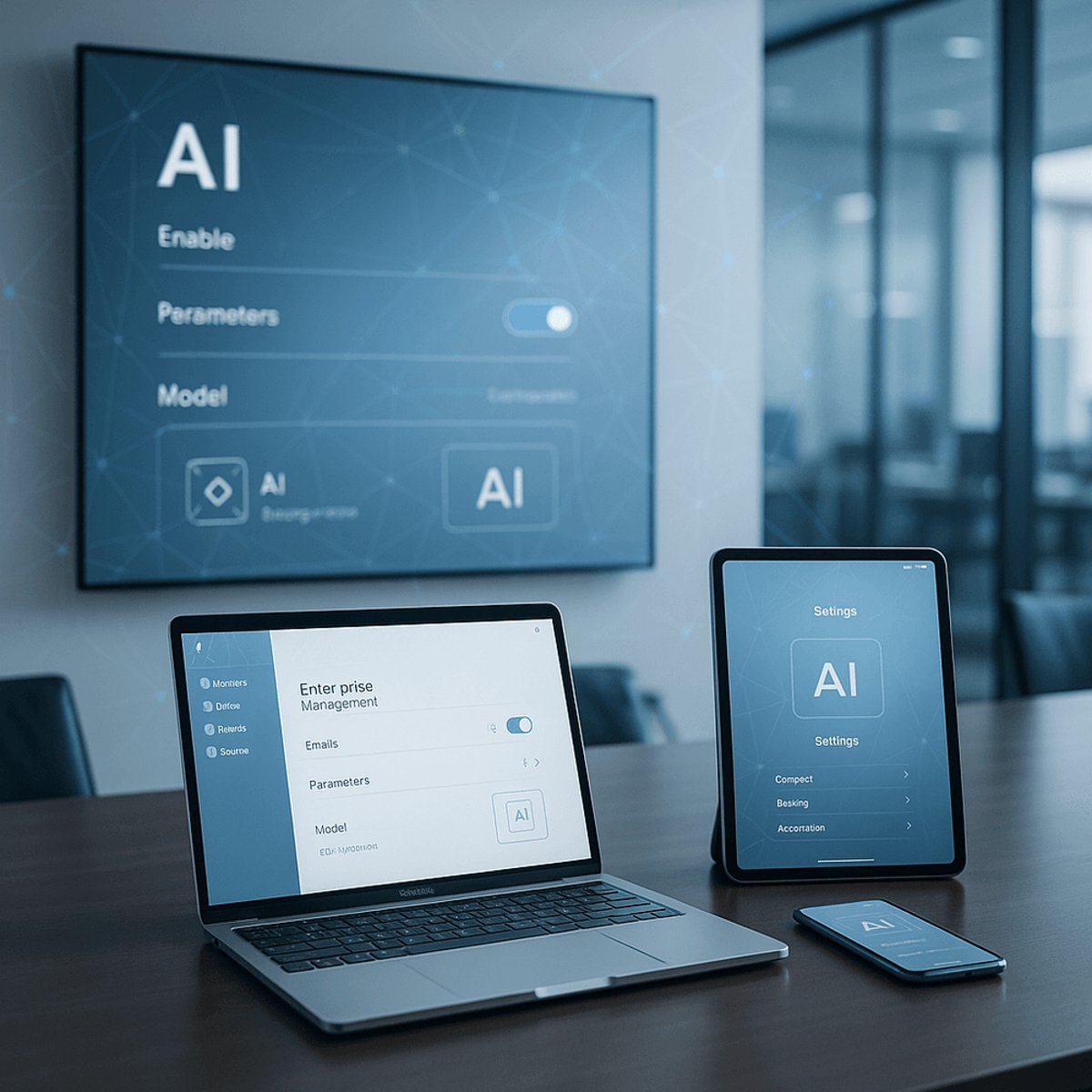
Apple just handed enterprise IT departments the keys to AI kingdom. The tech giant's September software updates will let businesses configure employee access to ChatGPT Enterprise, marking Apple's most significant push into corporate AI management yet. With OpenAI's enterprise service already serving 5 million business customers, this integration could reshape how companies deploy AI across their workforce.
Apple is betting big on enterprise AI, and the stakes just got higher. The company's upcoming September software rollout doesn't just add ChatGPT integration – it hands IT administrators unprecedented control over how their workforce accesses artificial intelligence, potentially reshaping the $50 billion enterprise software market.
The move comes as OpenAI's enterprise offering has exploded to over 5 million business customers, according to company data shared with TechCrunch. These companies are already using ChatGPT Enterprise to connect AI agents with their internal data systems, creating a massive addressable market that Apple clearly wants to capture.
But here's where Apple's strategy gets interesting: the integration isn't hardcoded specifically for OpenAI. According to Apple's support documentation, IT administrators will be able to restrict or allow any "external" artificial intelligence provider. This architecture decision signals Apple's intention to court other major AI players – potentially Google's Bard Enterprise, Microsoft's Copilot, or Anthropic's Claude for business.
"What's fascinating is Apple's approach to AI governance," notes enterprise software analyst Dan Ives of Wedbush Securities. "They're building the plumbing for multiple AI partnerships without having to restructure their entire integration layer."
The timing couldn't be more strategic. As Apple Intelligence rolls out across iPhone, iPad, and Mac, the company faces a critical challenge: convincing security-conscious enterprises to trust cloud-based AI processing. Apple's Private Cloud Compute architecture addresses some concerns, but many companies remain hesitant to send sensitive data to external AI services.
Apple's solution is elegantly simple: let businesses choose. Companies can decide whether to process AI requests on-device or in the cloud, and whether to allow employees to tap into ChatGPT's capabilities even without their own OpenAI enterprise contract. Because Apple's architecture routes requests to either Apple's cloud or ChatGPT – never both – IT departments can easily disable external AI access with a single configuration change.
The enterprise AI control panel represents just one piece of Apple's broader corporate software push. The company is simultaneously launching an API for Apple Business Manager, allowing integration with mobile device management (MDM) products, inventory systems, and help desk software. This move directly challenges established players like Microsoft System Center and VMware Workspace ONE.
Apple's also addressing a persistent enterprise pain point: device transitions during mergers and acquisitions. New Device Management tools will streamline migrating devices between management services, while an updated Return to Service feature can wipe devices for new users while preserving installed applications – saving significant time and bandwidth costs.
[embedded image: Apple enterprise AI configuration dashboard screenshot]
Perhaps most tellingly, Apple is extending these enterprise features to Vision Pro for the first time. The inclusion of Apple's $3,499 mixed reality headset in enterprise management tools suggests the company sees significant business adoption potential, despite lukewarm consumer reception.
The shared Mac capabilities getting added – including NFC login via Apple Watch or iPhone – reflect Apple's understanding of hybrid work environments. Authenticated Guest Mode lets employees access shared devices with their corporate credentials while ensuring data doesn't persist after logout.
Industry watchers see this as Apple's attempt to break Microsoft's stranglehold on enterprise computing. "Apple is playing the long game," says Gartner VP analyst Tom Mainelli. "They're not trying to replace Windows overnight, but they're making it incredibly easy for companies already invested in the Apple ecosystem to expand that investment."
The September rollout puts Apple in direct competition with Google Workspace and Microsoft 365, both of which have been racing to integrate AI capabilities. But Apple's device-centric approach – controlling the entire stack from hardware to AI integration – could prove decisive for companies already committed to iPhones and Macs.
For OpenAI, the partnership represents validation of their enterprise strategy. With ChatGPT Enterprise revenue reportedly exceeding $2 billion annually, according to recent investor presentations, deeper integration with Apple's installed base could accelerate growth significantly.
Apple's enterprise AI gambit reflects a company increasingly confident in its ability to challenge Microsoft and Google in corporate computing. By giving IT departments granular control over AI access while keeping the door open for future partnerships beyond OpenAI, Apple is positioning itself as the enterprise-friendly alternative to Big Tech rivals who often force all-or-nothing AI adoption. Whether businesses bite remains to be seen, but with 5 million companies already using ChatGPT Enterprise, the market validation is clear – and Apple wants its share.