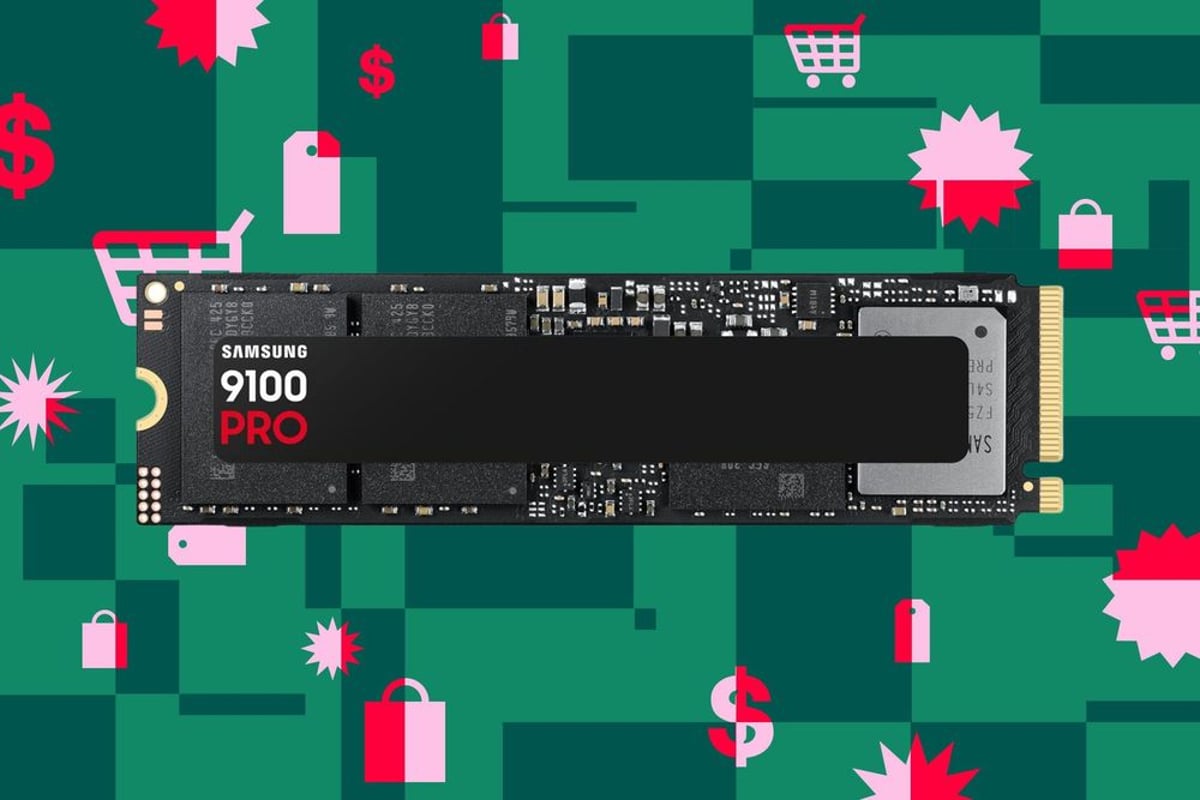
Samsung just carved out a rare bright spot in an otherwise brutal hardware market. The company's 9100 Pro SSD with 2TB of storage dropped to $302.99 on Amazon, down nearly $100 from its usual price tag and marking the first significant discount since February 2026. It's a welcome reprieve for PC builders navigating what the industry's been calling RAMageddon - the ongoing supply crunch that's sent memory and storage prices through the roof. While the deal doesn't match the $169.99 low from October 2025, it's notable timing as Google prepares to announce price hikes for its upcoming Pixel 11 lineup.
Samsung is giving hardware enthusiasts a brief window of relief in an otherwise punishing market. The company's 9100 Pro SSD, now available for $302.99 on Amazon, represents the first meaningful price drop since February 2026 for the 2TB model. It's dropping at a time when most PC components are heading in the opposite direction.
The timing couldn't be more pointed. RAMageddon, the industry shorthand for the ongoing memory and storage supply crisis, has been squeezing builders and upgraders for months. What sold for $169.99 last October now commands nearly double that price, and even this discounted rate sits 78% above that low point. But in a market where the 1TB version sells for $250, spending an extra $53 for double the capacity suddenly looks like smart math.
Samsung positioned the 9100 Pro as its first PCIe Gen 5 drive when it launched earlier this year, promising theoretical read and write speeds at least twice as fast as the popular 990 Pro it replaced. Those speeds matter if you're running the right motherboard and components to take full advantage of Gen 5's bandwidth. Drop it into a Gen 4 setup, and you'll still see solid performance, just not the blistering numbers on the spec sheet.
The heatsink-less version currently on sale works fine in most PC and laptop configurations, though Samsung and most manufacturers recommend adding cooling if you're pushing sustained workloads. For PlayStation 5 owners eyeing an upgrade, a heatsink isn't optional - it's required to prevent thermal damage to the drive. Aftermarket heatsinks run cheap, typically under $15 on Amazon, making the total investment still competitive.
What makes this discount newsworthy isn't just the dollar amount. It's the broader signal about where hardware pricing might be heading as supply chains slowly stabilize. Google just confirmed that its Pixel 11 series, launching August 12th at its Made by Google event, will carry higher price tags than previous generations. The company's Pixel 10A, meanwhile, dropped to $424 over the weekend across multiple retailers - its second-best price ever, suggesting vendors are clearing inventory ahead of the new lineup.
The storage market's been particularly volatile over the past year. What looked like a steady climb toward affordable, high-capacity drives reversed sharply in late 2025 as supply constraints hit manufacturers across Asia. Samsung, as one of the largest NAND producers globally, has more flexibility than most competitors to weather pricing swings. But even the company's economies of scale couldn't insulate it from broader market forces.
For consumers trying to time a purchase, the calculus is tricky. Waiting for prices to return to October 2025 levels could mean waiting months longer, if those prices return at all. Component shortages historically don't resolve overnight. The semiconductor industry's complex supply chains - spanning wafer fabrication, chip packaging, and global logistics - mean disruptions ripple forward for quarters.
Best Buy is also carrying the same 2TB 9100 Pro, though at $399.99 it's nearly $100 more expensive than Amazon's current offer. That pricing spread highlights how aggressively Amazon is positioning itself in the PC components category, often undercutting traditional electronics retailers by significant margins.
The 9100 Pro's successor in Samsung's roadmap isn't expected until late 2027 at the earliest, meaning this generation will anchor the company's enthusiast lineup for at least another year. That longevity makes current pricing particularly relevant for anyone building or upgrading systems with an eye toward future-proofing.
Other hardware deals are breaking through the pricing pressure too. Samsung's 32-inch M8 4K Smart Monitor hit $349.99, down from its $699.99 launch price and marking a 50% discount for a display that doubles as a streaming hub with built-in apps and USB-C connectivity. That's the kind of aggressive discounting that typically signals either inventory clearance or a new model inbound.
The SteelSeries Arctis Nova Pro Omni wireless gaming headset saw its first-ever price drop to $379.99, down from $399.99. It's a modest cut, but notable for a product that only launched earlier this year with premium positioning and a battery-swapping base station that targets serious multi-platform gamers.
What's clear is that the hardware market remains in flux. Pricing that looked stable six months ago has shifted dramatically, and what constitutes a "good deal" keeps recalibrating based on supply realities rather than historical trends. The $302.99 9100 Pro sits in that category - not the all-time low, but competitive enough given where the market's sitting right now.
The $303 price point for Samsung's 9100 Pro won't make anyone forget the sub-$170 deals from last fall, but it's the best opportunity in months for builders who can't wait out the supply crunch. With Google hiking prices on new hardware and storage costs still elevated across the board, locking in double the capacity for just $53 more than the 1TB model makes sense for anyone upgrading now. The real question is whether this discount signals a broader easing of RAMageddon pricing pressures, or just a temporary inventory adjustment before costs climb again. Either way, the window probably won't stay open long.