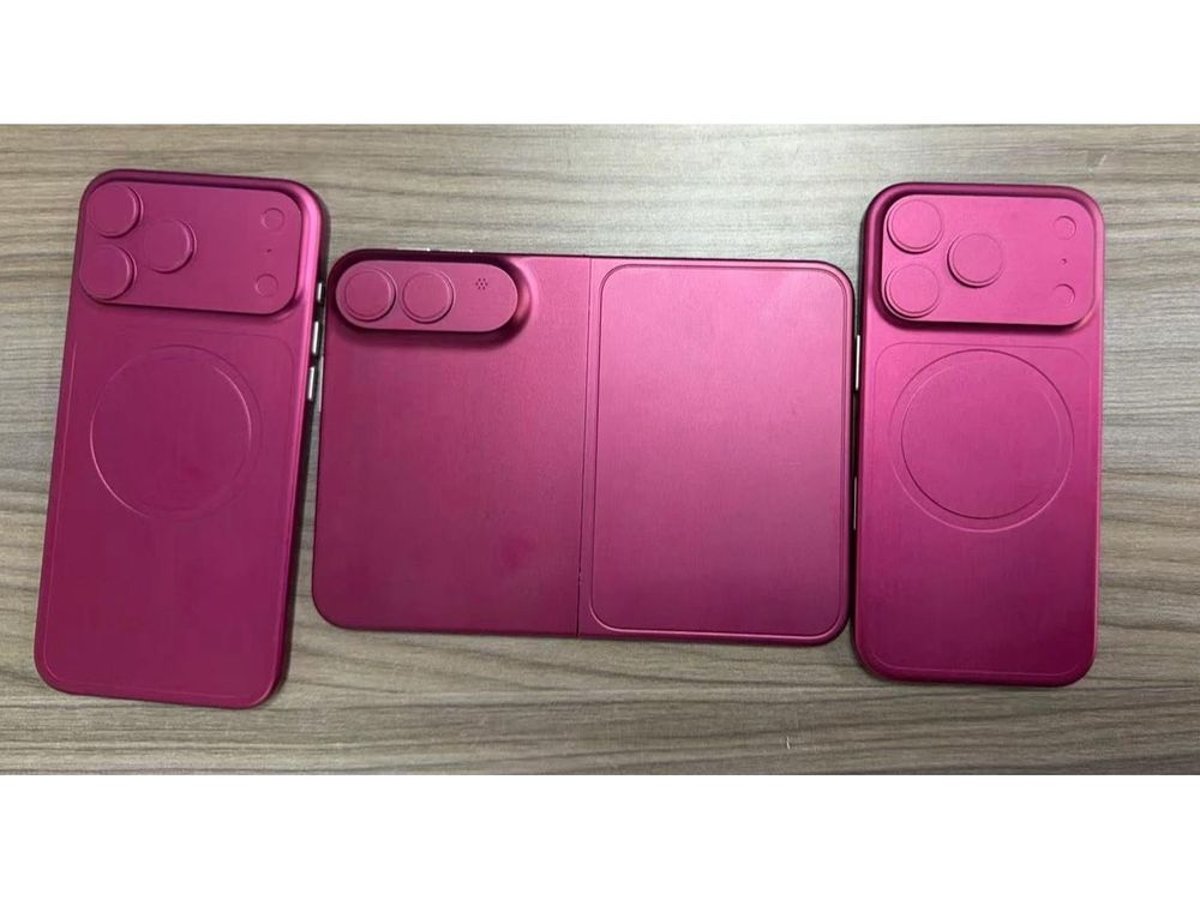
Apple may have a foldable problem on its hands. The first physical dummy units of the long-rumored iPhone Fold surfaced today, showing an unusually wide design that diverges sharply from competitors like Samsung's Galaxy Z Fold lineup. But the leak comes with a catch - early engineering tests have reportedly hit production snags that could delay the foldable's launch by several months compared to this fall's standard iPhone 18 lineup.
Apple's worst-kept secret just got a physical form. Reliable leaker Sonny Dickson posted images today of what appears to be a dummy unit for the company's first foldable iPhone, sitting next to mockups of the upcoming iPhone 18 Pro and Pro Max. The pink prototype units, typically used by case manufacturers to prep their products ahead of launch, show a foldable design that's noticeably wider than the current landscape-oriented foldables dominating the market.
Dickson has built a solid reputation over the years for obtaining accurate dummy models from Apple's supply chain, making these images more than just speculative renders. The photos shared on Bluesky mark the first time we're seeing the physical dimensions of what Apple's calling the iPhone Fold - a device that's been the subject of patents, rumors, and analyst predictions for years.
But the timing of this leak is interesting for another reason. The Verge reports that early engineering tests of the foldable have run into production problems that could push the device's release well past the standard September-October window that Apple typically uses for new iPhones. That means while the iPhone 18 and 18 Pro might arrive on schedule this fall, the Fold could land months later - or potentially slip into early 2027.
The production delays aren't entirely surprising. Foldable displays remain one of the trickiest hardware challenges in consumer electronics, with even established players like Samsung and Motorola dealing with durability concerns, crease visibility, and supply chain complexity. Apple's notorious perfectionism and quality standards likely mean the company won't ship until these issues are resolved.
What's notable about the design is how different it appears from Samsung's approach. The Galaxy Z Fold series unfolds into a tablet-like square aspect ratio, while early impressions of Apple's dummy suggest a wider, more elongated unfolded screen. This could indicate Apple is targeting different use cases - perhaps optimizing for split-screen productivity or video consumption rather than mimicking an iPad mini.
The iPhone 18 Pro dummies alongside the Fold don't show major departures from last year's iPhone 17 Pro design, suggesting Apple might be saving its big hardware changes for the foldable while keeping the standard lineup relatively conservative. That's a familiar pattern - Apple often introduces major design language shifts through new product categories before bringing those elements to the main iPhone line.
Competitively, this puts Apple in an awkward position. Samsung is already on its sixth generation of foldables, with the Z Fold and Z Flip lines establishing mature ecosystems. Chinese manufacturers like Huawei, Oppo, and Xiaomi have also shipped multiple foldable generations. Apple's late entry means the device needs to be exceptional to justify the wait.
The production challenges reportedly center on the display hinge mechanism and the ultra-thin glass technology required for a foldable screen that can withstand hundreds of thousands of fold cycles. Apple suppliers are likely working overtime to meet the company's durability requirements, which typically exceed industry standards.
Pricing remains a complete unknown, but if we use Samsung's $1,800 starting price for the Galaxy Z Fold 6 as a benchmark, expect Apple's foldable to command a significant premium - potentially $2,000 or more for the base configuration. That would make it Apple's most expensive iPhone ever, eclipsing even the top-tier iPhone Pro Max models.
The software side is equally crucial. Apple will need to optimize iOS to take full advantage of the larger unfolded display, potentially borrowing iPad-style multitasking features while maintaining the seamless experience iPhone users expect. How well the company executes that integration could determine whether the iPhone Fold becomes a must-have device or an expensive curiosity.
Apple's foldable ambitions are finally taking physical shape, but the road to market looks bumpier than expected. The dummy units confirm the company is serious about entering the foldable space with a design that breaks from the competition's playbook. Whether those production delays are a sign of perfectionism or genuine technical hurdles remains to be seen, but one thing's clear - when the iPhone Fold does arrive, it'll need to justify years of anticipation and likely a $2,000-plus price tag in a market where competitors have been iterating for half a decade.