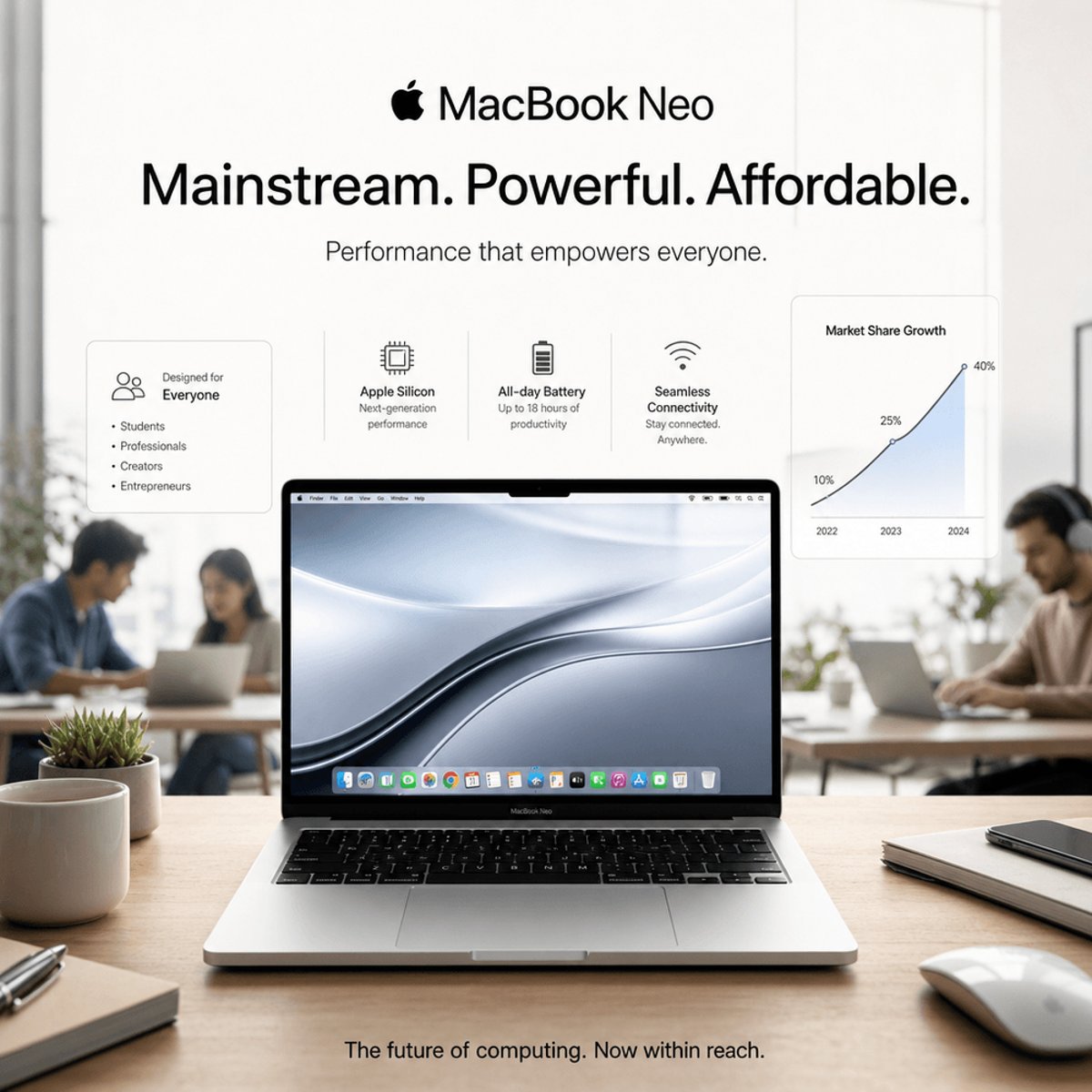
Apple is making serious inroads into the mainstream laptop market with its new MacBook Neo, which shipped 1.1 million units in its first weeks on sale according to fresh estimates from IDC. The launch signals Apple's renewed push beyond its traditional premium customer base, testing whether the company can replicate its mobile dominance in a fiercely competitive PC landscape where Dell, HP, and Lenovo have long controlled the mid-range segment.
Apple just proved it can still move hardware at scale. The company's MacBook Neo cracked 1.1 million unit shipments in its first weeks on shelves, according to preliminary estimates from research firm IDC, marking one of the stronger laptop debuts in recent memory. The numbers land as Apple attempts something it's historically struggled with - convincing budget-conscious buyers that a Mac belongs in their shopping cart alongside cheaper Windows alternatives.
The MacBook Neo's early traction suggests Apple might finally have the formula right. Unlike previous attempts to court mainstream buyers with stripped-down models, the Neo appears to balance specs and pricing in ways that resonate beyond the company's traditional base of creative professionals and affluent consumers. TechCrunch reports the device is finding particular traction with first-time Mac buyers, a demographic Apple has chased for years with mixed results.
The 1.1 million figure tells only part of the story. What matters more is velocity - how quickly those units moved through channels and whether demand is sustaining beyond launch hype. IDC's data captures initial shipments to retailers and distributors, not final sales to consumers, which means the real test comes in the weeks ahead as Apple either replenishes inventory or watches unsold units pile up in warehouses.
For context, Apple's Mac business has been stuck in a peculiar position for years. The company commands outsized profit margins in PCs while maintaining single-digit market share globally. Dell and HP ship far more laptops, but Apple captures a disproportionate chunk of industry profits by staying firmly upmarket. The Neo represents a calculated gamble that Apple can expand volume without sacrificing its premium positioning or trademark margins.
Competitors are paying attention. Lenovo just refreshed its ThinkPad lineup with aggressive pricing, while HP has been flooding retail channels with promotions on its Pavilion and Envy series. The PC market remains brutally competitive, with manufacturers fighting over thin margins in categories where consumers often see laptops as interchangeable commodities. Apple's brand strength matters, but only if buyers believe the premium justifies the price gap.
The MacBook Neo arrives at an interesting moment for Apple's hardware strategy. The company has spent years building out its custom silicon capabilities, starting with the M1 chip that redefined what Apple laptops could deliver on battery life and performance. Those investments now allow Apple to hit price points that would have been impossible when relying on Intel chips, potentially opening new market segments without completely cannibalizing sales of higher-end MacBook Pro and MacBook Air models.
Industry watchers will scrutinize Apple's Q3 earnings for clues about whether the Neo's momentum holds. Strong Mac revenue growth would validate the mainstream strategy, while flat numbers might suggest the Neo is merely shifting sales from other MacBook models rather than expanding the overall addressable market. Apple doesn't break out sales by individual product, so analysts will parse Tim Cook's commentary for hints about product mix and customer acquisition.
The broader question is whether this marks a permanent shift in Apple's PC playbook or a one-off experiment. The company has historically prioritized profit over volume, content to let rivals battle for the low end while Apple scoops up premium buyers. If the Neo succeeds without eroding margins or brand perception, expect Apple to double down with additional mainstream offerings. If it stumbles, the company can always retreat to its profitable comfort zone and pretend the mass market never tempted them.
Apple's MacBook Neo is off to a promising start with 1.1 million units shipped in its opening weeks, but the real test lies ahead. Can the company sustain this momentum in a market dominated by cheaper Windows alternatives, or will the Neo become another footnote in Apple's periodic attempts to court mainstream buyers? The answer will determine whether this launch represents a strategic inflection point for Apple's Mac business or just a temporary spike before gravity reasserts itself. For now, competitors have reason to worry - when Apple decides to play in your sandbox, things tend to get uncomfortable fast.