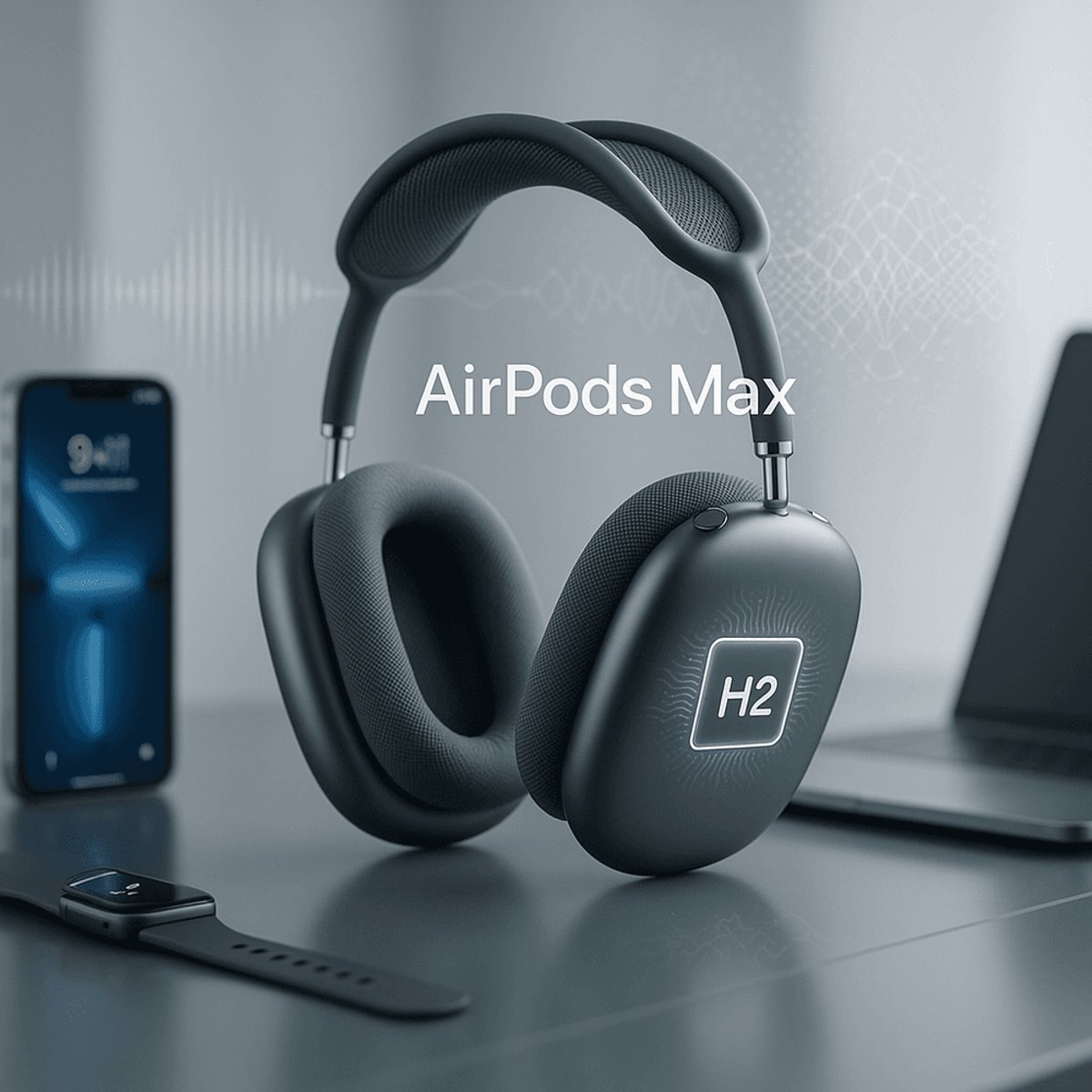
Apple just refreshed its premium over-ear headphones with the AirPods Max 2, marking the first major update to the lineup since the original debuted in late 2020. The new model packs the company's H2 chip - the same processor that powers the AirPods Pro 2 - alongside improved active noise cancellation and what Apple calls "intelligent features" that leverage on-device processing. It's a long-awaited upgrade for a product that's faced criticism for its aging Lightning port and lack of meaningful updates over the past five years.
Apple is betting that better brains make better headphones. The company's newly announced AirPods Max 2 represents the first substantial upgrade to its premium over-ear lineup in over five years, and the star of the show isn't a new driver design or battery breakthrough - it's the H2 chip that's been quietly revolutionizing Apple's audio products since 2022.
The original AirPods Max launched in December 2020 with the H1 chip and a $549 price tag that made audiophiles wince. But while competitors like Sony and Bose iterated annually on their flagship headphones, Apple's over-ear offering sat largely unchanged, save for new color options last year. That changes today with the H2 integration, which Apple first introduced in the AirPods Pro 2 to enable adaptive audio features that adjust noise cancellation and transparency modes based on environmental conditions.
The H2 chip brings more than just spec sheet bragging rights. It powers what Apple describes as "elevated sound quality" through computational audio - essentially using the processor to analyze incoming sound in real-time and optimize the output. According to Apple's announcement, the new AirPods Max deliver "even better ANC" that adapts to head movements and environmental noise with greater precision than the first generation's already impressive noise cancellation.
The timing is notable. Apple's been on a quiet mission to make its entire audio lineup smarter, not just louder. The AirPods Pro 2 introduced personalized spatial audio and adaptive transparency that automatically reduces loud environmental noises while maintaining natural sound. The H2 chip made that possible through on-device machine learning - no cloud processing required. Now that same computational muscle comes to the over-ear format, where larger drivers and better battery capacity give Apple more room to flex.
What's less clear from today's announcement is whether Apple addressed the original model's most glaring pain points. The first AirPods Max shipped with a Lightning port when the rest of the industry had moved to USB-C, used a bizarre "Smart Case" that left the headband exposed, and weighed a hefty 384 grams. Apple hasn't detailed whether the Max 2 makes the jump to USB-C - though given the company's shift across its product line following EU regulations, it'd be surprising if they didn't.
The "intelligent features" Apple teases likely mirror what AirPods Pro 2 users already enjoy: conversation awareness that automatically lowers volume when you start speaking, adaptive audio that blends noise cancellation and transparency based on your environment, and personalized volume that learns your preferences over time. These aren't flashy features, but they represent Apple's broader strategy of using silicon and software to create headphones that think for themselves.
For Apple, the AirPods Max 2 represents a crucial update to a product line that's been largely static while the company's computational audio ambitions accelerated elsewhere. The wearables category - which includes AirPods, Apple Watch, and accessories - generated over $41 billion in revenue for Apple in fiscal 2023. While AirPods Pro dominates in the true wireless space, the Max lineup needs to prove it can compete in the premium over-ear segment against entrenched players who've been iterating aggressively.
The H2 chip also positions Apple for future audio innovations that require serious processing power. Industry analysts have speculated that Apple's working on hearing health features similar to what it recently added to AirPods Pro 2, including hearing aid functionality that received FDA clearance. Bringing that level of computational capability to an over-ear form factor with larger batteries opens doors for features that wouldn't be feasible in smaller earbuds.
What remains to be seen is pricing and availability. If Apple maintains the $549 starting price while competitors like the Sony WH-1000XM5 sit around $399, the company will need to convince buyers that computational audio and ecosystem integration justify the premium. The original Max found its audience despite the price, but that was pre-pandemic when premium headphone sales were surging. Today's market is more price-sensitive and crowded with capable alternatives.
Apple's AirPods Max 2 isn't just a spec bump - it's the company finally bringing its computational audio vision to the over-ear format. The H2 chip transforms these from premium headphones into intelligent audio devices that adapt to your environment and habits. Whether that's enough to justify what'll likely remain a premium price in an increasingly competitive market is the real question. For users already invested in Apple's ecosystem who've been waiting five years for a meaningful Max update, the answer is probably yes. For everyone else, it depends on whether you value computational smarts over raw value. Either way, the move signals where premium headphones are headed: less about driver size and frequency response charts, more about the intelligence processing what you hear.