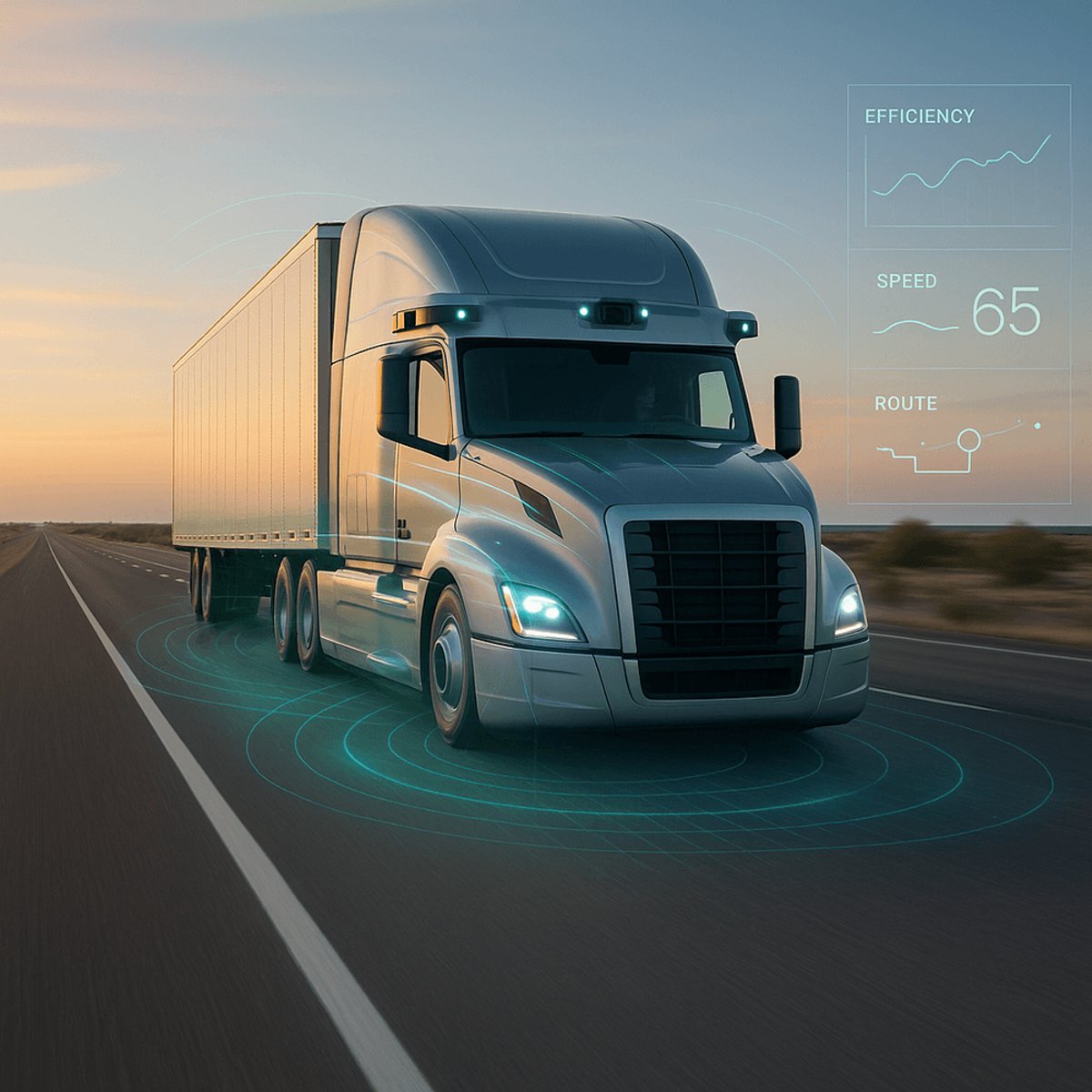
Aurora Innovation just crossed a critical threshold in autonomous trucking. The company's self-driving trucks can now haul freight 1,000 miles in 15 hours - faster than human drivers are legally allowed to operate under federal regulations. CEO Chris Urmson called it a "superhuman" moment, marking what could be the tipping point where autonomous trucks become economically superior to human-driven fleets. The milestone arrives as the logistics industry faces persistent driver shortages and rising freight costs.
Aurora Innovation just rewrote the economics of long-haul trucking. The autonomous vehicle company announced its self-driving trucks can now complete 1,000-mile routes in 15 hours - a feat that human drivers can't legally match under current federal regulations. CEO Chris Urmson didn't mince words, calling it a "superhuman" achievement that fundamentally changes the competitive landscape for freight hauling.
The breakthrough isn't just about raw speed. Federal Hours of Service regulations limit human truck drivers to 11 hours of driving within a 14-hour work window, followed by mandatory 10-hour rest periods. That means a 1,000-mile haul typically requires either a team of two drivers or an overnight stop, adding significant cost and complexity to logistics operations. Aurora's autonomous trucks, operating 24/7 without fatigue, simply don't face these constraints.
The timing couldn't be more critical for the freight industry. The American Trucking Associations estimates the industry is short roughly 80,000 drivers, a gap that's been widening for years as the driver population ages and younger workers avoid the grueling lifestyle. Meanwhile, e-commerce growth continues pushing freight volumes higher. Aurora's technology arrives as a potential solution to an increasingly urgent problem.
But the company isn't operating in a vacuum. Waymo has been running autonomous freight pilots with partners like Uber Freight, while TuSimple and Kodiak Robotics are also racing toward commercial deployment. The difference is Aurora's public claim of beating human performance on a key metric that matters to freight customers - delivery speed over long distances.
The technology behind the milestone relies on Aurora's Driver system, which combines lidar, radar, and camera sensors with machine learning models trained on millions of miles of real-world and simulated driving data. The system has to handle everything from adverse weather to aggressive passenger vehicles to sudden road closures - all while maintaining the steady, predictable driving style that maximizes fuel efficiency and cargo safety.
What this means for trucking companies is profound. A fleet of Aurora-powered trucks could theoretically move freight 30-40% faster than human-driven equivalents on long routes, while eliminating labor costs that typically represent 40% of total operating expenses. That's not just incremental improvement - it's the kind of advantage that could force rapid industry adoption once the technology proves reliable at scale.
Aurora hasn't disclosed exactly where or when this 1,000-mile run occurred, or how many such trips its trucks have completed. Those details matter - one successful run is impressive, but consistent performance across varied conditions and routes is what freight customers will demand before signing contracts. The company has been testing on corridors between Texas and California, focusing on Interstate routes where highway driving reduces complexity.
The regulatory landscape remains murky. While the National Highway Traffic Safety Administration has issued guidelines for autonomous vehicles, states maintain varying rules about driverless operation. Aurora and competitors are working closely with regulators to establish safety frameworks, but questions about liability in accidents and interstate commerce regulations are far from settled.
Competitors aren't sitting idle. Alphabet's Waymo recently expanded its autonomous trucking operations in the Southwest, while traditional trucking companies like Schneider National are partnering with multiple autonomous vehicle developers to hedge their bets. The race is less about who crosses the finish line first and more about who can scale reliable, profitable operations fastest.
For drivers, the implications are complicated. While some jobs will inevitably disappear, the transition won't happen overnight. Most experts predict autonomous trucks will initially focus on long-haul highway segments, with human drivers handling "first mile" and "last mile" operations in complex urban environments. That could actually improve driver quality of life by eliminating the long highway stretches that make the job so punishing.
The freight industry moves about 72% of America's goods by weight, generating over $900 billion in revenue annually. Even capturing a fraction of that market would make autonomous trucking one of the most valuable applications of self-driving technology - potentially more lucrative than passenger robotaxis given the clearer business case and willingness of logistics companies to adopt technology that cuts costs.
Aurora's 1,000-mile milestone represents more than a technical achievement - it's proof that autonomous trucks can outperform human drivers on metrics that directly impact freight economics. The company still needs to demonstrate consistent reliability at scale and navigate an evolving regulatory landscape, but the fundamental value proposition is now clear. As driver shortages intensify and logistics costs rise, the freight industry is watching closely to see whether Aurora can translate this "superhuman" capability into commercial reality. The race to transform America's trucking infrastructure just shifted into a higher gear.