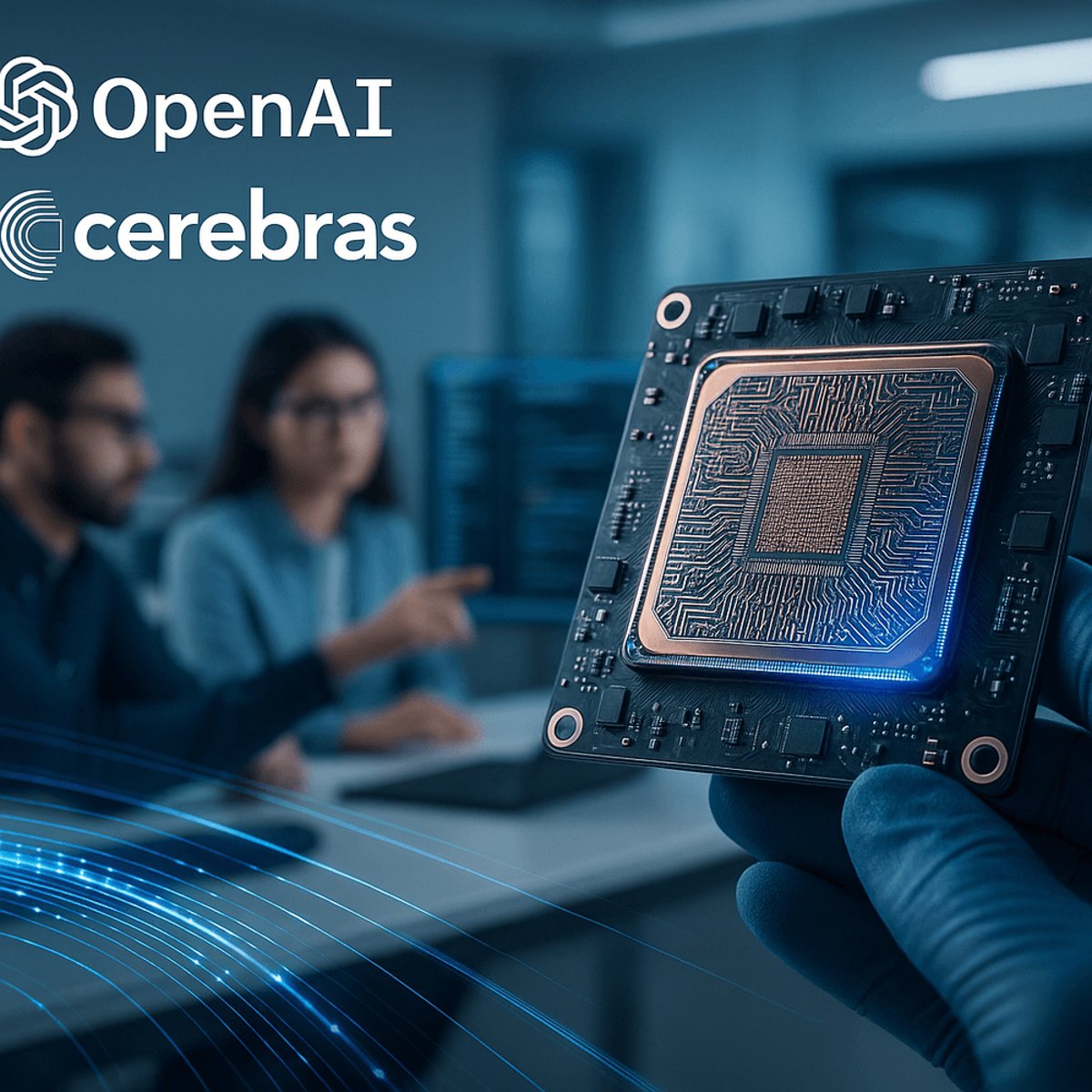
OpenAI just unveiled Codex-Spark, a new version of its developer-focused coding assistant that runs on dedicated hardware from chipmaker Cerebras. The launch marks what OpenAI calls the "first milestone" in a strategic partnership that could reshape how AI coding tools are deployed. While details remain sparse, the move signals OpenAI's push beyond traditional GPU infrastructure as competition heats up in the AI developer tools market.
OpenAI is betting on specialized hardware to power its next generation of developer tools. The company announced Codex-Spark today, a revamped version of its coding assistant that runs on chips from Cerebras, marking an unusual hardware partnership for the AI leader typically associated with massive GPU clusters.
The timing is strategic. As AI coding assistants explode in popularity - with GitHub Copilot claiming millions of users and Amazon's CodeWhisperer making aggressive inroads into enterprise development teams - OpenAI is looking for technical edges. Cerebras specializes in wafer-scale chips designed specifically for AI inference, potentially offering speed and efficiency advantages over conventional hardware.
OpenAI characterized the launch as the "first milestone" in its relationship with Cerebras, according to TechCrunch. That language suggests this isn't a one-off experiment but the opening move in a broader partnership. The original Codex, which powered the early versions of GitHub Copilot, helped kickstart the AI coding revolution when it launched in 2021.
Cerebras has been positioning itself as an alternative to Nvidia for AI workloads, with its CS-2 system featuring a single massive chip rather than arrays of smaller GPUs. The architecture is particularly well-suited for inference tasks - exactly what coding assistants need when generating suggestions in real-time for developers. For OpenAI, diversifying beyond Nvidia infrastructure addresses both supply constraints and potential cost advantages.
The competitive landscape for AI coding tools has intensified dramatically. Microsoft-backed GitHub Copilot dominates mindshare among individual developers, while Google recently integrated its Gemini models into coding workflows. Meta open-sourced Code Llama, and a wave of startups like Cursor and Replit are building entire development environments around AI assistance.
Codex-Spark's name hints at positioning around speed and responsiveness - critical factors when developers expect near-instant code completions. But OpenAI provided few technical details about performance benchmarks or availability. The lack of specifics suggests the partnership may still be in early stages, with broader rollout plans to come.
For Cerebras, landing OpenAI as a partner provides massive validation. The chipmaker has struggled to break through against Nvidia's ecosystem dominance, despite technical innovations. A high-profile deployment powering OpenAI developer tools could open doors to other AI companies looking for specialized hardware.
The partnership also reflects broader industry trends. As foundation models mature, companies are increasingly optimizing for inference efficiency rather than pure training scale. Specialized chips designed for serving AI models - from Google's TPUs to startups like Groq - are gaining traction. OpenAI experimenting with Cerebras hardware signals that even the biggest players are hedging their bets on chip architectures.
What remains unclear is whether Codex-Spark represents a complete reimagining of the model or simply an optimized deployment of existing technology. The original Codex was based on GPT-3 architecture fine-tuned for code. With OpenAI now operating GPT-4 and reportedly developing even more advanced systems, Codex-Spark could incorporate significant model improvements beyond just the hardware change.
OpenAI's Codex-Spark partnership with Cerebras signals a strategic shift toward specialized hardware for AI inference workloads, particularly in the white-hot developer tools market. While light on technical details, the "first milestone" framing suggests this is the opening chapter of a longer collaboration that could influence how AI coding assistants are built and deployed. As the race for developer mindshare intensifies, hardware optimization may prove as important as model capabilities. The real test will be whether Cerebras chips deliver meaningful performance or cost advantages that translate into better developer experiences - and whether this partnership expands beyond a single product into OpenAI's broader infrastructure strategy.