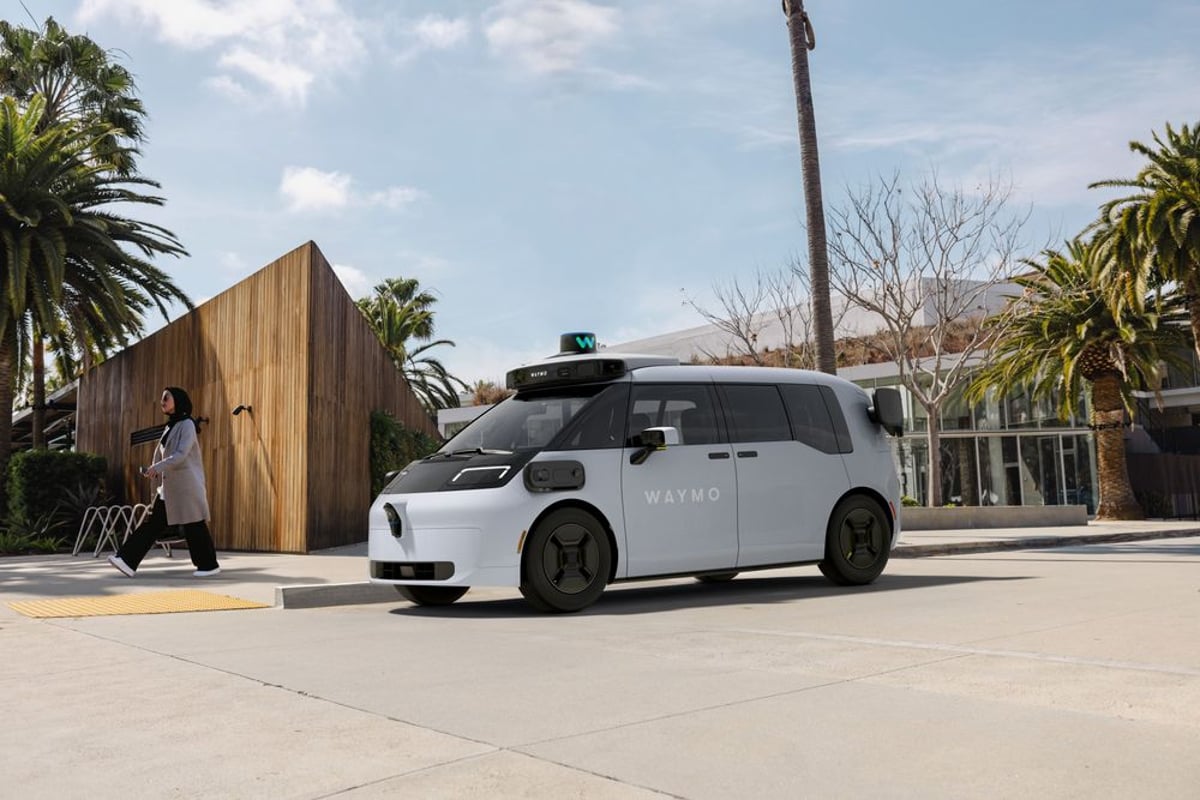
Alphabet's self-driving unit Waymo just cleared a massive hurdle in the race to commercialize robotaxis. The company announced today its sixth-generation autonomous driving system is ready for passenger trips, marking the first major tech upgrade since 2020. The rollout starts with employees and their friends in San Francisco and Los Angeles before expanding to public riders, but here's the real story: this generation is built for high-volume production across multiple vehicle platforms.
Waymo is making its biggest bet yet on autonomous vehicles. After years of testing and validation, Alphabet's self-driving division announced today that its sixth-generation robotaxi technology is ready for passengers, employee riders first, then the public. But the real news isn't just another tech update - it's that this system is purpose-built for high-volume production.
The timing matters. Waymo's current fleet of Jaguar I-Pace vehicles runs on fifth-generation technology that first rolled out in March 2020. That partnership hit a wall when Jaguar discontinued the I-Pace at the end of 2024, forcing Waymo to either stick with an aging platform or leap forward. They chose the latter.
The sixth-generation system marks a fundamental shift in Waymo's strategy. Unlike previous iterations tied to specific vehicle models, this tech is designed to work seamlessly across multiple vehicle types. That flexibility is critical for a company that's been burning through parent company Alphabet's cash for over a decade without reaching profitability. Building a system that can scale across manufacturers and models means Waymo can finally pursue the kind of volume economics that make robotaxis viable.
San Francisco and Los Angeles will serve as the initial testing grounds, starting with employees and their friends before opening to paying customers. The phased approach mirrors Waymo's historical playbook - cautious, methodical, willing to take years if necessary. That conservatism has kept Waymo ahead of competitors in safety metrics but behind in market penetration. Companies like Tesla and Cruise have moved faster, though with mixed results.
The competitive landscape has shifted dramatically since 2020. Tesla's Full Self-Driving system has racked up millions of miles of real-world data, even as critics question its safety. Cruise, backed by GM, briefly operated commercial robotaxi services before regulators shut them down following a pedestrian accident. Waymo has largely avoided those pitfalls through slower, more controlled expansion, but that caution comes with opportunity costs.
The mention of high-volume production is telling. Previous Waymo generations required extensive custom modifications to off-the-shelf vehicles, a process that's expensive and slow. If the sixth-gen system truly enables easier integration across platforms, it opens doors to partnerships with multiple automakers. Hyundai and other manufacturers could potentially adopt the tech without the extensive retrofitting that plagued earlier deployments.
Financially, this launch arrives as Alphabet faces increasing pressure to show returns on its Other Bets division, which includes Waymo. The unit has historically posted massive losses - hundreds of millions quarterly - while generating minimal revenue. A system designed for volume production suggests Waymo is finally ready to move from R&D project to scalable business.
The timing also coincides with broader industry momentum around autonomous vehicles. Regulatory frameworks are maturing, public acceptance is growing, and the technology itself has hit inflection points in reliability and cost. Waymo claims to have driven millions of autonomous miles with better safety records than human drivers, though full transparency on those metrics remains elusive.
What happens next depends on execution. If the sixth-gen tech proves reliable and the production ramp proceeds smoothly, Waymo could finally transition from promising experiment to legitimate business. If technical issues emerge or manufacturing partnerships stumble, the company faces another multi-year development cycle while competitors close the gap. The employee rollout will provide early signals - watch for any delays or pullbacks in the public launch timeline.
Waymo's sixth-generation launch represents more than incremental tech improvement - it's a strategic pivot toward commercial viability. By building a system designed for high-volume production across multiple vehicle platforms, Alphabet's self-driving unit is finally positioning itself to move beyond perpetual pilot programs. The real test comes in execution: Can they scale manufacturing partnerships, maintain safety records under broader deployment, and prove the unit economics that have eluded them for over a decade? The employee rollout starting in San Francisco and Los Angeles will provide early answers, but the ultimate question remains whether autonomous vehicles can transition from Silicon Valley moonshot to profitable transportation business.