TL;DR:
• Sam Altman tells CNBC AGI term has lost relevance amid definitional chaos
• OpenAI's GPT-5 launch draws "incremental" criticism despite $500B valuation talks
• Computer science experts call AGI a "distraction" that obscures real AI progress
• Industry shift toward measuring specific AI capabilities instead of general intelligence
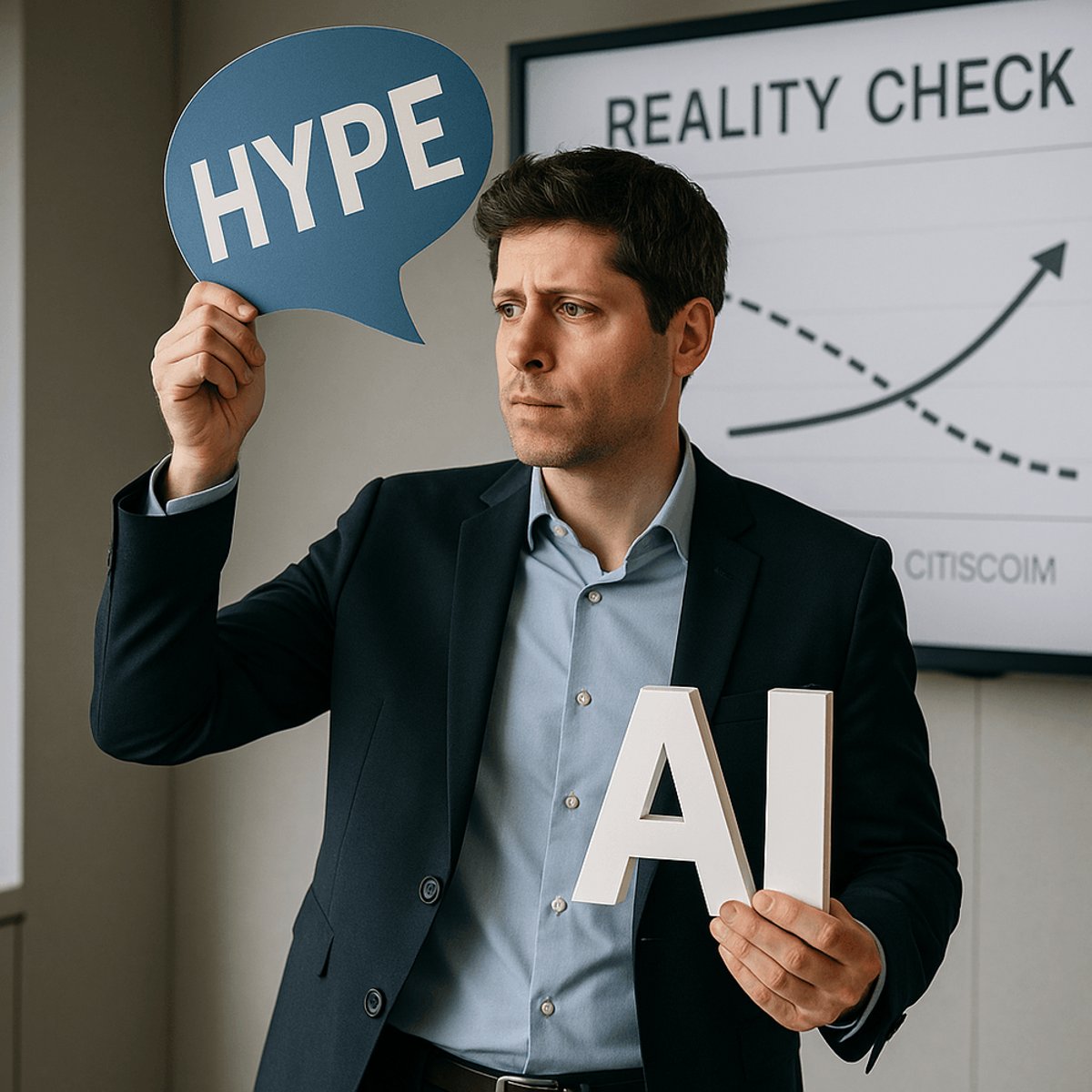
OpenAI CEO Sam Altman just dealt a stunning blow to the AI industry's most hyped concept, calling artificial general intelligence "not a super useful term" during a CNBC interview. The admission comes as his company's latest GPT-5 model faces criticism for being merely incremental, not revolutionary, raising questions about whether the $500 billion valuation buildup was premised on an impossible dream.
OpenAI CEO Sam Altman just pulled the rug out from under the AI industry's biggest buzzword. Speaking to CNBC's Squawk Box, Altman dismissed artificial general intelligence as "not a super useful term," marking a dramatic pivot from the company that has raised hundreds of billions promising exactly that breakthrough.
The timing couldn't be more telling. OpenAI's long-awaited GPT-5 model launched last week to lukewarm reception, with critics calling it "incremental, not revolutionary." University of Southampton computer science professor Wendy Hall didn't mince words: "It's the Wild West for snake oil salesmen at the moment."
Altman's AGI skepticism reveals deeper industry tensions. The company that built its $300 billion valuation on AGI promises is now preparing a secondary share sale at $500 billion while its CEO questions the very concept that justified those numbers. "I think the point of all of this is it doesn't really matter," Altman told CNBC, describing instead "this continuing exponential of model capability."
The definitional crisis runs deeper than OpenAI. Nick Patience, AI practice lead at The Futurum Group, calls AGI a "fantastic North Star for inspiration" that nonetheless "creates a fog of hype that obscures the real, tangible progress we're making in more specialised AI." Multiple companies and researchers use wildly different AGI definitions, from systems that can "do a significant amount of work in the world" to those matching human cognitive abilities across all domains.
Altman himself admitted OpenAI's new model misses his personal AGI bar since it can't continuously learn on its own. This acknowledgment comes after years of the entrepreneur suggesting AGI could arrive in the "reasonably close-ish future." Now he advocates for discussing "levels of progress" rather than the binary question of whether something qualifies as AGI.
OpenAI's strategic messaging shift couldn't come at a more critical moment. The company faces mounting pressure to justify unprecedented valuations while competitors like Anthropic, Google, and Meta race to develop their own frontier models. Each claims progress toward general intelligence, yet none can agree on what that actually means.
The implications ripple through Silicon Valley's funding ecosystem. Startups have raised billions promising AGI breakthroughs, while VCs bet on companies claiming proximity to general intelligence. Patient's blunt assessment captures the growing skepticism: "I feel AGI is a bit of a distraction, promoted by those that need to keep raising astonishing amounts of funding."
Instead of chasing the AGI chimera, experts argue for focusing on specific AI capabilities. This pragmatic approach measures tangible progress in coding, scientific research, mathematical reasoning, and creative tasks rather than pursuing an ill-defined holy grail. Altman still expects breakthroughs in "new math theorems and scientific discoveries" within two years, suggesting OpenAI will pivot toward concrete achievements.
The industry's AGI obsession may be reaching its breaking point. As models improve incrementally rather than achieving dramatic leaps toward general intelligence, companies face a harsh reality check. The question isn't whether AGI will arrive, but whether the term itself has become more marketing tool than meaningful technical milestone.
Altman's AGI dismissal signals a fundamental industry recalibration. As OpenAI prepares its half-trillion-dollar valuation pitch, the company that popularized AGI dreams now advocates for practical capability measurement over sci-fi promises. This shift from general intelligence hype toward specific AI achievements may finally ground Silicon Valley's loftiest ambitions in deliverable reality. The question isn't whether AGI will happen, but whether the industry will abandon its most tantalizing mirage for measurable progress.