TL;DR:
• Nvidia and AMD agreed to pay 15% of China chip revenues to U.S. government for export licenses
• Deal covers Nvidia's H20 and AMD's MI308 chips amid Trump's 100% tariff threats
• Jensen Huang met with Trump last week to negotiate terms
• First-ever revenue-sharing arrangement between chipmakers and U.S. government
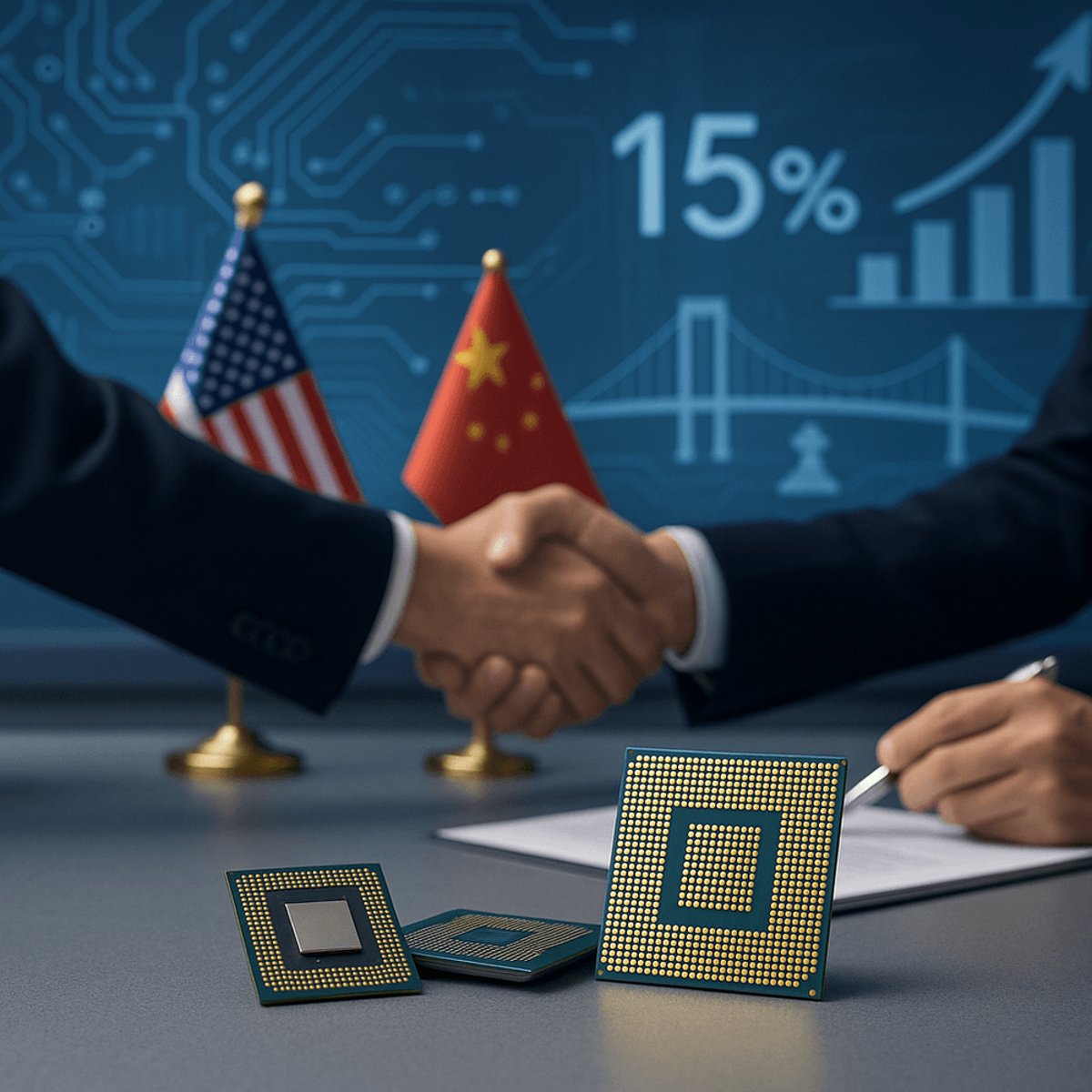
Nvidia and AMD just inked an extraordinary deal with the White House: 15% of their China chip revenues in exchange for export licenses. The unprecedented arrangement marks a new era of government revenue-sharing in tech, coming as Trump's tariff threats reshape global semiconductor trade.
The chip industry just witnessed something unprecedented. Nvidia and AMD have agreed to hand over 15% of their revenues from specific AI chips sold in China directly to the U.S. government, according to exclusive reporting by the Financial Times. In return, both companies receive the golden ticket: export licenses to sell their most advanced China-compliant chips in the world's second-largest economy.
The deal covers Nvidia's H20 chip and AMD's MI308 processor, both specifically designed to meet U.S. export restrictions while still delivering AI capabilities to Chinese customers. For context, Nvidia's China revenue hit $5.5 billion in fiscal 2024 before export controls tightened, making this revenue-sharing arrangement potentially worth hundreds of millions annually to the Treasury.
Nvidia CEO Jensen Huang personally flew to Washington last week for face-to-face negotiations with President Trump, according to FT sources. The high-stakes meeting came as Trump threatened a crushing 100% tariff on semiconductor imports unless companies "build in the United States." Huang's diplomatic mission appears to have paid off, securing market access while avoiding the tariff hammer.
"We follow rules the U.S. government sets for our participation in worldwide markets," Nvidia told the Financial Times in a carefully worded statement that acknowledges the new reality without celebrating it. The comment reflects how even the world's most valuable chip company must now navigate an era where geopolitics directly impacts profit margins.
This revenue-sharing model represents a seismic shift from traditional export controls, which typically restricted technology access through licensing requirements and compliance costs. Now the U.S. government becomes a direct financial beneficiary of American companies' overseas success, creating unprecedented alignment between corporate profits and national interests.
The timing couldn't be more critical for both companies. Nvidia's stock soared 170% last year on AI demand, but China restrictions have forced the company to develop watered-down chip variants specifically for the Chinese market. AMD, meanwhile, has been aggressively pursuing AI market share and can't afford to lose access to China's massive data center buildout.
Industry analysts are watching closely to see if this becomes a template for other tech giants. Intel, Qualcomm, and other semiconductor companies with significant China exposure could face similar arrangements as the Trump administration looks to monetize American technological advantages.
The deal also signals Trump's willingness to use carrots alongside sticks in trade policy. Rather than blanket restrictions, the administration is crafting bespoke arrangements that keep American companies competitive while extracting concessions. It's a far more sophisticated approach than simple tariffs, creating direct financial incentives for cooperation.
This unprecedented revenue-sharing arrangement fundamentally rewrites the playbook for tech-government relations. By making the U.S. Treasury a direct stakeholder in American chipmakers' overseas success, Trump has created a model that could rapidly spread across the technology sector. For investors, it represents a new cost of doing business in geopolitically sensitive markets. For competitors, it's a warning that access to critical technologies now comes with a government tax attached.