TL;DR:
• Nvidia and AMD agree to 15% revenue cut to U.S. government for China export licenses
• Companies gain access to sell H20 and MI308 AI chips in Chinese market worth billions
• Analysts view deal as net positive - 85% revenue better than zero market access
• Unprecedented "pay-to-play" model unlikely to extend beyond strategic semiconductors
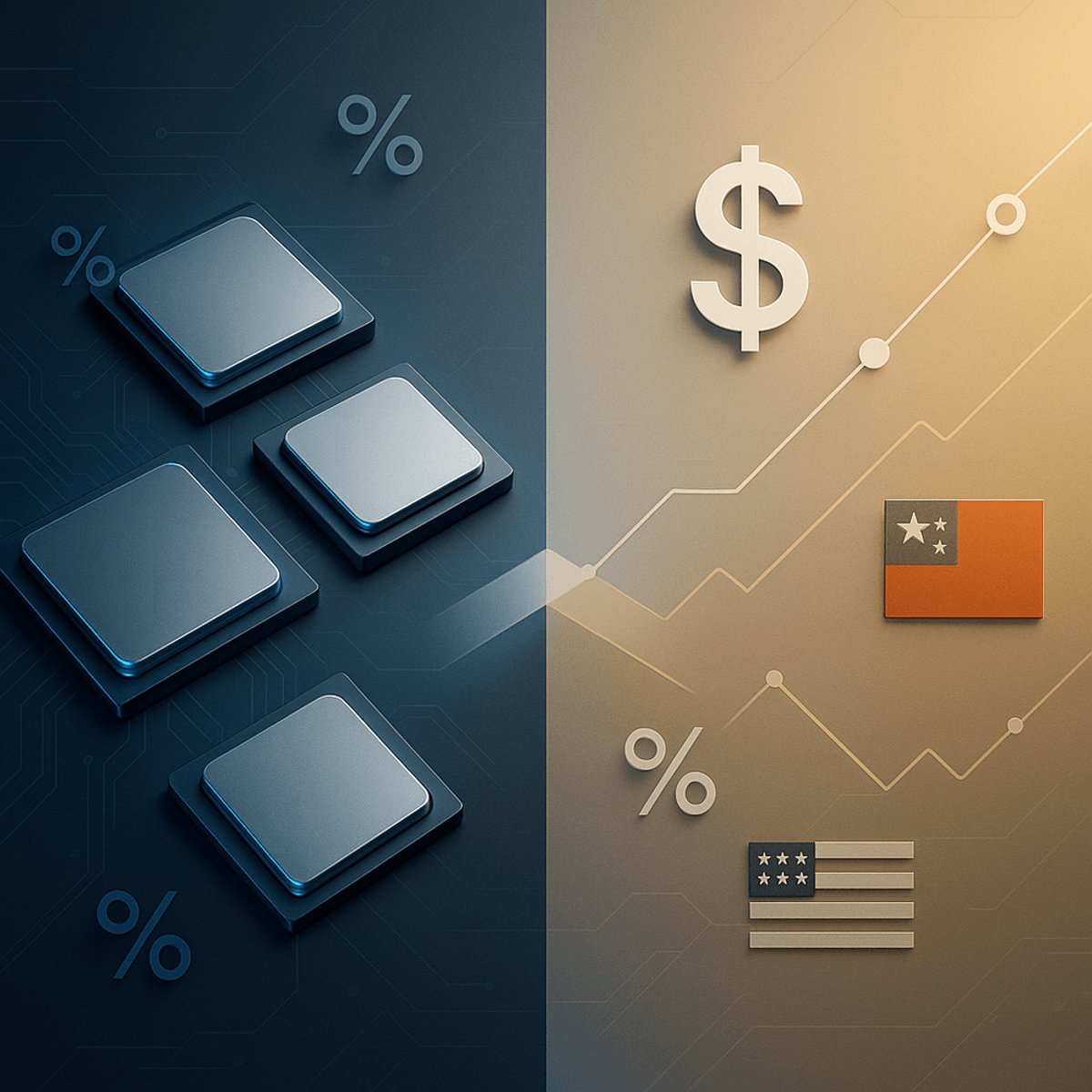
In an unprecedented move, Nvidia and AMD have struck a deal with the Trump administration to hand over 15% of their China chip revenues to the U.S. government in exchange for export licenses. The arrangement marks the first time Washington has directly monetized tech trade tensions, while giving both companies renewed access to the world's largest semiconductor market worth billions in potential sales.
The semiconductor industry just witnessed history in the making. Nvidia and AMD confirmed Monday they've agreed to fork over 15% of their China chip revenues to the U.S. government, securing export licenses for their AI semiconductors in what analysts are calling an "unusual" but strategically sound arrangement. The deal reopens billions in potential Chinese sales that had been locked away under export controls for months.
Markets responded with cautious optimism. Both Nvidia and AMD shares traded only slightly lower in premarket sessions, signaling investors see this as fundamentally positive despite the revenue haircut. "From an investor perspective, it's still a net positive, 85% of the revenue is better than zero," Ben Barringer, global technology analyst at Quilter Cheviot, told CNBC.
The arrangement grants Nvidia permission to resume sales of its H20 chip, specifically designed to meet Chinese export requirements, while AMD can ship its MI308 processors. Both products had been trapped in regulatory limbo for months as U.S.-China tech tensions escalated. Nvidia hadn't shipped H20s to China "for months," according to the company's statement to NBC News, making this deal crucial for maintaining competitive position against Chinese rival Huawei.
"We follow rules the U.S. government sets for our participation in worldwide markets," Nvidia said in its statement. "While we haven't shipped H20 to China for months, we hope export control rules will let America compete in China and worldwide. America cannot repeat 5G and lose telecommunication leadership."
The Trump administration's transactional approach extends beyond traditional trade policy into direct revenue extraction. Neil Shah, partner at Counterpoint Research, characterized the 15% cut as an "indirect tariff at source," while Futurum Group CEO Daniel Newman called it a "tax for doing business in China" in a social media post.
This precedent-setting deal likely won't spread beyond semiconductors, analysts predict. "I don't anticipate it extending to other sectors that are just as important to the U.S. economy like software and services," Nick Patience, practice lead for AI at The Futurum Group, told CNBC. The semiconductor industry's unique position under strict export controls makes it particularly suited for such arrangements.
China's reaction presents its own complexities. The country desperately needs advanced AI chips to fuel its technological ambitions, but the revenue-sharing requirement essentially makes Chinese companies subsidize the U.S. government with every purchase. Recent tensions have escalated further, with Chinese regulators questioning Nvidia about potential "backdoors" in its H20 chips - accusations the company has repeatedly denied.
"For China, it is a conundrum as they need those chips to advance their AI ambitions but also the fee to the US government could make it costlier," Counterpoint Research's Shah explained. China's state-run Global Times has already criticized the arrangement, arguing it undermines Washington's original security justifications for export controls.
The longer-term implications remain murky. George Chen, partner at The Asia Group, warned that uncertainty looms over whether the U.S. government might demand larger revenue cuts if China sales grow substantially. Companies may also adjust pricing to offset the 15% levy, though that risks ceding market share to domestic Chinese competitors like Huawei.
What's certain is that this deal fundamentally reshapes how tech companies will navigate U.S.-China trade tensions. The "pay-to-play" model offers a potential template for resolving export control disputes while generating direct revenue for the U.S. government - a win-win that reflects Trump's dealmaker instincts applied to geopolitical semiconductor competition.
Trump's semiconductor revenue-sharing deal with Nvidia and AMD establishes a new playbook for managing U.S.-China tech competition. While the 15% cut represents an unprecedented direct monetization of export controls, it offers both companies renewed access to billions in Chinese AI chip demand they couldn't reach for months. The arrangement reflects the administration's transactional approach to geopolitics, potentially setting a template for other strategic technology sectors. For investors, the math is simple: 85% of a massive market beats zero percent every time.