TL;DR:
• Trump signals openness to downgraded Blackwell sales to China with 30-50% performance cuts
• Nvidia and AMD already agreed to 15% revenue sharing deal with U.S. government for China sales
• Move aims to make China dependent on U.S. tech while preventing cutting-edge AI development
• Huawei preparing competitive Ascend processors as Chinese firms exhaust stockpiled chips
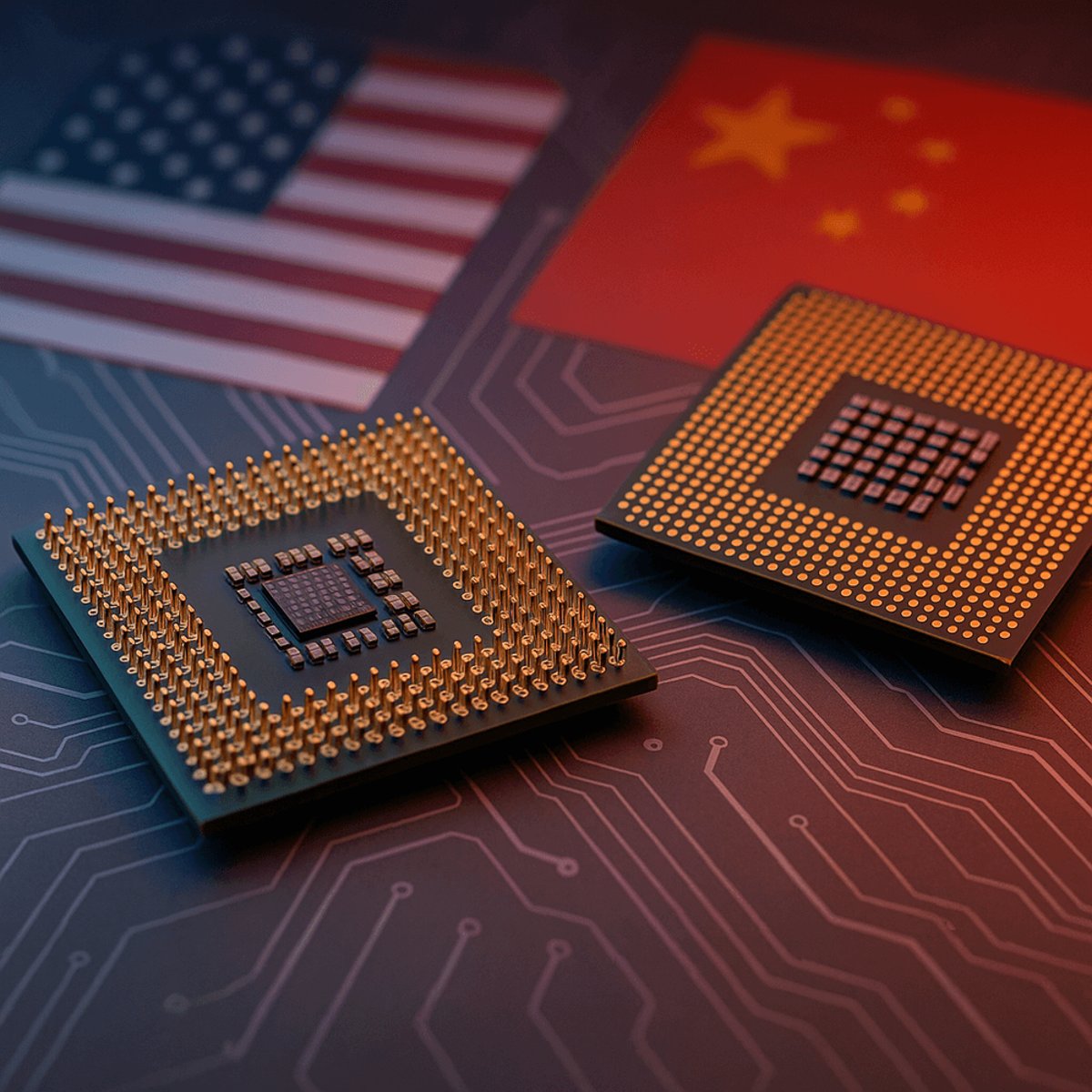
President Trump just cracked open a massive opportunity for Nvidia in China, signaling he'd allow sales of deliberately downgraded Blackwell AI chips with 30-50% reduced performance. The potential deal comes as Nvidia and AMD already agreed to pay the U.S. government 15% of Chinese chip revenues, reshaping the global AI hardware landscape.
President Trump just handed Nvidia a potential lifeline into China's massive AI market, but with strings attached that could reshape global semiconductor competition. Speaking at Monday's press conference, Trump revealed he's considering allowing sales of deliberately hobbled Blackwell processors to China, with performance slashed by 30-50%.
"It's possible I'd make a deal" on a "somewhat enhanced — in a negative way — Blackwell" processor, Trump told reporters, describing the Blackwell system as the "latest and the greatest in the world." The president indicated he'll meet with Nvidia CEO Jensen Huang specifically about this arrangement.
The timing couldn't be more critical for Nvidia, which has been locked out of China since 2022 when Washington banned exports of its A100 and H100 chips — the workhorses of AI model training. Last month, Huang lobbied Trump directly for Chinese market access, arguing that cutting off U.S. chips would simply accelerate China's domestic alternatives.
This latest development builds on last week's bombshell revenue-sharing agreement, where Nvidia and AMD agreed to pay the U.S. government 15% of Chinese chip revenues in exchange for export licenses. Trump initially demanded 20% but settled after Huang's negotiation, creating an unprecedented model where chip companies essentially pay tariffs on their own products.
"The idea here is to addict China to substandard, or non-cutting edge technology," Paul Triolo, partner at DGA-Albright Stonebridge Group, told CNBC. If approved, downgraded Blackwell access "would be a big deal going forward," potentially creating technological dependency while maintaining U.S. competitive advantages.
The strategic calculus reflects Huang's persistent argument that total chip cutoffs would simply hand the market to Huawei. China's tech giant has been aggressively developing its Ascend processor series as an Nvidia alternative, while Chinese firms burn through legally acquired stockpiles of older Nvidia chips for AI model training.
"We are in sort of a transition point of running out of those stockpiles of earlier acquired Nvidia GPUs," Triolo explained, noting that Huawei's current Ascend processors "are not quite capable" of full replacement yet. However, he expects Huawei to release more competitive 910 processors next year.
The potential Blackwell deal represents a delicate balancing act — allowing Nvidia to tap China's enormous AI market while ensuring Chinese firms can't access cutting-edge capabilities. With AI training requiring massive computational power, even downgraded Blackwell chips could prove valuable for less demanding applications, creating ongoing dependency on U.S. technology architecture.
Trump's conditional approval for downgraded Blackwell sales marks a pivotal shift from blanket chip bans toward strategic technological control. The move could generate billions for Nvidia while maintaining U.S. AI supremacy, but success hinges on calibrating performance limitations that satisfy Chinese demand without enabling advanced model development. As Huawei races to achieve chip independence, this window for controlled dependency may prove fleeting.