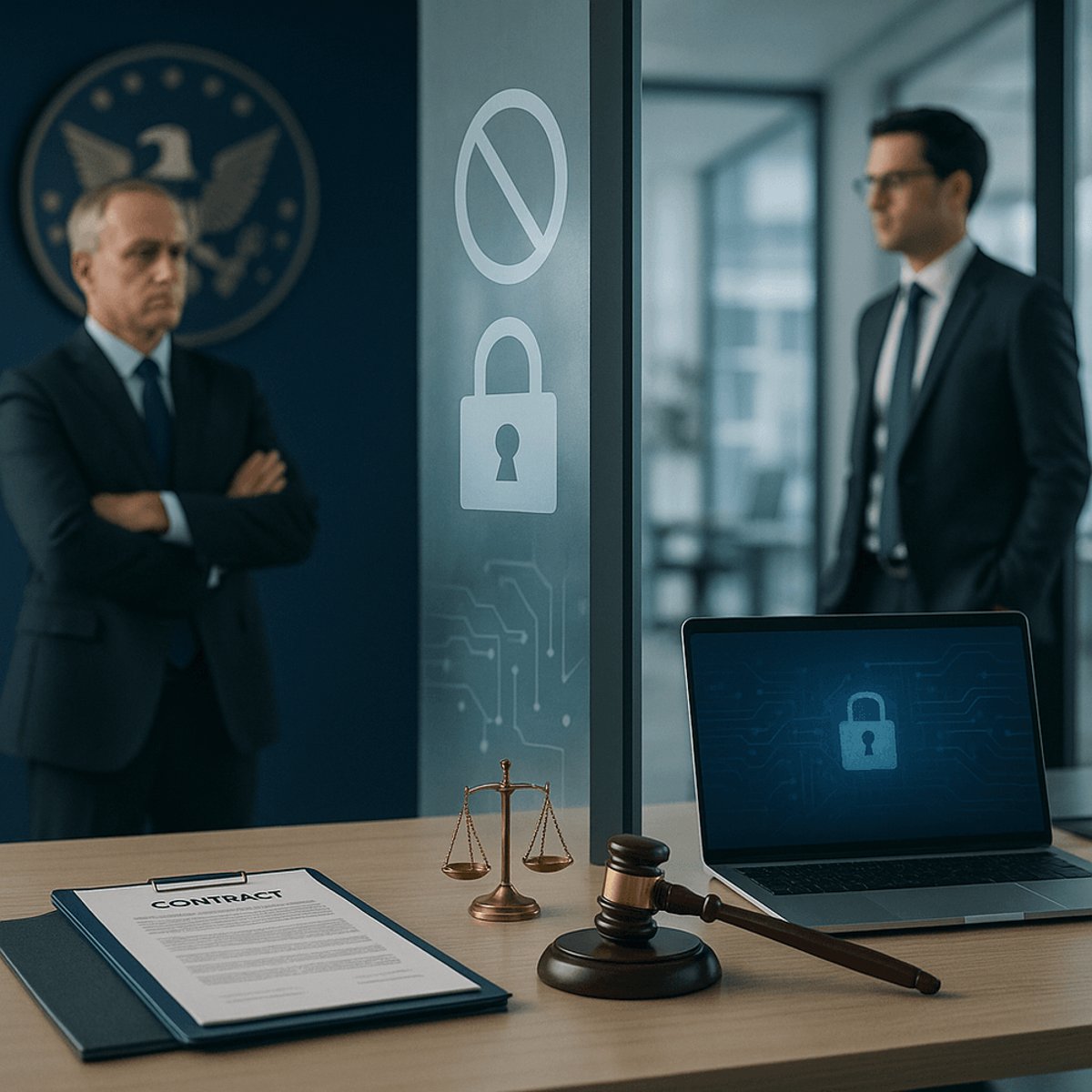
Anthropic, the AI startup behind the Claude chatbot, has filed a federal lawsuit against the Department of Defense, challenging its designation as a supply-chain security risk. The move escalates what began as a contract dispute into a constitutional battle with sweeping implications for how the government regulates AI vendors. If the designation stands, federal agencies could be barred from using Claude entirely, marking an unprecedented regulatory crackdown on a major AI company.
Anthropic just threw down the legal gauntlet against the Pentagon, filing a lawsuit that could reshape how Washington regulates AI companies. The San Francisco-based startup argues the Department of Defense overstepped its authority by slapping it with a supply-chain risk designation—essentially labeling the Claude developer as a potential security threat.
The designation represents a dramatic escalation from what Anthropic characterizes as a routine contract dispute. According to reporting by Wired, the company contends the Trump administration weaponized national security powers to settle what should have been a commercial disagreement. If the label sticks, federal agencies across the government could be prohibited from procuring or using Claude, effectively locking one of the industry's leading AI models out of the massive public sector market.
The lawsuit arrives as AI companies face mounting scrutiny over their relationships with government contractors and defense agencies. Anthropic has positioned itself as a safety-focused alternative to rivals like OpenAI and Google's DeepMind, but that reputation hasn't shielded it from regulatory crossfire. The company's challenge hinges on procedural arguments—that the DOD failed to provide adequate notice or opportunity to contest the designation before imposing it.
Supply-chain risk determinations traditionally target foreign companies with suspected ties to adversarial governments, most notably Chinese telecoms like Huawei and ZTE. Applying the same framework to a U.S.-based AI startup backed by prominent Silicon Valley investors marks a significant departure. Anthropic counts Google and venture firm Spark Capital among its investors, raising questions about what specific risks the Pentagon identified.
The timing couldn't be more fraught for the AI industry. Federal agencies have been racing to adopt large language models for everything from intelligence analysis to customer service chatbots, creating a lucrative and strategically important market. A ban on Anthropic would hand a massive competitive advantage to rivals like Microsoft-backed OpenAI and Google, which have already secured major government contracts.
Legal experts say the case will test how much deference courts give executive branch agencies when they invoke national security to restrict commercial activity. The DOD wields broad authority under federal acquisition regulations to exclude vendors it deems risky, but those powers aren't unlimited. If Anthropic can demonstrate the designation was arbitrary or politically motivated, courts might force the Pentagon to reverse course or at minimum provide a more detailed justification.
The broader implications extend beyond one company's government contracts. As AI systems become embedded in critical infrastructure and defense operations, Washington is grappling with how to assess and mitigate risks that don't fit neatly into existing regulatory boxes. Unlike traditional hardware supply chains, AI models present novel concerns around data handling, algorithmic bias, and the potential for adversarial manipulation. The Anthropic case could establish important precedents for how those risks get evaluated and who bears the burden of proof.
For now, the lawsuit injects uncertainty into Anthropic's growth trajectory just as the company was gaining momentum. Claude has earned praise for its nuanced responses and strong performance on safety benchmarks, positioning the startup as a credible challenger in a market dominated by larger, better-funded rivals. A prolonged legal battle—or worse, a designation that survives judicial review—could spook enterprise customers beyond just government agencies, particularly those in regulated industries that take cues from federal security assessments.
The DOD hasn't publicly detailed the specific concerns driving the designation, citing the sensitive nature of supply-chain security determinations. That opacity is part of what Anthropic is challenging, arguing it deserves a transparent process to defend itself against allegations that could cripple its business. The case will likely hinge on procedural questions about notice and due process rather than the underlying merits of any security concerns, but the political overtones are hard to ignore given the timing under a Trump administration that's shown willingness to use regulatory tools aggressively against tech companies.
This lawsuit represents more than a dispute between one startup and the Pentagon—it's a test case for how the U.S. government will regulate AI companies as they become integral to national security infrastructure. The outcome will signal whether Washington can use broad supply-chain authorities to exclude domestic AI vendors or whether companies get meaningful due process before being labeled security risks. For Anthropic, the stakes are existential: lose access to government customers and face a chilling effect on enterprise adoption, or win and establish guardrails that protect the entire industry from arbitrary regulatory actions. Either way, the case will set precedents that echo across the AI sector for years to come.