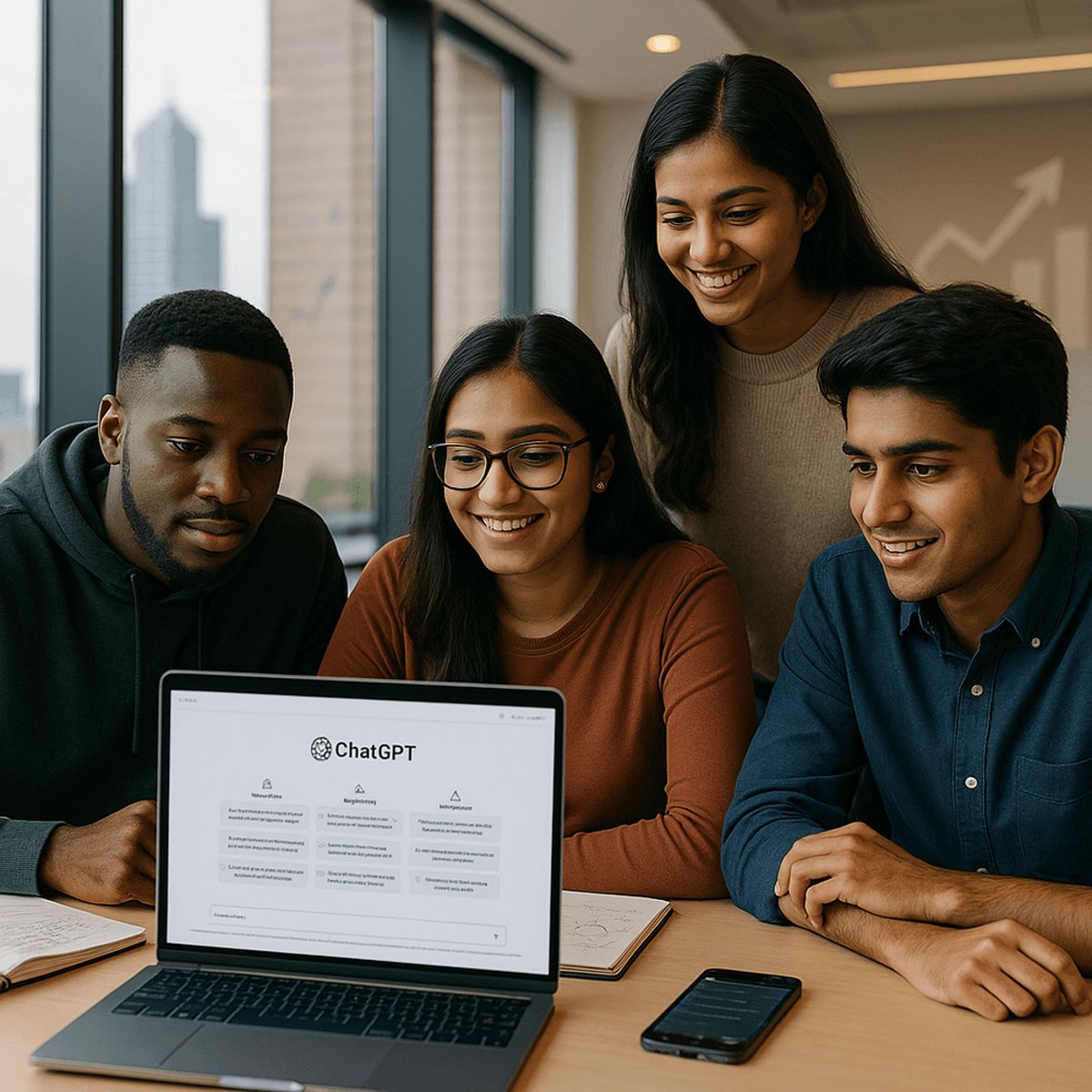
OpenAI just dropped a jaw-dropping number: India now has 100 million weekly active ChatGPT users, making it one of the AI giant's largest markets globally. CEO Sam Altman revealed the milestone while highlighting that India leads the world in student adoption of the AI chatbot. The disclosure marks a significant validation of India's AI-first transformation and signals how emerging markets are racing ahead in generative AI adoption, potentially reshaping OpenAI's strategic priorities.
OpenAI CEO Sam Altman just put India on the AI map in a big way. The country has crossed 100 million weekly active users of ChatGPT, a figure that places it among the platform's most engaged markets worldwide. But the real story isn't just the raw numbers - it's who's driving them. Altman revealed that India now has the largest student user base globally, a demographic shift that's fundamentally changing how OpenAI thinks about product development and market strategy.
The 100 million weekly active user mark is particularly striking when you consider OpenAI's global user base trajectory. While the company has been tight-lipped about country-specific breakdowns in the past, this disclosure suggests India represents a substantial chunk of ChatGPT's overall engagement. For context, OpenAI has previously touted over 300 million weekly active users globally, meaning India could account for roughly a third of that traffic. That's not just impressive - it's transformative for how the company allocates resources and tailors features.
The student angle is where things get really interesting. India's education system serves over 250 million students across schools and universities, creating a massive addressable market for AI tools. Students are using ChatGPT for everything from homework assistance and exam preparation to learning new languages and coding skills. Unlike markets where ChatGPT adoption has been driven primarily by professionals and enterprises, India's growth story is fundamentally grassroots. This bottom-up adoption pattern mirrors how India embraced smartphones and mobile internet, leapfrogging traditional desktop computing entirely.
What's driving this explosive growth? Several factors are converging at once. India's young, tech-savvy population has shown remarkable appetite for digital tools that promise efficiency gains. The country has over 700 million internet users, with smartphone penetration continuing to climb. English proficiency, while not universal, is widespread enough among students to make ChatGPT immediately accessible without localization barriers. And crucially, the free tier of ChatGPT removes the cost barrier that might limit adoption in price-sensitive markets.
But there's a competitive dimension here too. Google has long dominated India's tech landscape, with products like Search, YouTube, and Android commanding massive market share. The fact that OpenAI has managed to carve out such significant mindshare - particularly among students who are forming their first tech habits - represents a potential long-term threat to Google's dominance. Google's Gemini and other AI offerings haven't captured the cultural zeitgeist in India the way ChatGPT has, giving OpenAI a first-mover advantage that's proving hard to disrupt.
The implications for India's education sector are profound. Teachers and administrators are grappling with how to integrate AI into curricula while preventing academic dishonesty. Some institutions have embraced ChatGPT as a learning tool, while others have attempted outright bans. The reality is that with 100 million students already using the platform weekly, the genie is out of the bottle. The question isn't whether AI will transform Indian education, but how quickly institutions can adapt their pedagogical approaches to this new reality.
For OpenAI, India represents both opportunity and challenge. The company will need to invest in local infrastructure to handle the massive traffic volumes and ensure low-latency responses. There are also regulatory considerations - India's government has been increasingly assertive about data localization and AI governance. OpenAI will need to navigate these requirements while maintaining the product experience that's driven such remarkable adoption.
The revenue picture is equally complex. While India delivers massive user numbers, monetization remains tricky. ChatGPT Plus subscriptions at $20 per month are expensive by Indian standards, where the average monthly per capita income hovers around $200. OpenAI will likely need to explore regional pricing strategies, similar to how Netflix and Spotify have adapted to Indian market dynamics. The alternative is accepting lower revenue per user but making it up through sheer volume and by treating India as a testbed for features that could work in other emerging markets.
Altman's disclosure comes at a strategic moment. OpenAI is reportedly in fundraising talks that could value the company north of $300 billion, and demonstrating strong international growth - particularly in massive markets like India - strengthens the investment thesis. It also signals to competitors like Anthropic and Google that the race for global AI dominance won't be won solely in Silicon Valley. Emerging markets are becoming the new battleground, and OpenAI just planted a major flag.
The student user base revelation also hints at OpenAI's product roadmap. Features tailored for education - think personalized tutoring, adaptive learning paths, or integration with popular Indian ed-tech platforms - could become priorities. We might see OpenAI forge partnerships with major Indian education players or even develop India-specific product variants. The company has already shown willingness to customize ChatGPT for different use cases; a version optimized for Indian students seems like a logical next step.
India's 100 million weekly ChatGPT users isn't just a vanity metric - it's a preview of how AI adoption will unfold across the Global South. Students are leading the charge, integrating AI into their daily learning workflows faster than institutions can adapt their policies. For OpenAI, this validates a bet on international expansion and creates a template for cracking other emerging markets. But it also raises the stakes considerably. With great user numbers comes great responsibility, and OpenAI will need to prove it can scale infrastructure, navigate local regulations, and build sustainable business models in markets where $20 monthly subscriptions aren't realistic for most users. The next chapter of the AI revolution is being written in classrooms from Mumbai to Bangalore, and the world is watching.