TL;DR:
• ChatGPT's mobile app hits $2B in global revenue since May 2023 launch
• Revenue jumped 673% year-over-year to $1.35B in 2025, earning $193M monthly vs rivals' $3.6M
• App outperforms competitors 30x in lifetime spending, 53x higher than nearest rival Grok
• 690M downloads globally with $10 per install in US market driving 38% of total revenue
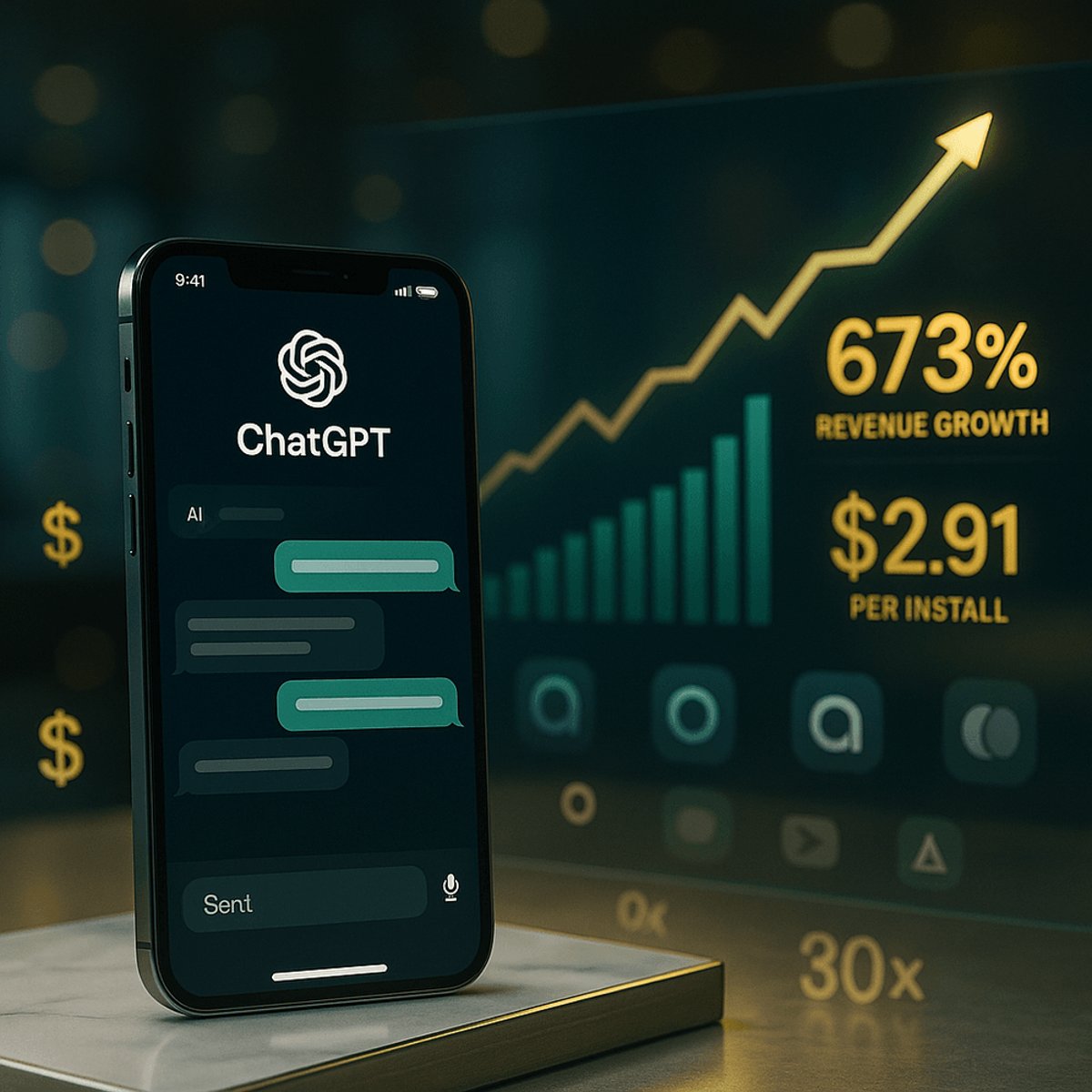
OpenAI's ChatGPT mobile app just crossed the $2 billion revenue milestone, obliterating its AI competitors with earnings 30 times higher than Claude, Grok, and Copilot combined. The stunning figures reveal how completely ChatGPT dominates mobile AI monetization, generating $2.91 per download while rivals struggle to breach $1.
OpenAI's ChatGPT mobile app just shattered the $2 billion revenue barrier, cementing its stranglehold on mobile AI monetization with numbers that make competitors look like rounding errors. According to fresh analysis from Appfigures, ChatGPT's mobile earnings dwarf its nearest rivals by a staggering 30-to-1 ratio, with the app pulling in approximately 30 times the combined lifetime spending of Claude, Copilot, and Grok.
The revenue explosion tells the story of mobile AI's breakout year. ChatGPT's mobile app generated $1.35 billion in 2025 alone through July, representing a jaw-dropping 673% surge from the $174 million it earned during the same period last year. The app now averages close to $193 million monthly, compared to just $25 million in 2024 - a trajectory that's leaving competitors scrambling to find their footing in the mobile AI gold rush.
"The numbers reveal just how far ahead ChatGPT has pulled in the consumer mobile space," industry analysts note, as xAI's Grok manages only $25.6 million in 2025 revenue to date. That translates to roughly $3.6 million per month for Grok, or barely 1.9% of ChatGPT's monthly haul. The gap becomes even more pronounced when examining per-download economics: ChatGPT earns $2.91 globally per install, while Grok manages just $0.75 and Microsoft's Copilot trails at $0.28.
The geographic breakdown reveals ChatGPT's pricing power in premium markets. US users drive 38% of the app's total revenue despite representing only 10.3% of downloads, with American consumers paying an average of $10 per install. Germany follows as the second-largest revenue market at 5.3%, while India leads in raw download volume with 13.7% of ChatGPT's 690 million lifetime installs.
These mobile metrics expose a critical timing advantage that ChatGPT capitalized on ruthlessly. While OpenAI launched its mobile app in May 2023, rivals fumbled their mobile strategies. Elon Musk's Grok didn't get standalone iOS and Android apps until January 2025 and March 2025 respectively, forcing users to access the AI through X's platform during crucial early adoption months.
The download velocity tells an equally compelling story. ChatGPT's monthly downloads surged 180% to 45 million globally, while accumulating 318 million installs in 2025's first seven months - nearly triple the 113 million from the same 2024 period. This acceleration comes as mobile users increasingly bypass web interfaces for dedicated AI apps, a shift that's rewarding early movers like OpenAI while punishing latecomers.
Beyond the raw revenue figures, these numbers illuminate how consumer AI monetization differs dramatically from enterprise sales. While companies like Anthropic and Microsoft generate significant revenue through API access and business subscriptions, mobile app stores reveal which AI assistants truly resonate with individual consumers willing to pay monthly subscription fees.
The data also provides context for recent tensions between Musk and Apple over alleged App Store favoritism toward ChatGPT. With 690 million downloads versus Grok's 39.5 million, ChatGPT's chart dominance appears driven by user preference rather than platform bias. The 17-to-1 download advantage suggests organic demand, not algorithmic manipulation.
ChatGPT's $2 billion mobile milestone exposes the winner-take-most dynamics reshaping AI markets. While web-based revenue streams remain critical, mobile monetization increasingly separates true consumer champions from enterprise-focused players. As AI assistants evolve from novelties to necessities, OpenAI's early mobile advantage continues compounding, creating defensive moats that rivals struggle to breach even with superior technology.