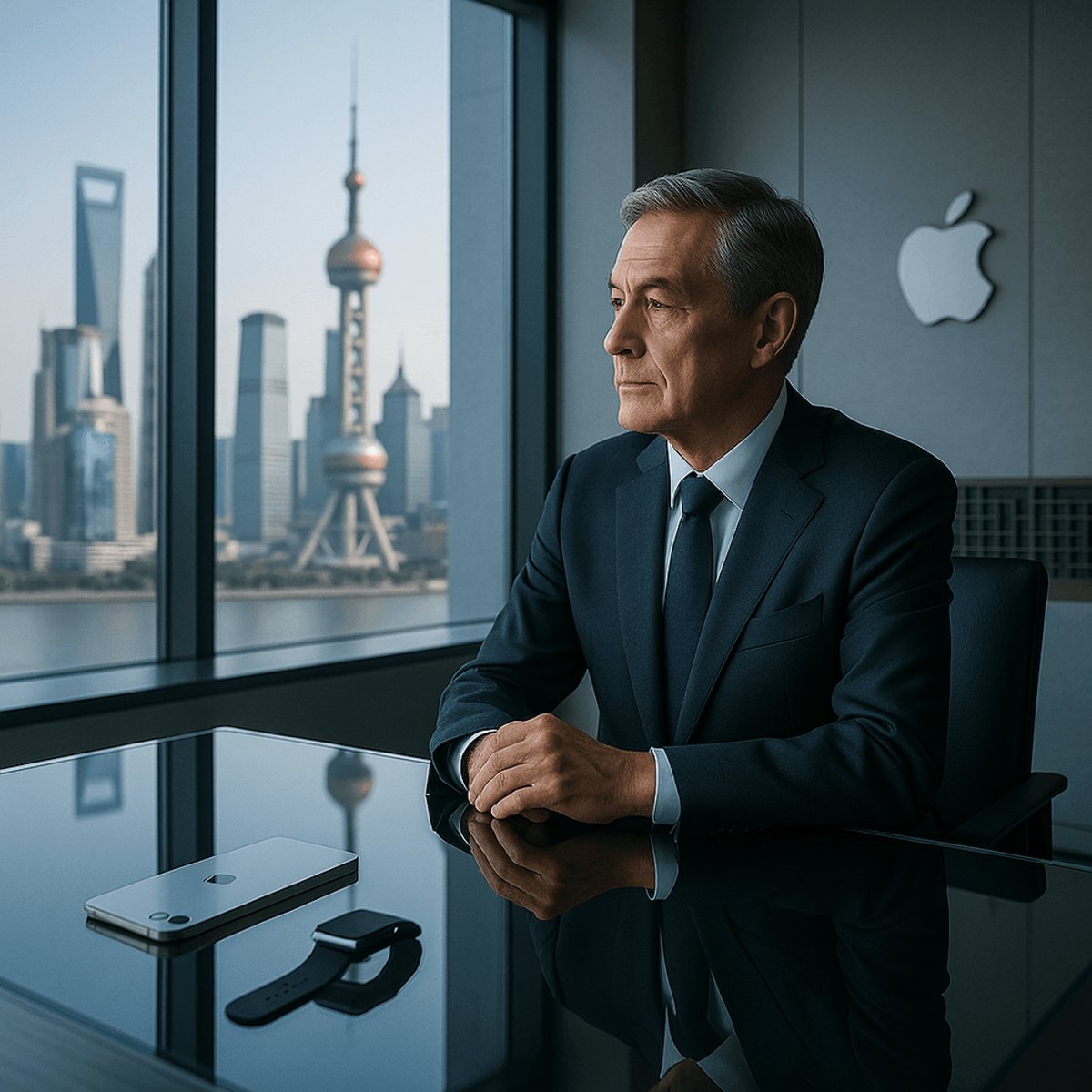
Apple CEO Tim Cook touched down in China this week as the company marks its 50th anniversary, a visit that underscores just how critical the region remains despite mounting geopolitical pressures. The trip comes as iPhone sales are reportedly surging in the world's second-largest economy, even as tensions between Washington and Beijing create fresh uncertainties for American tech giants operating in the region.
Apple CEO Tim Cook made a strategic appearance in China this week, reinforcing the country's pivotal role in the tech giant's global operations even as geopolitical headwinds threaten to reshape US-China business relations. The visit coincides with Apple's 50th anniversary milestone and comes at a moment when the company is reportedly experiencing strong iPhone demand in the region.
The timing carries particular significance. China represents Apple's third-largest market and serves as the backbone of its manufacturing empire, with the vast majority of iPhones still assembled in facilities operated by partners like Foxconn and others across the country. Any disruption to this relationship would fundamentally alter Apple's supply chain and market access.
Cook has made China visits a regular fixture of his leadership strategy, often appearing during key product launches or cultural moments to demonstrate Apple's commitment to Chinese consumers and regulators. These trips typically include meetings with government officials, retail store visits, and engagement with local partners - a diplomatic dance that's become increasingly complex as US-China relations have deteriorated.
The reported surge in iPhone sales comes as welcome news for Apple, which has faced intensifying competition from domestic Chinese brands like Huawei, Xiaomi, and others that have gained ground in recent years. Huawei's resurgence with its Mate series, powered by domestically-produced chips, has particularly challenged Apple's premium market position in China.
But the geopolitical backdrop looms large. The US government has tightened export controls on advanced chips and technology to China, while Beijing has responded with restrictions on foreign technology in sensitive sectors. Apple has had to navigate these crosscurrents carefully, balancing its massive manufacturing footprint and customer base in China against political pressures in Washington and concerns about supply chain resilience.
The company has begun diversifying its manufacturing presence, expanding production in India and Vietnam, but China's scale and ecosystem remain unmatched. Moving significant production out of China would take years and billions in investment, making the relationship too important to abandon despite the risks.
Cook's visit also comes as Apple faces specific regulatory challenges in China, including scrutiny over data practices and app store policies. The company operates its Chinese iCloud services through a local partner and has made other concessions to comply with Chinese regulations - moves that have drawn criticism from privacy advocates but are seen as necessary to maintain market access.
For Apple's 50th anniversary, the China visit sends a clear message: despite diversification efforts and geopolitical tensions, the company's future remains deeply intertwined with its largest Asian market. The question isn't whether Apple can afford to leave China, but rather how it manages the growing risks of staying so deeply embedded there.
Cook's China visit is more than ceremonial diplomacy - it's a calculated reminder that Apple's massive scale depends on maintaining this complicated relationship. As the company celebrates half a century of innovation, its next chapter will be defined by how skillfully it navigates between two superpowers whose interests are increasingly at odds. The iPhone sales surge offers a bright spot, but the long-term challenge of operating between Washington and Beijing's competing demands isn't going away.