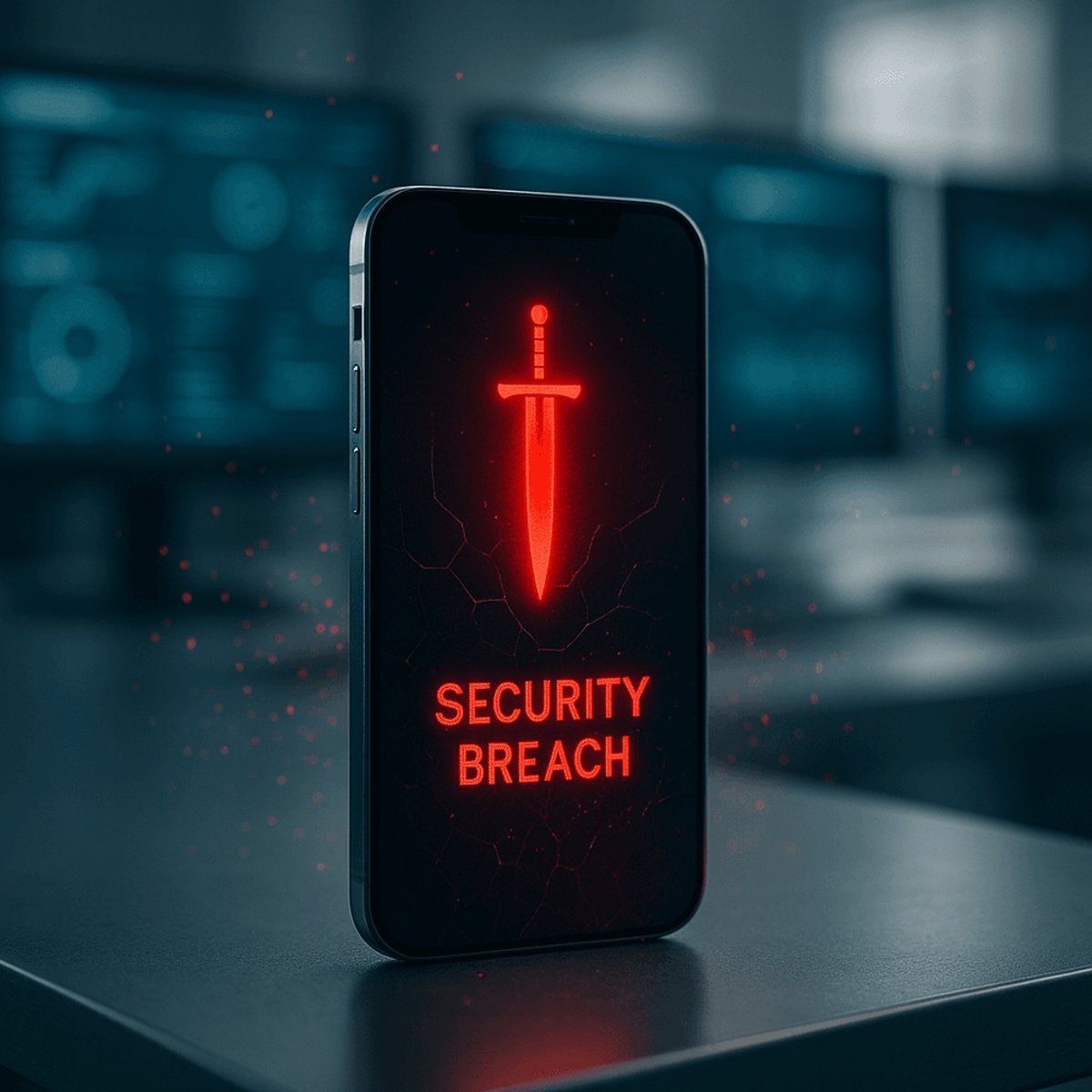
Apple is facing a critical security crisis as researchers expose DarkSword, a sophisticated iPhone hacking tool actively deployed by Russian threat actors. The exploit targets devices running iOS 18 through zero-click web attacks, meaning iPhones can be compromised simply by visiting a malicious website. With hundreds of millions of devices potentially at risk, the discovery marks one of the most serious mobile security threats in recent years, raising urgent questions about the security of Apple's latest operating system.
The iPhone's reputation as a secure fortress just took a serious hit. Security researchers have uncovered DarkSword, a sophisticated hacking technique that's been actively exploited by Russian threat actors to compromise devices running Apple's latest iOS 18 operating system. According to Wired's breaking report, the exploit was discovered in the wild, meaning it's not a theoretical vulnerability but an actual weapon being used in ongoing attacks.
What makes DarkSword particularly dangerous is its zero-click nature. Users don't need to download a suspicious app or click on a phishing link. Simply visiting an infected website is enough to trigger the exploit chain and give attackers complete control of the device. This delivery mechanism makes it nearly impossible for even security-conscious users to protect themselves through behavioral changes alone.
The timing couldn't be worse for Apple. iOS 18 was marketed as the company's most secure mobile operating system yet, featuring enhanced lockdown modes and improved memory protections designed specifically to defend against sophisticated nation-state attacks. That a Russian hacking group managed to develop a reliable exploit for the platform so quickly suggests either a fundamental flaw in Apple's security architecture or access to previously unknown vulnerabilities that bypassed the company's internal security reviews.
Hundreds of millions of devices are potentially at risk. iOS 18 adoption has been rapid since its release, with Apple reporting that over 60% of compatible iPhones upgraded within the first three months. If DarkSword can reliably compromise any device running the operating system, the scale of exposure is staggering. Every business executive, journalist, activist, and government official carrying an iPhone suddenly faces the prospect that their device could be silently compromised without their knowledge.
The exploit's discovery raises uncomfortable questions about the mobile security ecosystem. For years, Apple has positioned the iPhone as the gold standard for privacy and security, justifying premium pricing partly on the strength of its security architecture. But sophisticated nation-state actors have repeatedly demonstrated their ability to break through Apple's defenses, often using tools that remain undetected for months or years before discovery.
Security researchers are now racing to reverse-engineer DarkSword to understand its technical mechanisms. The exploit likely chains together multiple vulnerabilities, using an initial browser weakness to gain a foothold before escalating privileges to achieve full system compromise. This kind of exploit chain is expensive to develop, typically requiring teams of skilled researchers and investment measured in millions of dollars. That Russian actors deployed it in active operations suggests they viewed their targets as high-value enough to burn such a valuable capability.
Apple has not yet issued a public statement about DarkSword or announced plans for a security patch. The company typically moves quickly when actively exploited vulnerabilities surface, often releasing emergency updates within days of confirmation. The silence is unusual and may indicate either that Apple is still assessing the scope of the vulnerability or working on a complex fix that requires extensive testing to avoid breaking device functionality.
For enterprise security teams, DarkSword represents a nightmare scenario. Mobile device management solutions and traditional endpoint protection tools offer limited visibility into sophisticated iOS exploits. Most organizations assume that company-issued iPhones provide a secure platform for sensitive communications and data access. If that assumption no longer holds, companies may need to fundamentally rethink their mobile security strategies, potentially restricting device access to critical systems until Apple issues a confirmed fix.
The broader implications extend beyond any single vulnerability. DarkSword's existence suggests that the cat-and-mouse game between tech companies and sophisticated attackers has entered a new phase. As device makers like Apple add more security layers, attackers invest more resources in finding ways around them. Zero-click exploits that work reliably across millions of devices represent the pinnacle of this arms race, demonstrating that no system is truly impenetrable when sufficient resources and expertise are applied to breaking it.
DarkSword's emergence forces a reckoning with mobile security assumptions that have guided both consumer behavior and enterprise policy for years. As Apple works to patch this vulnerability, users and organizations must confront an uncomfortable reality - the devices we trust with our most sensitive information remain vulnerable to sophisticated attacks. The coming days will reveal whether this is an isolated exploit or a sign of deeper security challenges in iOS 18's architecture. Until Apple issues a fix and clarifies the scope of affected devices, hundreds of millions of iPhone users are left in an unsettling limbo, unsure whether their devices have already been compromised or remain at risk with every website they visit.