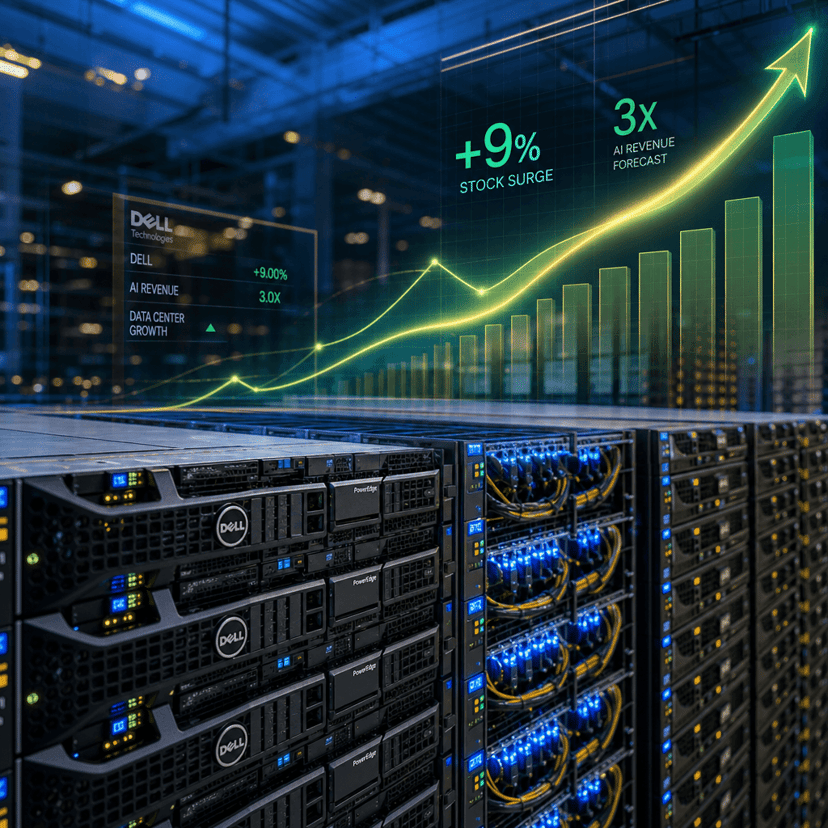
Dell just told Wall Street its AI server business is growing a lot faster than anyone expected. The company now sees AI server revenue tripling in fiscal 2027, a sharp jump from the doubling it projected just six months ago. Investors responded immediately, sending Dell shares up 9% and reigniting the broader conversation about how deep the AI infrastructure boom actually runs.
Dell just made one of the boldest calls on AI infrastructure demand yet. The company revealed it now expects AI server revenue to triple in fiscal 2027, according to CNBC. That's not a minor tweak. Six months ago, Dell's own internal math had that same number simply doubling. Tripling instead of doubling in half a year is the kind of guidance revision that makes analysts sit up, and it did exactly that, with shares climbing 9% in the session following the update.
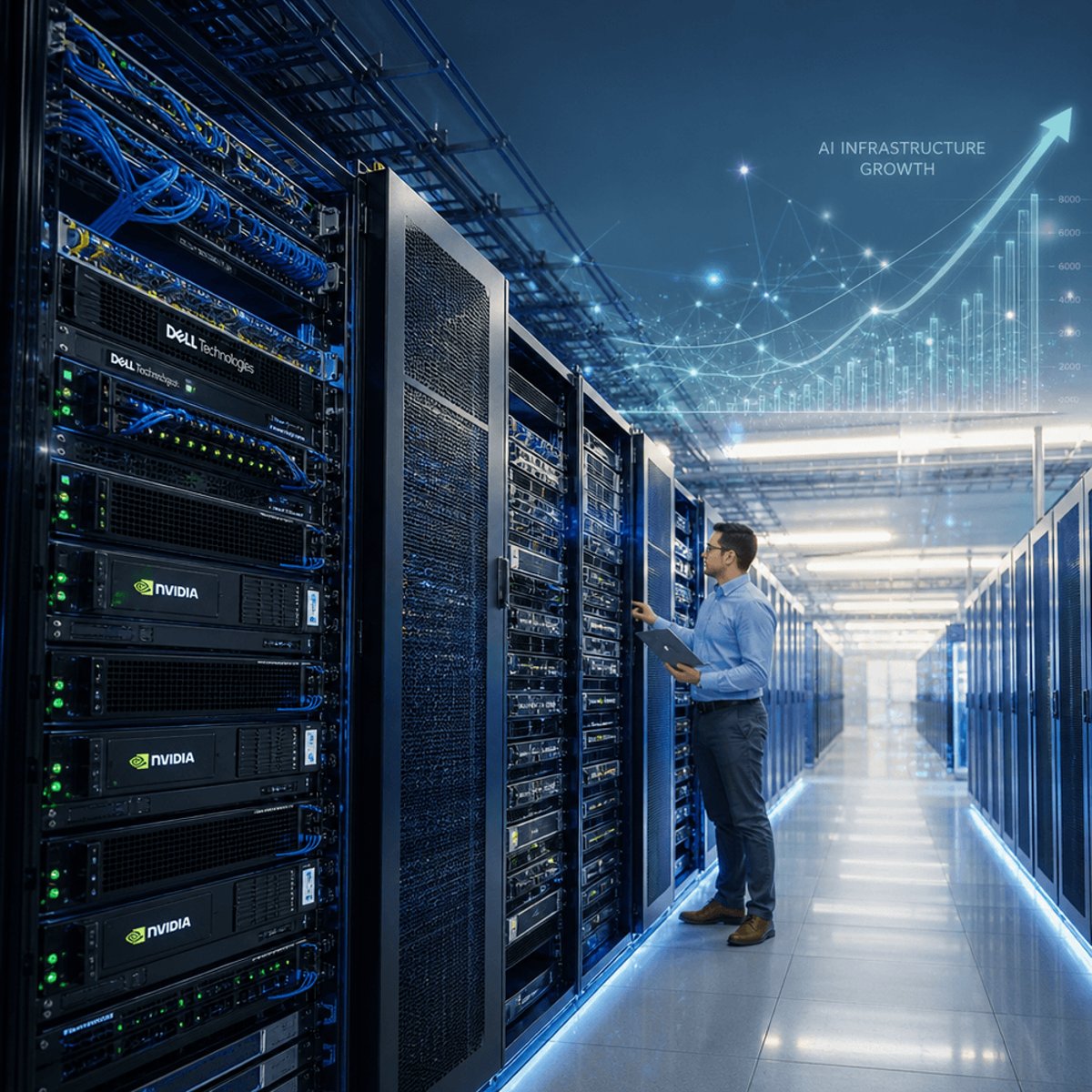
For a company that's spent the better part of three decades known for PCs and enterprise laptops, Dell's transformation into an AI infrastructure powerhouse has been one of the more underrated storylines in tech this year. The company builds the physical servers that house Nvidia's GPUs, the chips powering everything from large language model training to enterprise AI deployments. When demand for those chips spikes, Dell's server backlog spikes right along with it. And based on this new guidance, that backlog just got a lot bigger.
[Image: Dell data center server racks configured for AI workloads]
What's notable here isn't just the raw growth number, it's the pace of the revision. Companies typically nudge guidance up or down by single-digit percentages between quarters. Going from 'double' to 'triple' in two consecutive guidance cycles suggests Dell's order book is filling up faster than its own forecasting models anticipated. That kind of surprise usually points to either a handful of massive enterprise or hyperscaler contracts landing ahead of schedule, or broader-based demand across Dell's customer base finally catching up to the AI hype that's dominated boardroom conversations for the past two years.
The timing lines up with a pattern that's been building across the server supply chain. Competitors including HPE and Super Micro have each flagged strong AI-related order growth in recent quarters, but Dell's move to triple its own outlook puts real pressure on rivals to match or explain why they aren't seeing the same acceleration. It also reinforces a theme that's been running through this earnings season: enterprises are no longer just piloting AI, they're building out the physical infrastructure to run it at scale, and that infrastructure spending shows up first in server orders.
[Video iframe: Dell fiscal Q2 2027 earnings call highlights]
Dell's finance team has leaned into this story on recent earnings calls, framing the company's AI server business as the fastest-growing segment in its portfolio by a wide margin. The math backs that framing up. Tripling a revenue base in a single fiscal year is the kind of growth rate usually reserved for early-stage startups, not a hardware giant with decades of legacy business lines to manage. That Dell can post numbers like this at its scale says something about just how much capital is flowing into AI infrastructure right now, and how much further that capital has to run.
There's a broader read-through here too. Dell's guidance revision effectively serves as a real-time data point on enterprise AI capital expenditure, arguably a cleaner signal than the vaguer 'AI investment' language coming out of software companies' earnings calls. When a hardware maker with actual purchase orders on its books says demand tripled its own forecast, that's tangible evidence the AI buildout isn't slowing down.
The open question now is how long this pace holds. Six months from now, Dell will report again, and the market will be watching closely to see whether that tripling estimate holds, gets revised up again, or finally starts leveling off. Given how this year's guidance revisions have gone, betting against another upward surprise might be the riskier position to take.
For readers tracking where AI money is actually landing, Dell's revised forecast is one of the clearest signals yet that enterprise AI infrastructure spending is real and accelerating, not just a talking point on earnings calls. A hardware maker tripling its own growth expectations within six months tells you demand is outrunning even the most bullish internal projections, and that has implications far beyond Dell's own stock price, from chip suppliers like Nvidia to rival server makers scrambling to keep pace.