Data centers are hitting a wall, and it's not about chips or software - it's power. DG Matrix just pulled in $60 million to solve one of AI's most pressing infrastructure problems: how to intelligently route electricity from multiple sources to hungry server racks. The startup's solid-state transformers promise to untangle the grid chaos that's slowing down the AI boom, as hyperscalers scramble to keep their expanding facilities fed with reliable energy.
The AI gold rush has a dirty secret: there's not enough power to go around. DG Matrix is betting $60 million it can fix that problem with technology that sounds almost too simple to work.
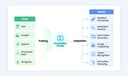
The startup just closed a substantial funding round to commercialize solid-state transformers that do something traditional power infrastructure can't - think on their feet. Instead of dumbly shuttling electricity from point A to point B, DG Matrix's systems intelligently juggle power from solar panels, battery storage, the grid, and even on-site generators, sending the cleanest and most reliable electrons to where they're needed most.
It's the kind of unglamorous infrastructure play that suddenly matters a lot when Amazon, Microsoft, and Google are all fighting over the same strained electrical grids to power their AI ambitions. Data center construction has exploded, but the power infrastructure to support it hasn't kept pace. Traditional transformers are analog relics in a digital world, unable to handle the complexity of modern energy portfolios.
"We're essentially building a smart power router for data centers," explains the approach in TechCrunch's exclusive report. The distinction matters because data centers are increasingly piecing together power from wherever they can get it - a solar farm here, a battery backup there, grid power when it's available and affordable.
The timing couldn't be better. AI training runs are consuming exponential amounts of electricity, and the facilities housing them are butting up against local grid capacity limits. Some hyperscalers are now looking at nuclear power and exploring deals with utilities just to secure enough juice for planned expansions. Nvidia's latest GPUs pull so much power that cooling and electricity costs now rival the hardware expenses themselves.
DG Matrix's solid-state approach swaps out heavy copper coils and mechanical switches for power electronics that can make split-second decisions about where electricity should flow. Think of it as replacing a highway interchange with intelligent, adaptive routing that responds to traffic in real-time. The transformers can blend renewable energy when it's available, fall back to grid power during peak solar hours, and tap battery reserves during demand spikes - all without human intervention.
This matters because data center operators are under pressure from two directions. Governments and customers want carbon-neutral operations, which means using renewables whenever possible. But AI workloads demand 24/7 uptime with zero tolerance for brownouts or voltage sags that could corrupt training runs worth millions of dollars. Traditional power infrastructure forces operators to choose between reliability and sustainability. DG Matrix is promising both.
The $60 million war chest suggests investors see the power management challenge as more than a niche problem. It's becoming a fundamental constraint on AI development. Meta recently delayed data center expansions in multiple regions due to grid connection delays. Tesla is reportedly exploring modular nuclear reactors for its Dojo supercomputer facilities. The whole industry is realizing that compute capacity is only valuable if you can actually plug it in.
What makes DG Matrix's technology compelling is the software layer sitting on top of the hardware. The solid-state transformers don't just move power around - they optimize for cost, carbon footprint, and reliability simultaneously. During off-peak hours, the system might prioritize cheap grid power. When renewable generation spikes, it seamlessly shifts load to solar or wind. If battery storage is approaching full capacity, it can dump excess power back to the grid for revenue.
The company is entering a market that's historically been dominated by industrial giants like Siemens and ABB, but those incumbents are still selling equipment designed for a centralized, fossil-fuel-powered grid. Data centers need something more flexible, and they need it yesterday. DG Matrix's bet is that solid-state technology has finally reached the price point where it makes economic sense for large-scale deployment.
With this funding round, the startup plans to scale up manufacturing and begin pilot deployments with undisclosed hyperscale customers. The technology has been validated in lab settings, but the real test comes when it's managing megawatts of power for mission-critical AI infrastructure. Even a brief power hiccup during a large language model training run can waste days of compute time and millions in sunk costs.
The broader implications extend beyond data centers. If DG Matrix can prove solid-state transformers work at scale, the same technology could revolutionize electrical distribution across industrial facilities, EV charging networks, and even residential microgrids. But the immediate opportunity - and the reason investors just wrote a $60 million check - is solving the AI industry's power crisis before it throttles the entire sector's growth trajectory.
DG Matrix's $60 million bet on smart transformers arrives at exactly the moment when AI's infrastructure needs are colliding with grid reality. The technology promises to turn data centers' power management from a blunt instrument into a precision tool, but the real question is whether it can scale fast enough to meet demand. If the startup delivers on its pilot deployments, it won't just be selling hardware - it'll be removing one of the biggest bottlenecks in AI development. That's worth watching closely, because the company that solves the power problem might end up controlling which AI projects actually get built.