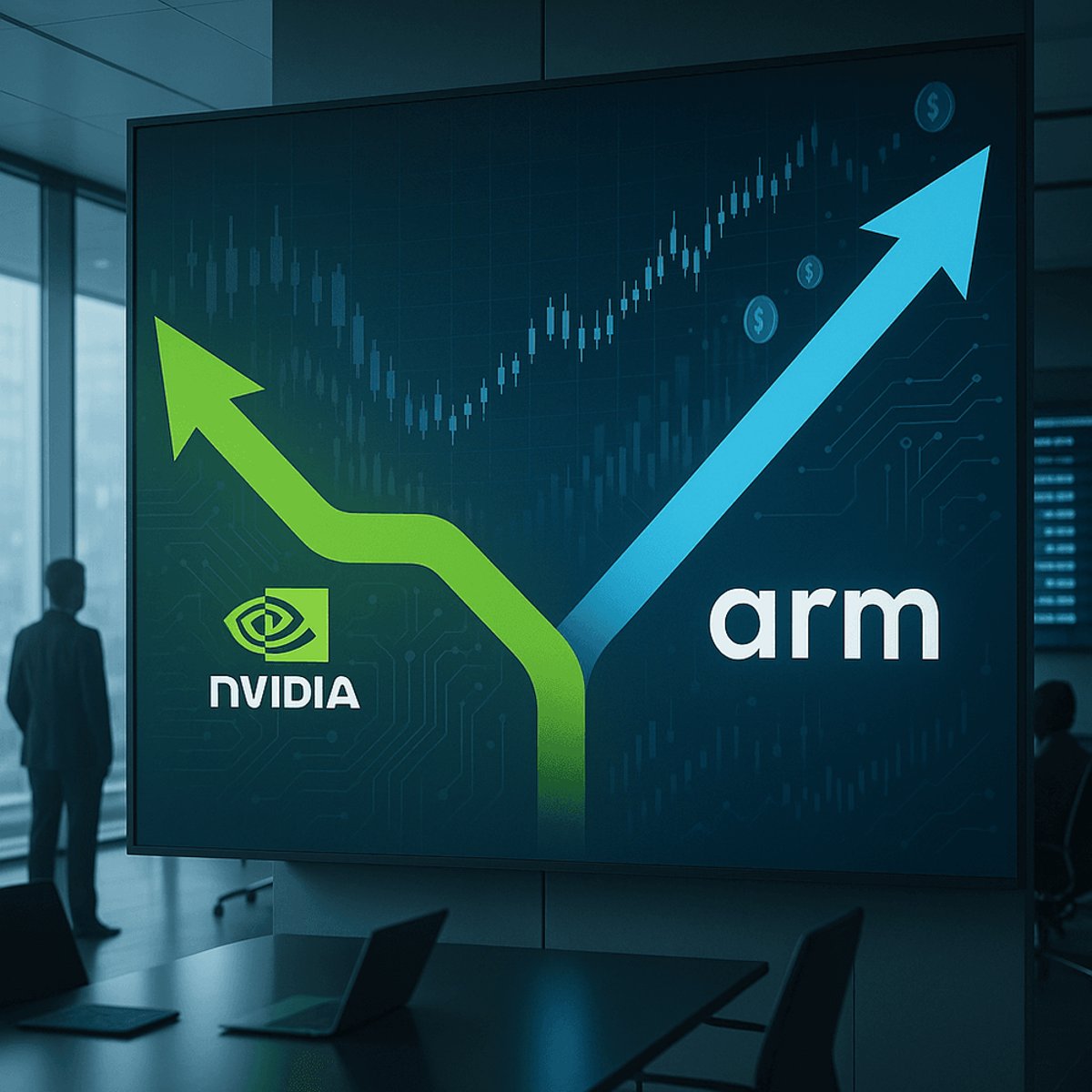
Nvidia has quietly exited its entire stake in Arm Holdings, according to fresh SEC filings that surfaced Wednesday. The move marks a stark reversal for the graphics chip giant, which just five years ago tried to acquire the British chip designer for $40 billion in what would have been the semiconductor industry's biggest deal ever. The divestment comes as Nvidia reshuffles its portfolio amid explosive AI demand and mounting pressure to streamline its strategic bets.
Nvidia just closed the book on one of tech's most dramatic acquisition sagas. SEC filings released Wednesday confirm the AI chip leader has fully exited its stake in Arm Holdings, the British semiconductor designer whose technology powers nearly every smartphone on the planet. The disclosure marks the final chapter in a relationship that once promised to reshape the entire chip industry.
Arm's stock actually climbed in premarket trading following the news, a counterintuitive reaction that speaks volumes about how the market now views both companies. Investors seem relieved that Arm can chart its own course without the shadow of Nvidia's influence, while Nvidia gets to redeploy capital into areas more directly aligned with its AI dominance.
The backstory here is wild. Back in September 2020, Nvidia announced plans to acquire Arm from SoftBank for $40 billion, a deal that would have given the GPU maker control over the fundamental architecture used in billions of devices. But regulators worldwide saw red flags. The Federal Trade Commission sued to block it, citing competition concerns. The UK's antitrust watchdog piled on. By February 2022, the deal was officially dead.
What's telling is that Nvidia held onto its Arm shares even after the acquisition collapsed. The company maintained what sources described as a "strategic position" through 2024 and into 2025, presumably betting on Arm's growing relevance in the data center market. But something changed. According to the latest 13F filing, Nvidia liquidated the entire position sometime in Q4 2025.
Timing matters here. Nvidia's AI chip business has exploded beyond anyone's wildest projections, with its H100 and upcoming Blackwell GPUs commanding premium prices and months-long waitlists. The company's market cap has swelled past $2 trillion as hyperscalers like Microsoft, Google, and Meta race to build out AI infrastructure. In that context, holding a passive stake in a chip architecture company starts to look like a distraction.
There's also the competitive angle. Arm has been pushing aggressively into the server market, positioning its energy-efficient designs as alternatives to traditional x86 chips from Intel and AMD. But Arm-based CPUs are increasingly paired with Nvidia's GPUs in AI systems, creating a complex frenemy dynamic. By divesting, Nvidia eliminates any appearance of conflict when negotiating with Arm's licensees or competing against Arm-powered systems.
The British chip designer, for its part, seems to be thriving on its own. Since going public again in September 2023 (after SoftBank took it private years earlier), Arm has seen its stock more than double as investors bet on its royalty-rich business model and expanding footprint in automotive and data center chips. The company's Q3 results showed licensing revenue up 23% year-over-year, driven by AI-related chip designs.
What Nvidia is doing with the proceeds remains unclear. The company has been on a spending spree lately, investing in AI startups, building out its own data centers, and reportedly exploring acquisitions in the networking space. Selling the Arm position frees up billions that could fund any of those initiatives without diluting shareholders or taking on debt.
For the broader semiconductor industry, this is a signal worth parsing. Nvidia's exit suggests the company believes its future lies in vertical integration and direct control over its AI stack, rather than horizontal bets on foundational technologies like chip architectures. It's a vote of confidence in Nvidia's ability to dominate without needing to own every layer of the ecosystem.
Nvidia's decision to fully exit its Arm position isn't just housekeeping - it's a strategic statement. As AI infrastructure becomes the defining battleground in tech, Nvidia is betting it can win without owning the underlying chip architecture that powers half the world's devices. For Arm, the news removes any lingering questions about its independence and lets it pursue server and automotive deals without Nvidia's shadow looming. Both companies now have clearer paths forward, even if those paths increasingly compete for the same data center real estate. Watch for Nvidia to redeploy this capital into AI-adjacent bets, and for Arm to accelerate its push into high-margin server designs.