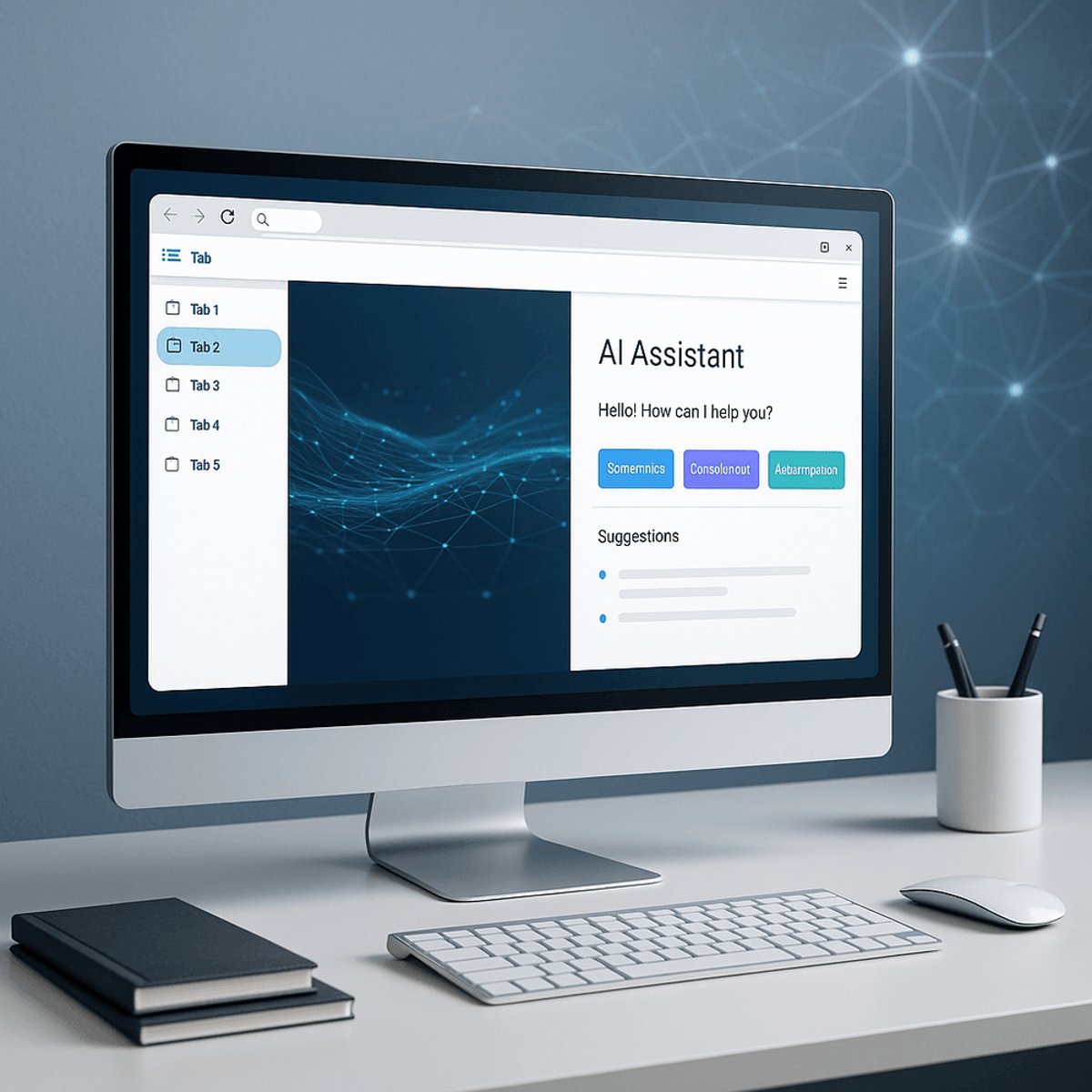
The Browser Company's AI-native browser Dia is getting a major upgrade by absorbing the best features from Arc, its experimental predecessor that proved too complex for mainstream adoption. Following Atlassian's $610 million acquisition, founder Josh Miller confirmed that Dia will inherit Arc's "greatest hits" - including the beloved sidebar mode, vertical tabs, and custom shortcuts - while maintaining its AI-first architecture designed for speed and simplicity.
The Browser Company just solved one of the biggest challenges in AI browser development - figuring out what users actually want. Instead of guessing, they're importing the proven winners from Arc, their ambitious but ultimately too-complex browser experiment that's been providing real-world user data for over a year.
Founder Josh Miller made it official on Sunday, confirming that Dia will get "Arc's greatest hits" including the signature sidebar mode that Arc users couldn't live without. The timing makes perfect sense - Atlassian's $610 million acquisition gives the team resources to execute this feature migration properly while maintaining Dia's AI-first foundation.
The strategy reveals just how valuable Arc's "failure" actually was. When The Browser Company launched Arc in mid-2023, it reimagined browsing with separate workspaces, pinned tabs, a Command Bar inspired by Apple's Spotlight, and that distinctive sidebar housing everything from bookmarks to audio controls. But Miller later admitted the harsh truth - Arc was "simply too different, with too many new things to learn, for too little reward."
That complexity killed Arc's mainstream potential, but it generated something arguably more valuable - a year-plus of user behavior data showing exactly which modern browser features actually stick. Early Dia users are already experiencing the payoff. The latest "early birds" release includes focus mode, vertical tabs, pinned tabs in grid view, and automatic Google Meet picture-in-picture when switching tabs.
User feedback confirms the strategy's working. One longtime Arc user posted on X that they're "so close to not miss Arc" after switching to Dia, praising the inherited features while noting Dia feels snappier overall.
Miller's systematically testing the transition of Arc's more complex features too. The team is exploring how to adapt Arc's Spaces - distinct browsing areas with their own pinned tabs, themes, and cookies - for Dia's streamlined approach. They're also testing pinned tabs implementation and gathering feedback on features like swipeable profiles.
The Atlassian acquisition adds another strategic layer. Miller confirmed that Dia will integrate deeply with Jira and other Atlassian tools, plus third-party apps like Linear. This enterprise angle could give Dia distribution advantages that Arc never had, especially as companies experiment with AI-powered productivity tools.
What makes this different from typical feature copying is Dia's architectural foundation. Miller emphasizes that Dia's build is "much better for AI, speed, and security" than traditional browsers, meaning Arc's UX wins get combined with genuine AI-native capabilities like memory and intelligent agents.
The mobile strategy shows similar learning-driven thinking. Miller confirmed that Arc Search-inspired updates are coming to Dia's mobile app in 2026, suggesting they're taking time to get the adaptation right rather than rushing features to market.
This approach contrasts sharply with other AI browser attempts that either start from scratch or simply bolt AI features onto existing browsers. The Browser Company essentially ran a year-long consumer research project with Arc, learned what works and what doesn't, then built those insights into a purpose-designed AI browser.
The broader implication extends beyond browsers to AI product development generally. Instead of theorizing about user needs, The Browser Company shipped an experimental product, gathered real usage data, then applied those learnings to their AI-native rebuild. It's product development through iteration rather than speculation.
For the competitive landscape, this gives Dia genuine advantages over browsers from Google, Microsoft, or AI startups building from theoretical user needs. They know which features create genuine user value because they've already tested them at scale.
The Browser Company's strategy of learning from Arc's complexity to build Dia's simplicity represents a masterclass in product iteration. By systematically importing proven features while maintaining AI-native architecture, they're solving the user adoption challenge that killed Arc while keeping its innovations. With Atlassian's backing and enterprise integration plans, Dia could become the first AI browser to achieve both technical sophistication and mainstream usability - precisely because it learned what not to do first.