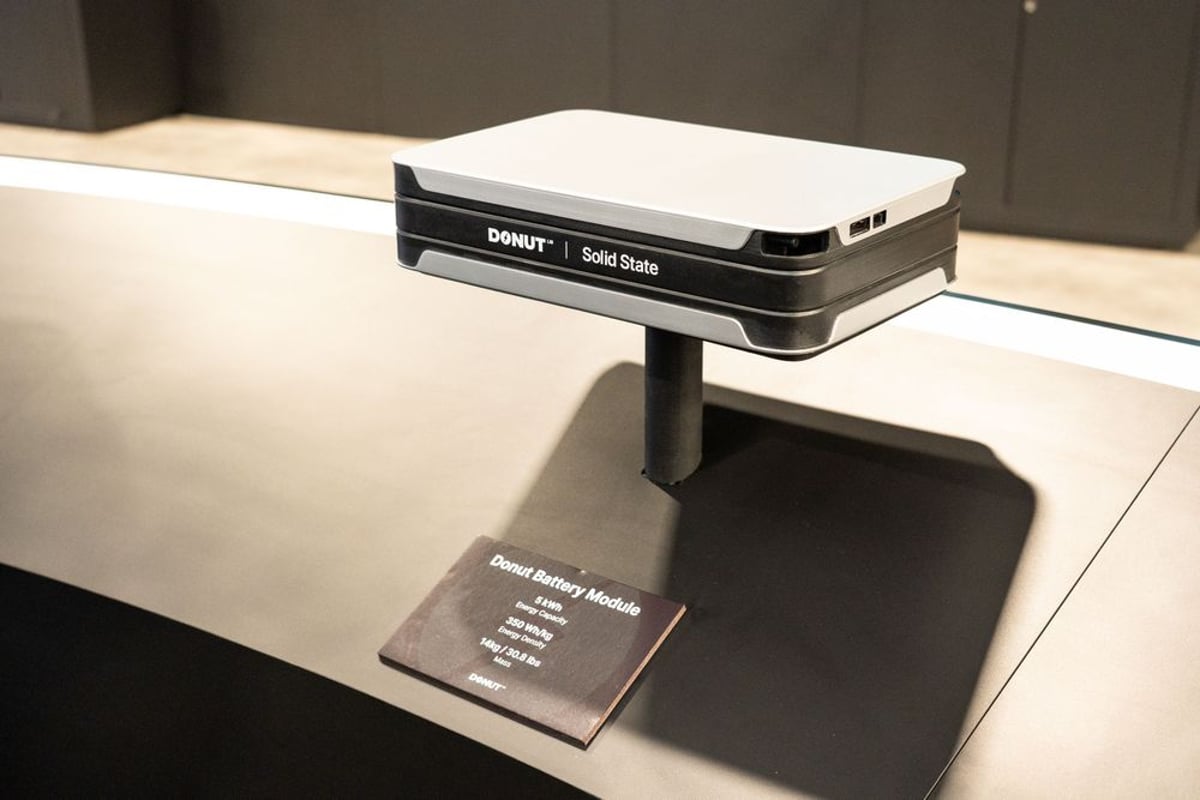
Finnish battery startup Donut Lab just released the first independent validation of its solid-state battery tech, and the results back up the company's bold claims. After months of skepticism following its early-2026 announcement, the startup partnered with state-owned VTT Technical Research Centre of Finland to test charging speed and thermal performance. The results, published today, show the battery hitting fast-charge targets while maintaining stable heat levels - a critical milestone for a technology that's tripped up bigger players for years.
Donut Lab isn't backing down from the skeptics. The Finnish battery startup that turned heads in early 2026 with claims of a production-ready solid-state battery just dropped its first set of independent test results, and they're designed to silence the doubters.
The VTT Technical Research Centre of Finland put Donut Lab's battery through charging speed and thermal behavior tests, according to test documentation released today. For an industry that's watched countless solid-state promises fizzle out in the lab-to-production valley of death, third-party validation isn't just nice to have - it's essential.
The results show the battery maintaining stable thermal performance during fast-charging cycles, addressing one of the biggest production headaches that have kept solid-state tech trapped in research labs. Traditional lithium-ion batteries generate significant heat during rapid charging, requiring complex cooling systems. Solid-state designs promise better thermal management, but proving it at scale has been the stumbling block.
Donut Lab announced its breakthrough earlier this year, claiming it had cracked the production puzzle that's eluded bigger players. The company said it could manufacture solid-state cells using existing battery production infrastructure - a claim that raised eyebrows across the industry. Toyota, Samsung, and QuantumScape have all pushed back their solid-state timelines multiple times, citing manufacturing challenges.
The VTT tests focused specifically on charging speed and heat generation - two metrics that make or break commercial viability. Fast charging matters for electric vehicle adoption, but thermal stability determines whether a battery can survive thousands of cycles without degrading. According to The Verge's earlier coverage, Donut Lab has been tight-lipped about exact energy density figures and cycle life data.
That's where questions remain. Today's test results validate thermal performance during charging, but they don't address long-term durability - the real make-or-break metric for batteries. A cell that charges fast and stays cool is impressive, but if it degrades after 500 cycles instead of 2,000, it's not ready for commercial deployment.
The competitive pressure is real. Tesla continues pushing the limits of conventional lithium-ion chemistry with its 4680 cells, while Chinese manufacturers like CATL are shipping semi-solid-state designs that split the difference between old and new tech. Donut Lab's approach - promising full solid-state performance with conventional manufacturing - puts it in direct competition with these incremental improvements.
Industry observers have been watching solid-state development with equal parts hope and fatigue. The technology promises higher energy density, faster charging, and better safety compared to liquid electrolyte batteries. But commercialization has been perpetually five years away for the past decade.
VTT Technical Research Centre, a state-owned research organization, brings credibility that startup self-testing can't match. The Finnish research institute has deep expertise in materials science and battery technology, making it a logical validation partner for a homegrown startup.
What Donut Lab still needs to prove: full cycle-life testing under real-world conditions, production scalability beyond pilot batches, and actual commercial partnerships. The company hasn't announced manufacturing partners or customers, though battery startups typically lock those deals before going public with performance data.
The timing is strategic. As established automakers delay their solid-state plans, there's an opening for a nimble startup to claim the production-ready crown. But the battery industry is littered with companies that had great lab results and stumbled on manufacturing. Fisker and Lordstown Motors serve as cautionary tales of what happens when battery promises don't match production reality.
For now, Donut Lab has cleared one hurdle. The VTT validation shows its batteries behave as advertised under controlled test conditions. The harder questions - durability, cost, and manufacturing at volume - remain unanswered. But in an industry where most solid-state developers are still struggling with basic performance validation, shipping third-party test results is progress.
Donut Lab's VTT validation marks a tangible step forward in solid-state battery development, but it's just the first checkpoint in a marathon. The Finnish startup has proven its tech can handle fast charging without thermal issues - no small feat in an industry where bigger players have stumbled. But the real test comes next: demonstrating cycle life, securing manufacturing partners, and proving it can scale beyond pilot production. For an industry desperate for a solid-state breakthrough, Donut Lab's third-party results are encouraging. Whether they translate to commercial success depends on answers the startup hasn't provided yet.