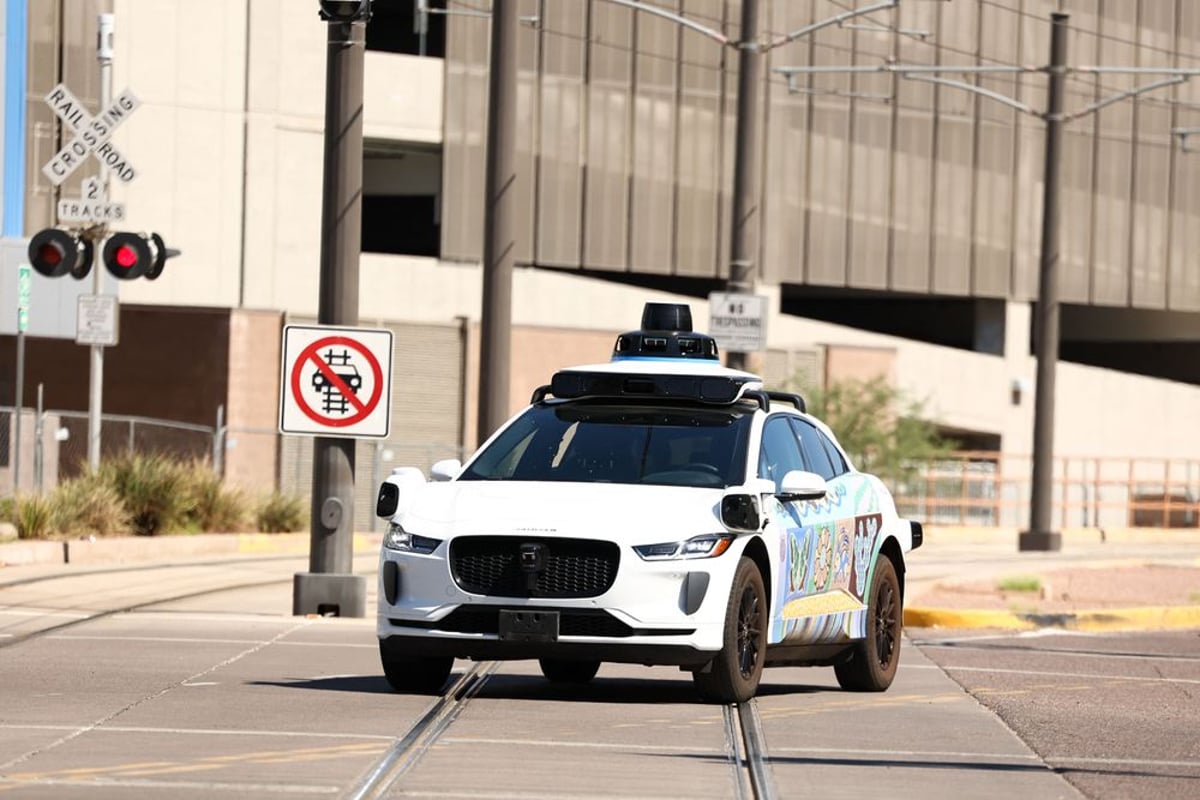
DoorDash just announced a partnership with Google's Waymo to deploy driverless Jaguar SUVs for food delivery in Phoenix, marking another major step in the automation of last-mile delivery. The move comes as delivery companies race to cut labor costs while competing for market share in the increasingly crowded autonomous delivery space.
The gig economy just got a little more robotic. DoorDash announced today it's teaming up with Waymo to bring autonomous Jaguar SUVs into its delivery fleet in Phoenix, giving customers the option to have their pad thai delivered by a robot instead of a human driver.
The partnership kicks off with deliveries from DoorDash's DashMart convenience stores, with plans to expand to restaurants and grocery stores over time. When customers place an order, they might get matched with a Waymo vehicle that'll pull up to their street. From there, it's a DIY experience - customers use their DoorDash app to unlock the vehicle's trunk and grab their order themselves.
It's part of DoorDash's broader push to automate delivery and slash labor costs. Just last month, the company unveiled its own sidewalk robot called Dot in Phoenix, and it's already working with Serve Robotics in Los Angeles for sidewalk deliveries. The company isn't alone - Uber Eats has similar partnerships with multiple robotics companies as the delivery wars heat up.
But Waymo's road-based vehicles represent a different approach than sidewalk robots. These autonomous SUVs can theoretically deliver orders faster since they operate on streets rather than crawling along sidewalks, though Phoenix traffic might have something to say about that.
The user experience raises some interesting questions though. Without a human driver, there's no one to ring doorbells, climb stairs, or handle the personal touch that many customers expect. Everything happens through the app, and customers need to walk down to street level to collect their orders. As The Verge noted, other companies have tried this model with mixed results.
This isn't Waymo's first rodeo with food delivery. The Google-owned company partnered with Uber Eats for similar deliveries in Phoenix last year, though that partnership has since ended. The timing suggests Waymo is still figuring out its delivery strategy after initially pursuing its own logistics business.
Waymo once had bigger ambitions in the delivery space, striking deals with UPS, Wayfair, JB Hunt, and Uber to apply its autonomous driving tech to last-mile delivery and long-haul trucking. But the company hit the brakes on those efforts to focus resources on its core robotaxi business, which is now generating revenue in Phoenix and San Francisco.
The Phoenix partnership makes strategic sense for both companies. DoorDash gets to test autonomous delivery without developing the technology in-house, while Waymo finds a new revenue stream for its existing fleet. Phoenix has become ground zero for autonomous delivery experiments, with its relatively simple grid layout and favorable regulations making it an ideal testing ground.
For consumers, the shift toward automated delivery represents a fundamental change in how we think about convenience. The promise is faster, cheaper delivery available 24/7. The trade-off is losing the human element that has traditionally defined customer service in the delivery industry.
The DoorDash-Waymo partnership represents another milestone in the automation of everyday services, but it also highlights the challenges facing autonomous delivery. While the technology promises efficiency gains and cost reductions, companies are still figuring out how to balance automation with customer expectations. As these partnerships expand beyond Phoenix, we'll learn whether consumers are ready to trade human interaction for the convenience of robot delivery.