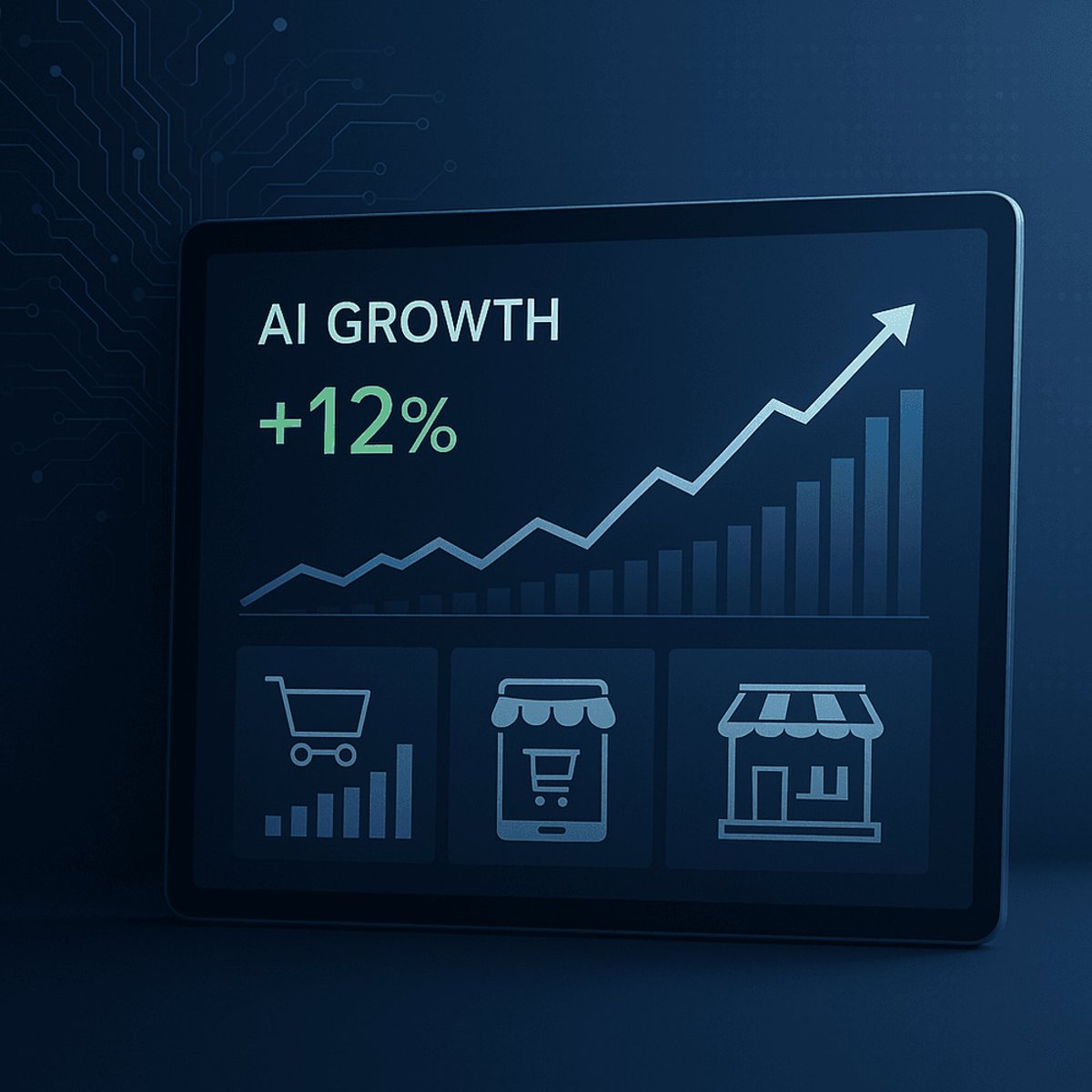
Chinese e-commerce giant Alibaba just delivered the kind of AI news that investors have been waiting to hear. The company claims its artificial intelligence investments in e-commerce are already breaking even, with preliminary testing showing a 12% boost in advertising returns. This comes as the tech world grapples with mounting concerns about massive AI spending with little to show for it, making Alibaba's claim a potential game-changer for how the industry views AI ROI.
Alibaba just threw down the gauntlet in the AI spending debate. While tech giants from Meta to Amazon face mounting pressure to justify their massive AI investments, the Chinese e-commerce behemoth is claiming victory - its AI spending is already paying for itself.
Vice President Kaifu Zhang told reporters Thursday that the company's AI investments in e-commerce are breaking even, with preliminary testing showing a consistent 12% increase in returns on advertising spend. "It's very rare to see double-digit changes" in such tests, Zhang said during a presentation to media in Shanghai, predicting a "very significant" positive impact on gross merchandise volume during this year's Singles Day period.
The timing isn't coincidental. Alibaba began presales for Singles Day just yesterday, China's massive shopping event that dwarfs Black Friday. With AI-powered personalized search results and improved virtual clothing try-ons now live across Taobao and Tmall, the company is betting big that AI will drive consumer engagement when it matters most.
This bold claim comes as the entire tech industry wrestles with what critics call an AI spending bubble. Companies have poured hundreds of billions into artificial intelligence infrastructure, often with limited immediate returns. Alibaba itself announced in February it would spend 380 billion yuan ($53 billion) over three years on AI and cloud infrastructure, then doubled down last month with promises to increase that spending even further.
The skeptics have good reason to worry. While OpenAI burns through cash developing increasingly expensive models and Google faces questions about Gemini's commercial impact, few companies have demonstrated clear AI profitability at scale. Alibaba's claim that it's already breaking even on e-commerce AI could validate the entire enterprise AI thesis - or set up a major credibility test.
The numbers behind Alibaba's confidence are substantial. The company's China e-commerce unit generated $19.53 billion in revenue during the quarter ended June 30, representing 10% year-over-year growth despite sluggish consumer spending across China. Last year's Singles Day period saw 20.1% growth in sales to 1.11 trillion yuan across major platforms including Alibaba's Tmall, according to research firm Syntun.
But Alibaba's AI play goes beyond simple automation. Zhang detailed how the company has deployed AI across the entire shopping experience - from making search results more personalized to improving the accuracy of virtual try-ons, addressing one of e-commerce's biggest pain points. These aren't just efficiency plays; they're designed to fundamentally change how consumers discover and purchase products.
The company's CFO Toby Xu framed the strategy during an August earnings call, calling AI and consumption "two major historic opportunities" requiring investments of "historic scale." The company acknowledged it may prioritize these investments over short-term profit margins - a risky bet that's now showing early signs of validation.
What makes Alibaba's claim particularly significant is its timing and specificity. While competitors make vague promises about AI's future potential, Alibaba is putting concrete numbers on current performance. That 12% improvement in advertising returns isn't a projection - it's what the company says it's already seeing in real deployments.
The broader implications extend well beyond e-commerce. If Alibaba can demonstrate sustainable AI ROI at scale, it provides a blueprint for other enterprises grappling with their own AI investment decisions. The company's integrated approach - using AI across search, recommendation, advertising, and virtual experiences - could become the standard for how large platforms deploy artificial intelligence.
Alibaba's claim that its AI investments are already breaking even represents either a major validation of enterprise AI spending or a risky bet on unproven metrics. With Singles Day just weeks away, the company will have a massive real-world test of whether AI-powered personalization and virtual experiences actually drive the consumer behavior changes needed to justify those billions in spending. If the numbers hold up, Alibaba may have just provided the roadmap every other tech giant has been searching for.